The City That Wasn’t Destroyed
Every August 25, small bunches of flowers appear on walls across Paris. Most tourists walk past them without a glance. They are pinned beneath marble plaques the size of a sheet of paper, and they mark the exact spot where someone died — a resistance fighter, a soldier, a passer-by — during the week the city freed itself in 1944.
Paris is unusual among European capitals. It was not carpet-bombed like London, not reduced to rubble like Warsaw or Berlin. Hitler ordered it destroyed and the general in charge did not obey. The result is a city where the Second World War is everywhere and almost invisible: no ruins, no craters, but thousands of small scars for anyone who knows how to read them.
This guide is a map of those scars. It follows the ground we cover on our WWII walking tours, and it is timed for the anniversary of the Liberation of Paris — the best week of the year to go looking.
1. Bullet Holes: Reading the Stone
The most striking traces are the ones you can touch. During the six days of the Paris uprising (August 19–25, 1944), fighting broke out around every German strongpoint, and the soft limestone of Haussmann’s Paris recorded every burst.
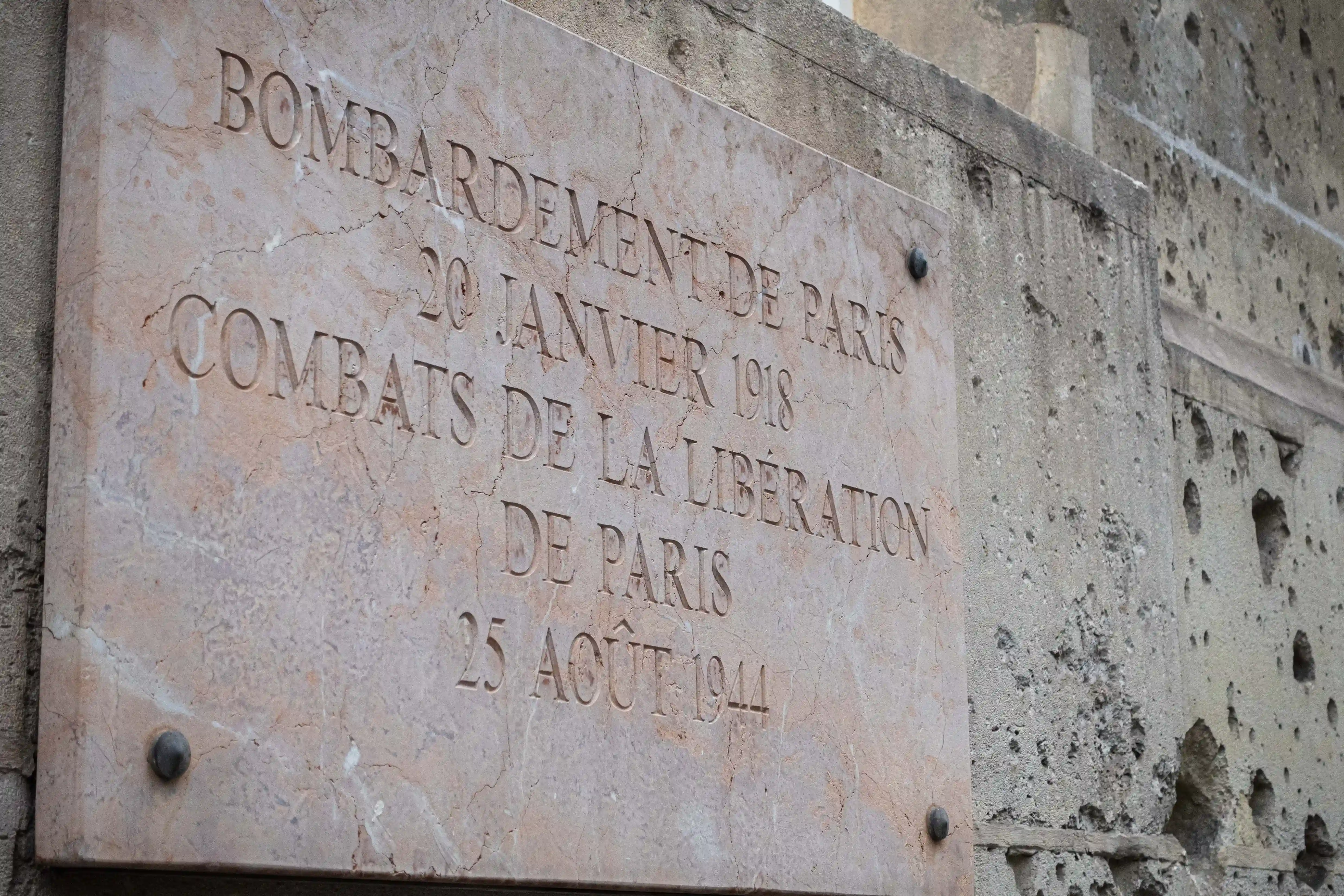
École des Mines, boulevard Saint-Michel (Left Bank). The façade of the mining school, facing the Luxembourg Gardens, is peppered with impacts, and a marble plaque explains why: “Bombardement de Paris, janvier 1918 — Combats de la Libération de Paris, 25 août 1944.” Two world wars on one wall. The 1918 marks date from the First World War, when German aircraft bombed Paris; the 1944 marks from the battle for the Palais du Luxembourg, where the Luftwaffe garrison held out behind the garden railings until the afternoon of August 25 while French tanks and FFI fighters closed in along the boulevard. The building was never re-clad. The holes were deliberately kept — a memorial made of the damage itself. This is one of the stops where our Left Bank tour lingers longest.
Préfecture de Police, Île de la Cité. The uprising began here on August 19, when 2,000 Paris policemen on strike seized their own headquarters and raised the tricolour. The Germans counter-attacked with tanks; the police held on with pistols and Molotov cocktails until a truce was brokered. Look at the stonework along the quays around the building and you will still find the pockmarks.
Place de la Concorde (Right Bank). The Hôtel de la Marine — the colonnaded palace on the north side of the square — was the headquarters of the Kriegsmarine in Paris, and its neighbour the Hôtel de Crillon housed German officers. On August 25 the square became a battlefield: a French tank was hit and burned in front of the Tuileries railings, and the last German garrison surrendered here under fire. It is one of the key stops of our Right Bank tour — the story of that afternoon is best told standing in the middle of the square.
How to tell what you’re looking at. A single bullet leaves a round, cone-shaped crater the width of a fingertip. A shell fragment leaves a ragged, oval gouge. A machine-gun burst leaves a line of holes climbing diagonally up the wall. Weathering and pollution, by contrast, eat evenly at the surface. Once you have seen a genuine impact, you will start spotting them on buildings all over the city.
2. The Plaques: “Ici est tombé…”
Paris has well over a thousand commemorative plaques from the Second World War, more than any other European city. Most follow the same formula: Ici est tombé (“Here fell”), a name, an age, sometimes a unit, and the words Mort pour la France. Many were put up within months of the Liberation, paid for by neighbours or comrades.
Read them as you walk and a pattern emerges. On the Left Bank they cluster along boulevard Saint-Michel, rue des Écoles, the quays of the Île de la Cité and the bridges — the axis of the fighting between the Latin Quarter barricades and the German garrisons at the Luxembourg and the Senate. On the Right Bank they thicken around the Concorde, the rue de Rivoli and the Hôtel de Ville, where the last strongpoints fell.
Some plaques tell of an earlier and quieter war. In front of hundreds of Paris primary schools, a newer text — put up since the early 2000s — records the number of Jewish children from that school deported between 1942 and 1944 who never returned. They are among the most affecting inscriptions in the city precisely because of where they are: on the wall of a school, at child height, next to a playground.
On August 25 the city places flowers under many of the Liberation plaques. If you can only visit Paris once for its wartime history, that is the day to come.
3. Ghost Signs: “ABRI” and Painted Arrows
Look above shop fronts and on the sides of older buildings for stencilled letters, often faded to a shadow: ABRI (shelter), sometimes with an arrow and a number of places. They were painted in 1939–40 to guide people to air-raid cellars, and a surprising number survived under grime and later paint. The Left Bank, less rebuilt than the boulevards of the west, still has a handful.
What has not survived, except in photographs, are the German street signs: black-and-white wooden panels bolted to lamp posts, pointing the way in Gothic lettering to Der Militärbefehlshaber, Soldatenheim or the Wehrmacht hospital. They were torn down within hours of the Liberation. We bring copies of those photographs on our tours, because holding a 1941 image up against the same lamp post is the fastest way to understand what occupied Paris looked like.
4. Underground: The Bunkers of Paris
Occupied Paris built downwards, and much of it is still there.
The Rol-Tanguy command post, place Denfert-Rochereau. In August 1944 Colonel Henri Rol-Tanguy, commander of the FFI for the Paris region, directed the uprising from a civil-defence bunker some twenty metres beneath the square. It is now the centrepiece of the Musée de la Libération de Paris – Musée du Général Leclerc – Musée Jean Moulin, reopened on the 75th anniversary in 2019 in the old Ledoux toll pavilions. Free entry, and the descent into the shelter is worth the visit alone.
The Luftwaffe bunker under the Lycée Montaigne. Beside the Luxembourg Gardens, the German air force built a large concrete bunker beneath the courtyard of a Paris secondary school. It is normally closed, but opens on the Journées du Patrimoine in September — book early.
Gare de l’Est. Under the platforms lies a bunker built for the railway staff and later used by the occupiers, complete with period ventilation gear. Visits are rare and organised by the SNCF.
The Metro. Several stations closed in September 1939 and never reopened — Arsenal, Saint-Martin, Croix-Rouge, Champ de Mars. Their story is in our article on Paris’s ghost stations.
5. Buildings That Changed Sides
Some of the most famous addresses in Paris spent four years under a different flag. Nothing marks most of them, which is exactly why they belong on a list like this.
- Hôtel Meurice, rue de Rivoli — headquarters of the German military governor; the room where von Choltitz refused to burn the city.
- Palais du Luxembourg — the French Senate became the Luftwaffe’s western headquarters, ringed with bunkers.
- Jeu de Paume, Tuileries — the sorting depot for looted art, where Rose Valland kept her secret ledger.
- Musée de l’Homme, Trocadéro — birthplace of one of the first Resistance networks.
- The Ritz, place Vendôme — Luftwaffe brass on the Vendôme side, and Hemingway’s “liberation” of the bar in August 1944.
- Hôtel Lutetia, boulevard Raspail — Abwehr headquarters, then in spring 1945 the reception centre for survivors returning from the camps.
- Hôtel Majestic, avenue Kléber — seat of the German military command; today the Peninsula.
6. Memorials and Museums
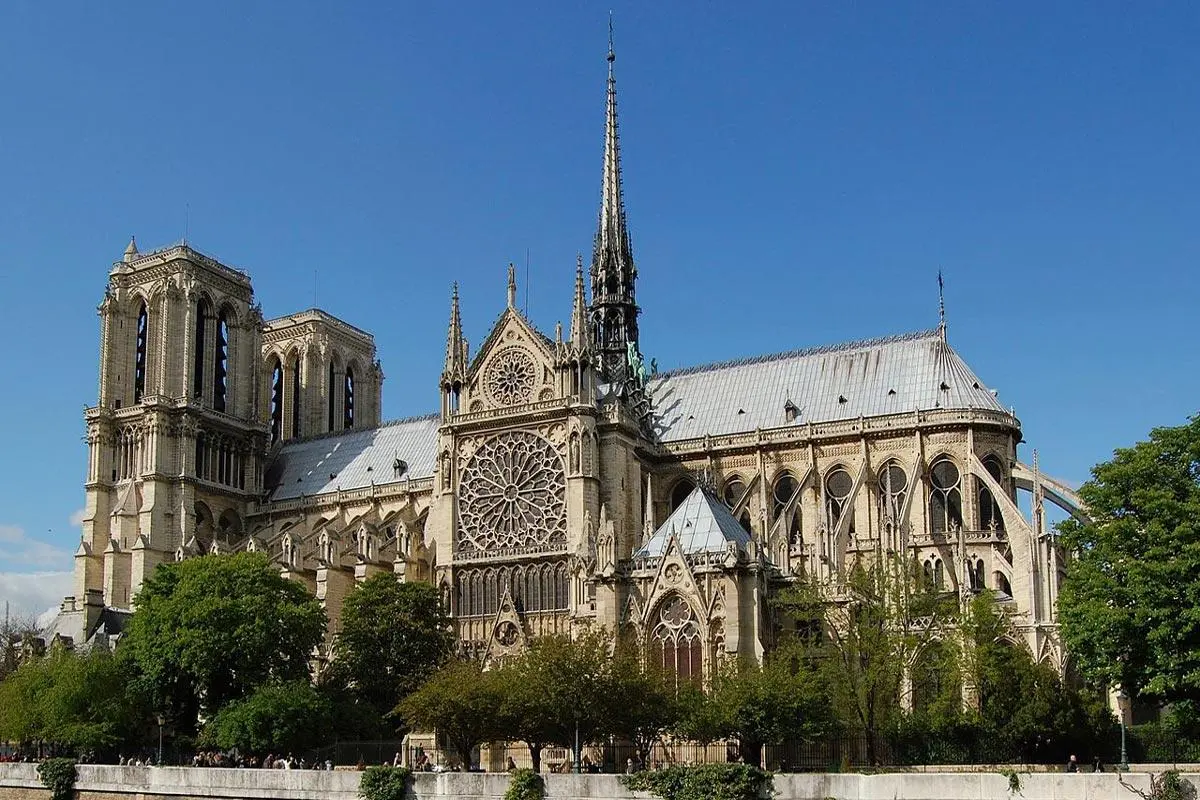
- Mémorial des Martyrs de la Déportation, at the eastern tip of the Île de la Cité behind Notre-Dame. Inaugurated by de Gaulle in 1962, it is a sunken crypt lined with 200,000 points of light, one for each deportee from France. Free, and a five-minute walk from the cathedral’s own wartime story.
- Mémorial de la Shoah, in the Marais: the Wall of Names lists the roughly 76,000 Jews deported from France.
- Jardin-mémorial des Enfants du Vel’ d’Hiv, quai de Grenelle, on the site of the demolished velodrome where more than 13,000 people were held after the round-up of July 16–17, 1942.
- Mont-Valérien, in Suresnes just west of Paris: the fortress where more than a thousand hostages and resistance fighters were shot, and the national memorial of Fighting France.
- Musée de l’Armée, Les Invalides: the WWII galleries, plus the Musée de l’Ordre de la Libération.
How to Plan a Day of It
The Left Bank gives you the densest concentration in the smallest area: start at the Musée de la Libération at Denfert-Rochereau, walk north through the Luxembourg Gardens to the École des Mines, down boulevard Saint-Michel to the Sorbonne, and finish at the Préfecture, Notre-Dame and the Deportation memorial. Three hours on foot, with the plaques as your breadcrumbs.
The Right Bank version runs from the Trocadéro (Musée de l’Homme) along the river to the Pont Alexandre III, the Concorde, the Tuileries and the Jeu de Paume, ending at the Ritz and the Meurice.
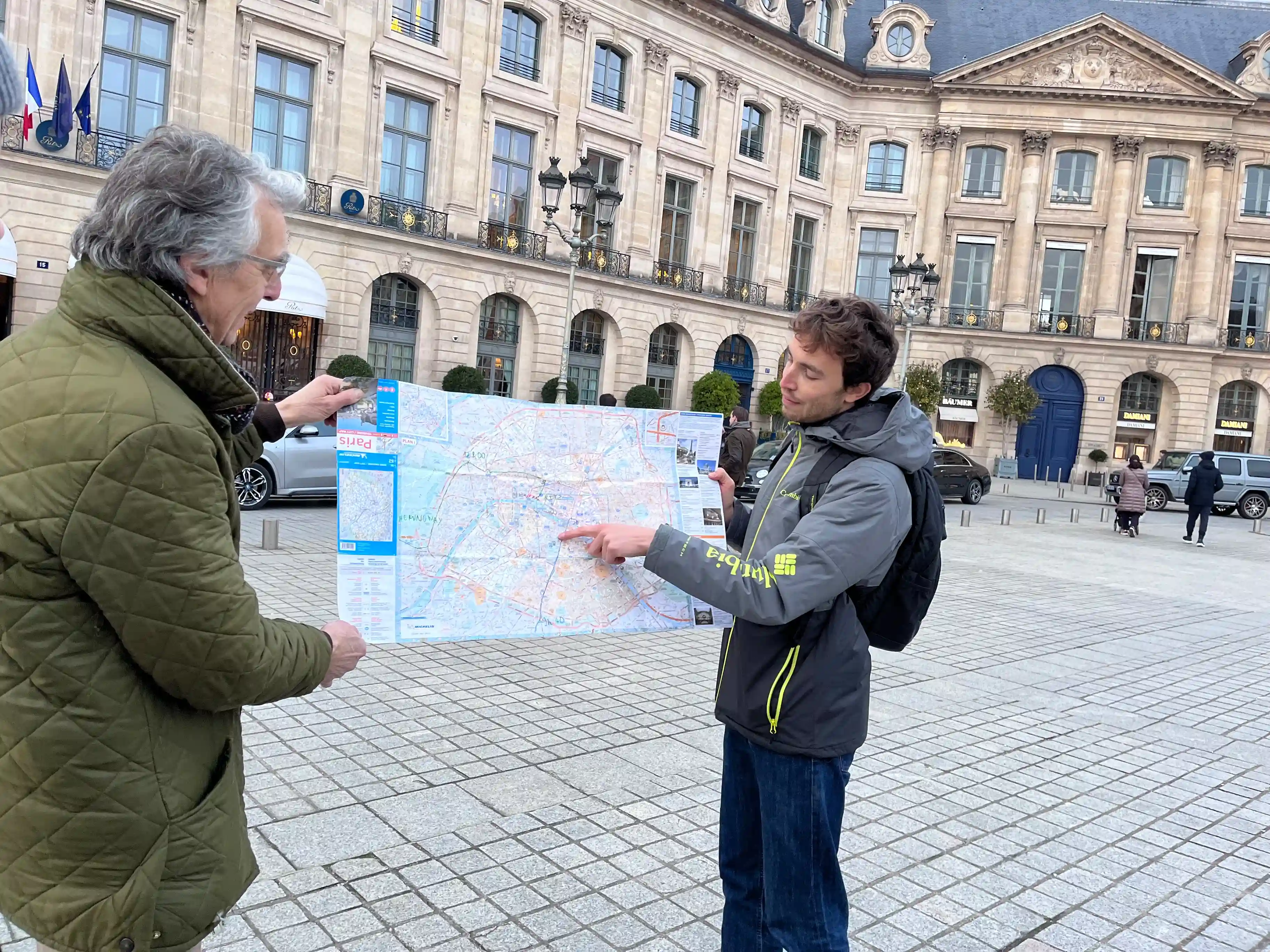
Or come with us. Our Left Bank WWII walking tour and Right Bank WWII walking tour follow exactly these routes, with the archive photographs, the names behind the plaques, and the stories that no plaque is long enough to tell.
Every wall in Paris has a story — Book a WWII tour in Paris.
Photo: the plaque and bullet-scarred façade of the École des Mines, boulevard Saint-Michel. Personal photograph, Paris History Tours.