When Resistance Was Unthinkable
In the summer of 1940, France was a nation in shock. The German army had defeated it in six weeks. Marshal Pétain had asked for an armistice and been given full powers. Paris was occupied, German soldiers paraded on the Champs-Élysées, and swastika flags hung from public buildings.
For most French people, resistance seemed not only dangerous but pointless. The war looked over, and Germany had won.
A handful of people refused to accept it. Among the first were a few scholars working in the Palais de Chaillot, on the Trocadéro hill, and one of them kept a journal.
Agnès Humbert
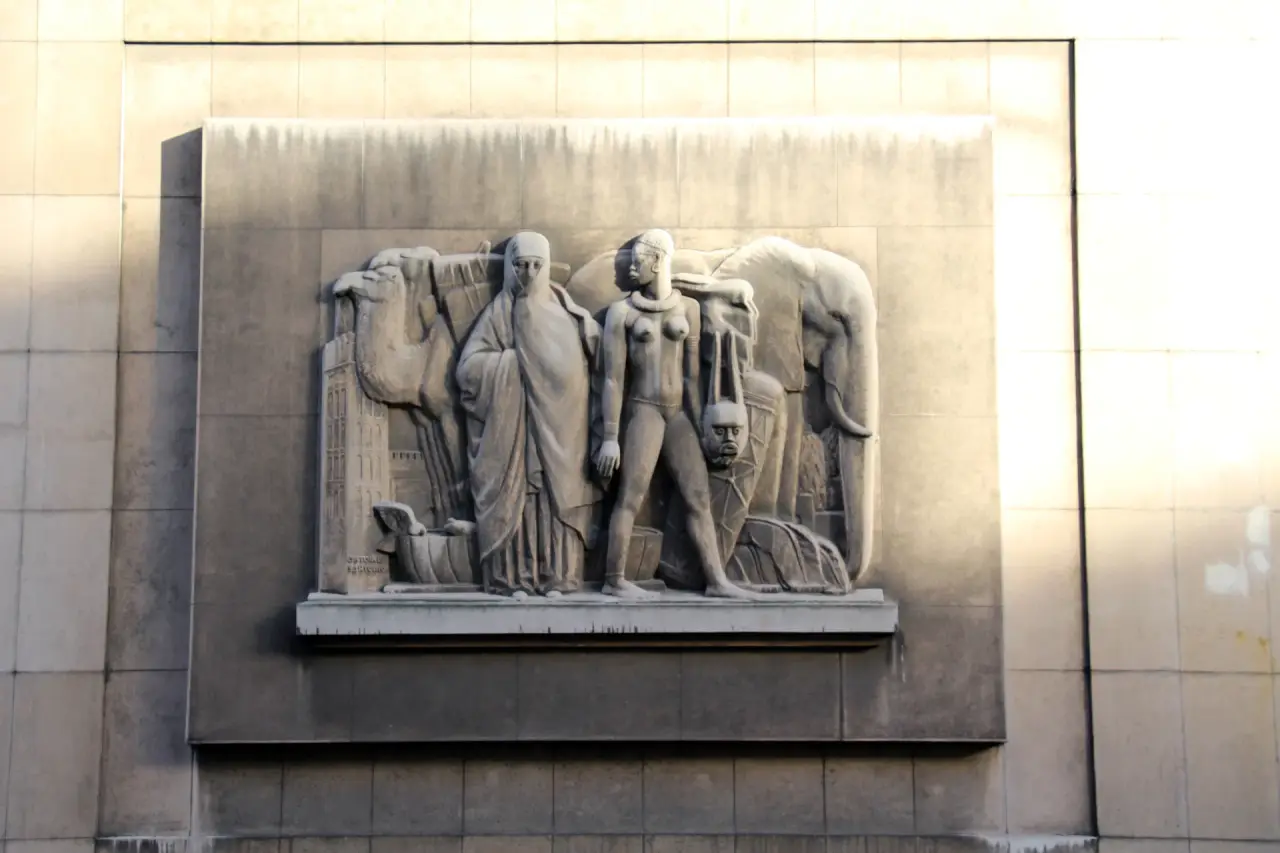
Agnès Humbert was born in Dieppe in 1894. An art historian, she worked in 1940 at the Musée des Arts et Traditions populaires, the young museum of French folk culture run by Georges-Henri Rivière in the Palais de Chaillot. Its neighbour in the same building was the Musée de l’Homme, the museum of anthropology directed by Paul Rivet, an outspoken opponent of Vichy who would leave France for Colombia early in 1941.
Humbert was 45 when Paris fell. In her journal, she describes the shock of defeat, then a growing, almost physical need to do something.
The Birth of a Network
Over the summer and autumn of 1940, a group took shape around three people from the Musée de l’Homme: the linguist Boris Vildé, born in Russia and a naturalised Frenchman; the anthropologist Anatole Lewitsky, also of Russian origin; and the museum’s librarian, Yvonne Oddon. Agnès Humbert joined them from the start, as did the writer and art historian Jean Cassou.
They had no weapons and no training. What they had were typewriters, a duplicating machine, contacts among scholars, lawyers and students, and the conviction that someone had to say out loud that the defeat was not the end.
What They Did
Their best-known act was a newspaper. On December 15, 1940, the first issue of Résistance appeared, typed and duplicated in secret and passed from hand to hand. Its first editorial called on readers to resist. Five issues came out between December 1940 and March 1941, carrying news the official press did not print and appeals not to accept the Occupation.
Around the paper, the group did what the first resisters could: collecting information that might be useful to London, helping escaped prisoners and others hunted by the Germans, and recruiting through networks of friends and colleagues in Paris and beyond.
Humbert typed, carried and distributed. Her journal records the fear of being followed, the meetings in apartments and museum offices, and the strange elation of doing something forbidden.
Betrayal and Arrest
The group was too open to last. A man named Albert Gaveau, who had won the members’ trust, was in fact working for the Germans.
The arrests began in early 1941. Anatole Lewitsky and Yvonne Oddon were taken on February 10, Boris Vildé on March 26. Agnès Humbert was arrested in April 1941. Nineteen people in all were arrested in what became known as the affaire du musée de l’Homme.
The Trial and Mont-Valérien
Their trial opened before a German military court in Paris on January 8, 1942. In February, it handed down ten death sentences.
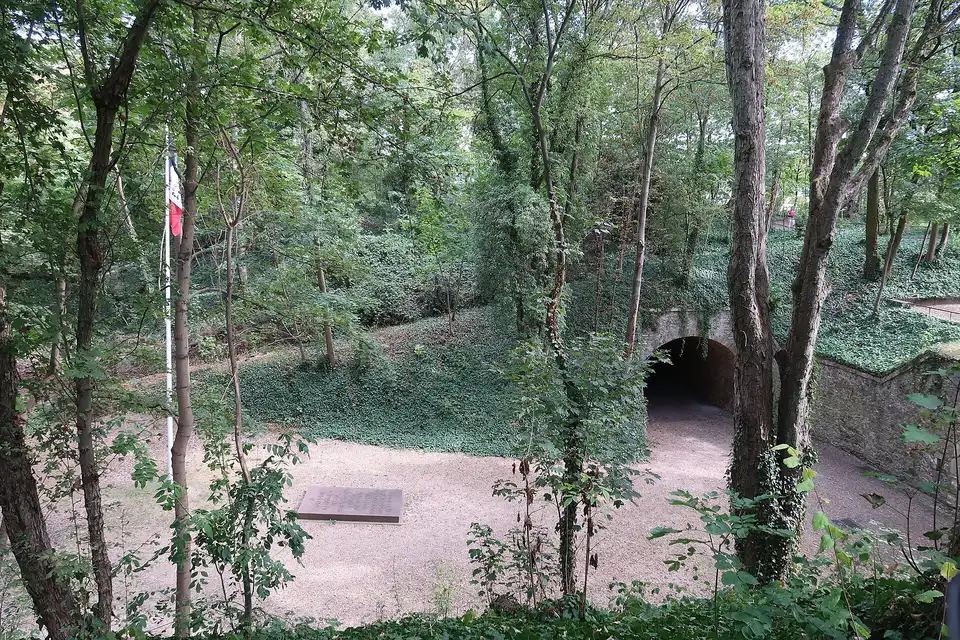
The three women among the condemned, Yvonne Oddon, Alice Simonnet and Sylvette Leleu, had their sentences commuted to deportation. The seven men, Boris Vildé, Anatole Lewitsky, Léon-Maurice Nordmann, Georges Ithier, Jules Andrieu, René Sénéchal and Pierre Walter, were shot at Mont-Valérien, the fortress west of Paris, on February 23, 1942.
Humbert’s Ordeal
Agnès Humbert was held in the Cherche-Midi military prison, then at Fresnes. The court sentenced her to five years of hard labour. She was deported to Germany, to the prison of Anrath and then to a rayon factory in Krefeld, where women prisoners worked in toxic conditions.
She held on for more than three years. In June 1945, she was freed by the U.S. Third Army. Rather than go straight home, she stayed for a time in Germany and took part in the denazification of the area around Wanfried, alongside the Americans.
The Journal
Back in France, she published her journal in 1946 as Notre guerre (Our War). It is one of the very few accounts of the first months of the Resistance written as they happened, before anyone knew how the story would end. It reached English readers in 2008, translated by Barbara Mellor as Résistance: Memoirs of Occupied France.
She received the Croix de guerre in 1949 and died in 1963.
A Legacy of Courage
The Musée de l’Homme group matters for when it acted. In the summer and autumn of 1940, organised resistance barely existed, and General de Gaulle’s appeal of June 18 had been heard by very few. These scholars chose to act anyway, with almost nothing, and most of them paid for it. The title of their newspaper, Résistance, would become the name of the whole movement.
The men who were shot are remembered at the Mont-Valérien memorial, the national memorial to the Resistance in Suresnes.
Discover This Story on Our Tour
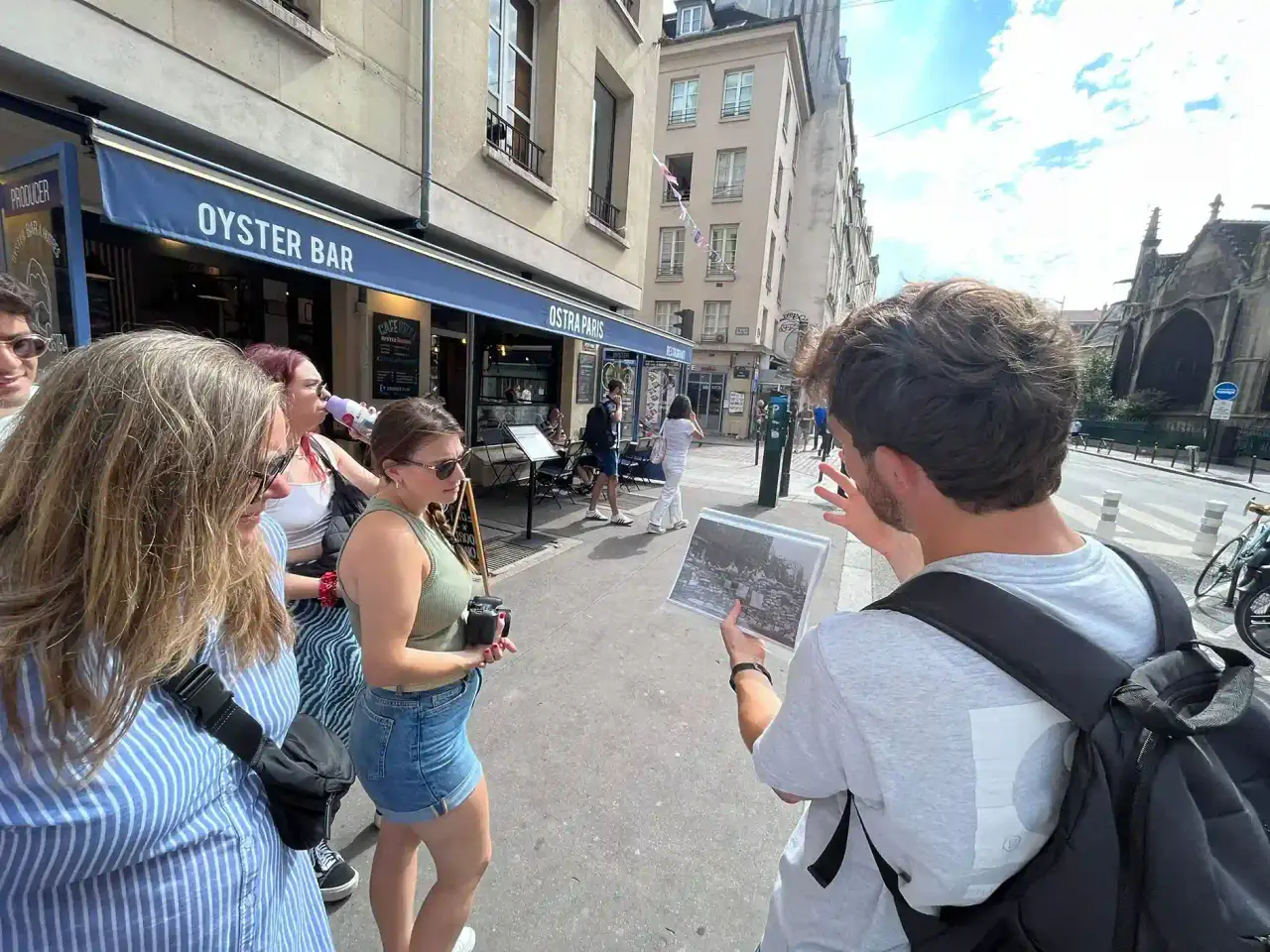
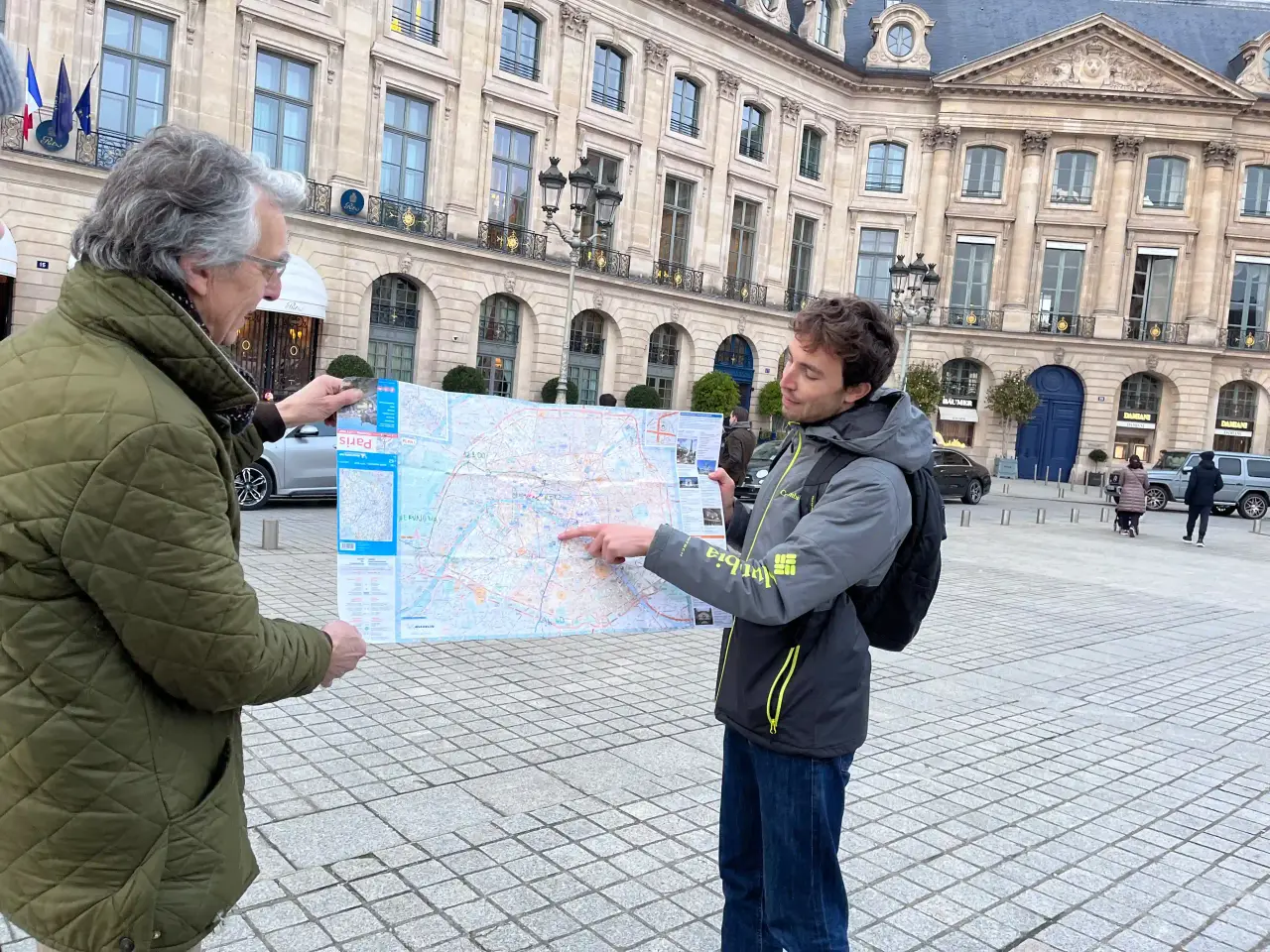
The story of Agnès Humbert and the Musée de l’Homme network is told on our Left Bank WWII tour, at the stop devoted to the Resistance near the Sorbonne, in the university quarter where so many of these scholars studied, taught and met. For the months that came before, read our timeline of Paris under the Occupation.
Questions
- Who was Agnès Humbert?
- A French art historian, born in Dieppe in 1894. In 1940 she worked at the Musée des Arts et Traditions populaires, in the Palais de Chaillot, and co-founded with colleagues from the neighbouring Musée de l'Homme one of the first resistance groups in occupied Paris. Arrested in 1941 and deported, she survived and published her journal in 1946.
- What was the Musée de l'Homme network?
- A group formed in the summer of 1940 around the linguist Boris Vildé, the anthropologist Anatole Lewitsky and the librarian Yvonne Oddon, who worked at the Musée de l'Homme. It published the clandestine paper Résistance and was dismantled in 1941; seven of its members were shot at Mont-Valérien in February 1942.
- Where can you see the traces of this story today?
- The Musée de l'Homme is still in the Palais de Chaillot, at the Trocadéro. The men of the network who were shot are remembered at the Mont-Valérien memorial in Suresnes, west of Paris, where the clearing of the executions can be visited.
- Which tour tells this story?
- The Left Bank WWII tour, at its stop devoted to the Resistance, near the Sorbonne.
Sources
- Agnès Humbert, Notre guerre : souvenirs de résistance, 1946.
- Agnès Humbert, translated by Barbara Mellor, Résistance: Memoirs of Occupied France, 2008.
- Julien Blanc, Au commencement de la Résistance : du côté du musée de l'Homme, 1940-1941, 2010.