Paris 1940–1944

The scars of WWII in Paris: the map

Paris was not destroyed in 1944, so its war wounds are easy to miss. Bullet holes, plaques to those who fell, the rooms where the Resistance met: here they are, street by street, photographed on the spot.

Every point

The places, one by one

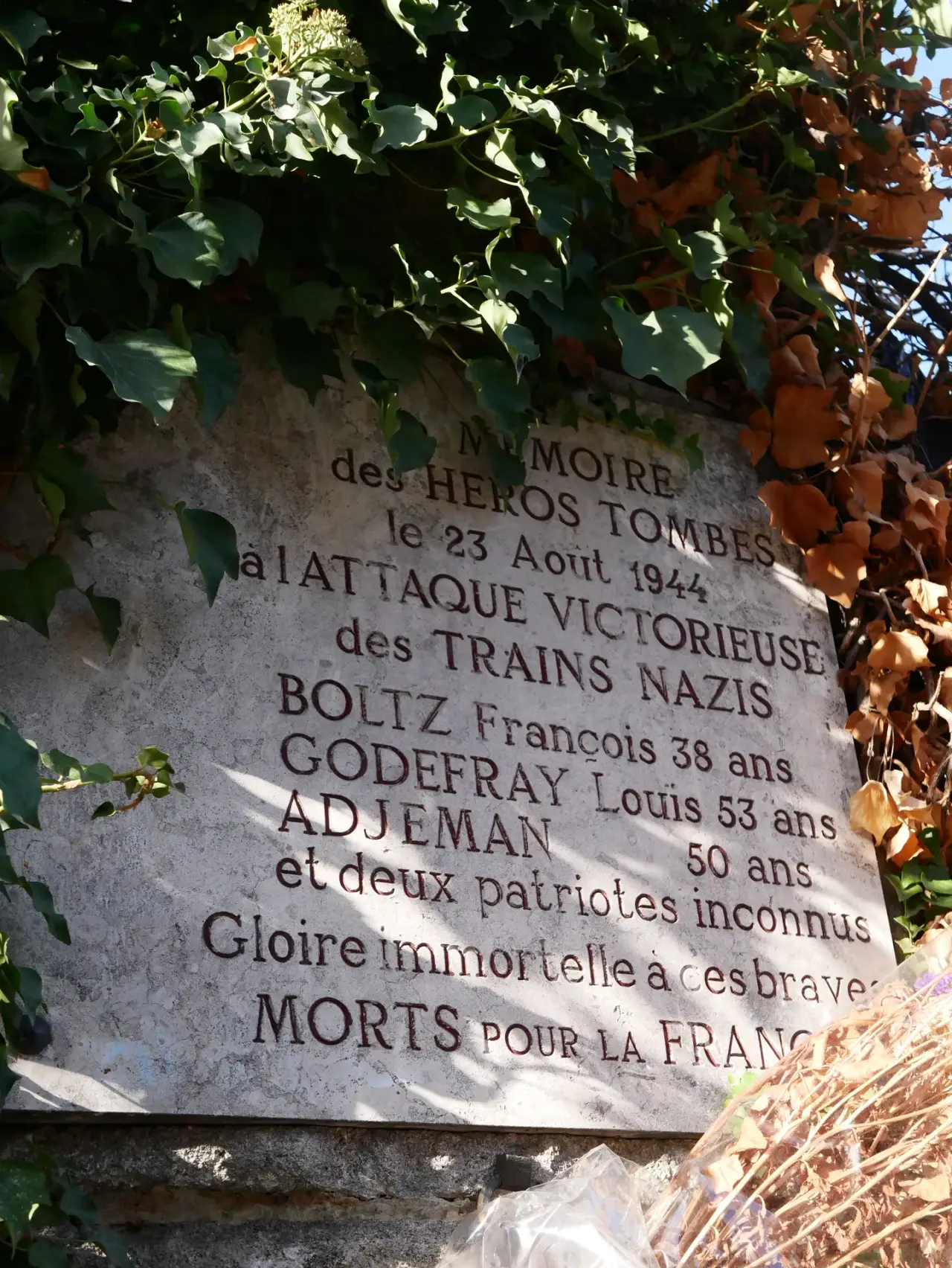
  1. Plaque to the men who fell on 23 August 1944 attacking the Nazi trains, under ivy

    Where they fell · 23 August 1944 · 20th arr.

    Petite Ceinture bridge, rue de Ménilmontant

    79 rue de Ménilmontant, 75020 Paris

    On 23 August 1944, a German train trapped in the Petite Ceinture tunnel surrendered to the FFI holding both its exits. Léon Adjeman and two unknown men fell here; François Boltz and Louis Godefroy at the other end, rue de la Mare.
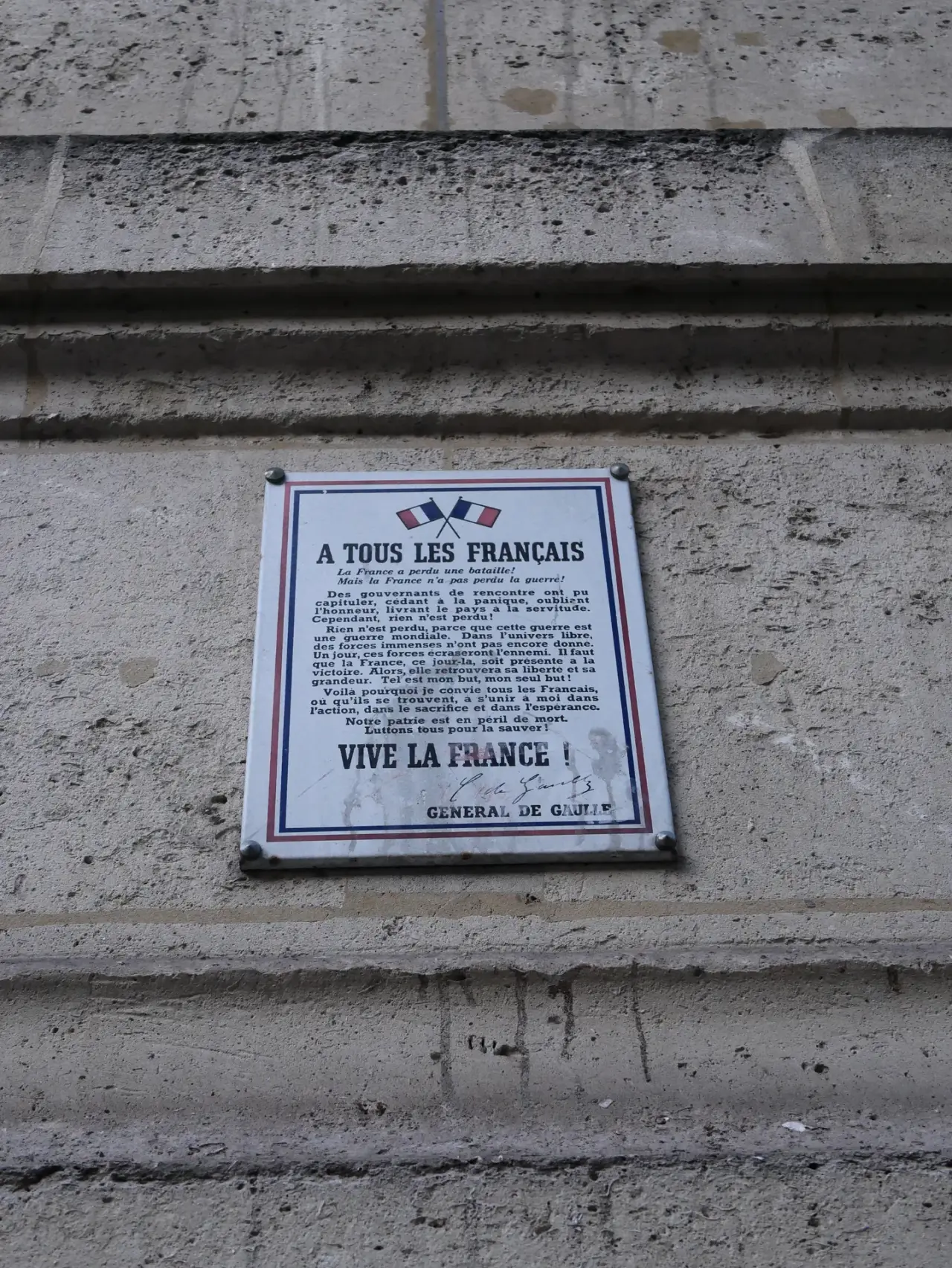
  2. Enamel plaque “À tous les Français” signed Général de Gaulle

    Places of memory · 3 August 1940 · 11th arr.

    “À tous les Français”, Lycée Voltaire

    101 avenue de la République, 75011 Paris

    A plaque reproducing de Gaulle’s poster “France has lost a battle! But France has not lost the war!”, first put up on the walls of London on 3 August 1940, not on 18 June as is often thought.

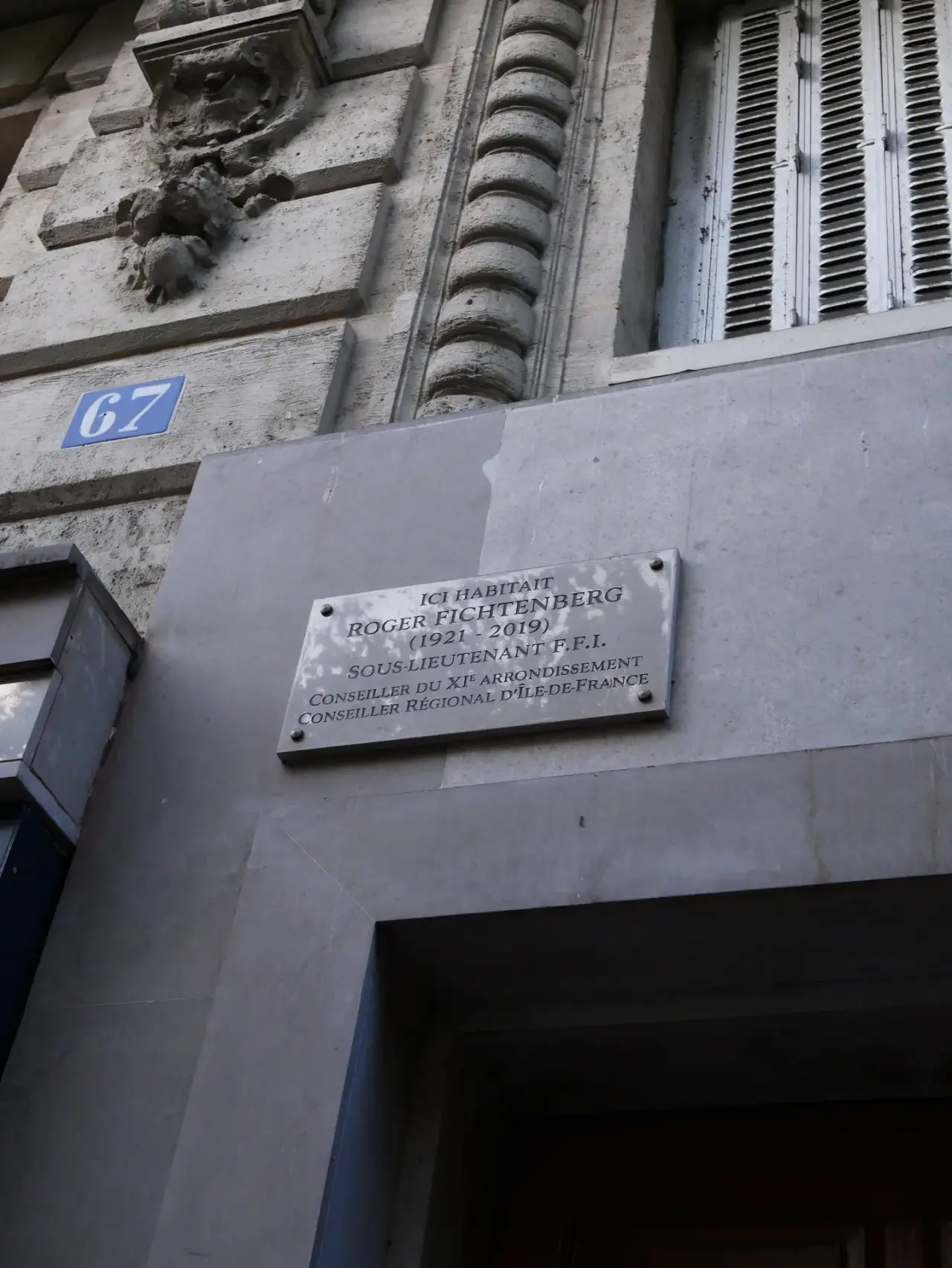
  3. Plaque “Ici habitait Roger Fichtenberg (1921–2019), sous-lieutenant F.F.I.”

    Places of memory · August 1942 – August 1944 · 11th arr.

    Roger Fichtenberg

    67 avenue de la République, 75011 Paris

    A former pupil of the Lycée Voltaire, this young Parisian Jew joined the Jewish Scouts’ resistance: under a false name he got internees out of Rivesaltes and young people into Switzerland and Spain. On 19 August 1944 he seized the Agen prefecture.

    Private building: seen from the street

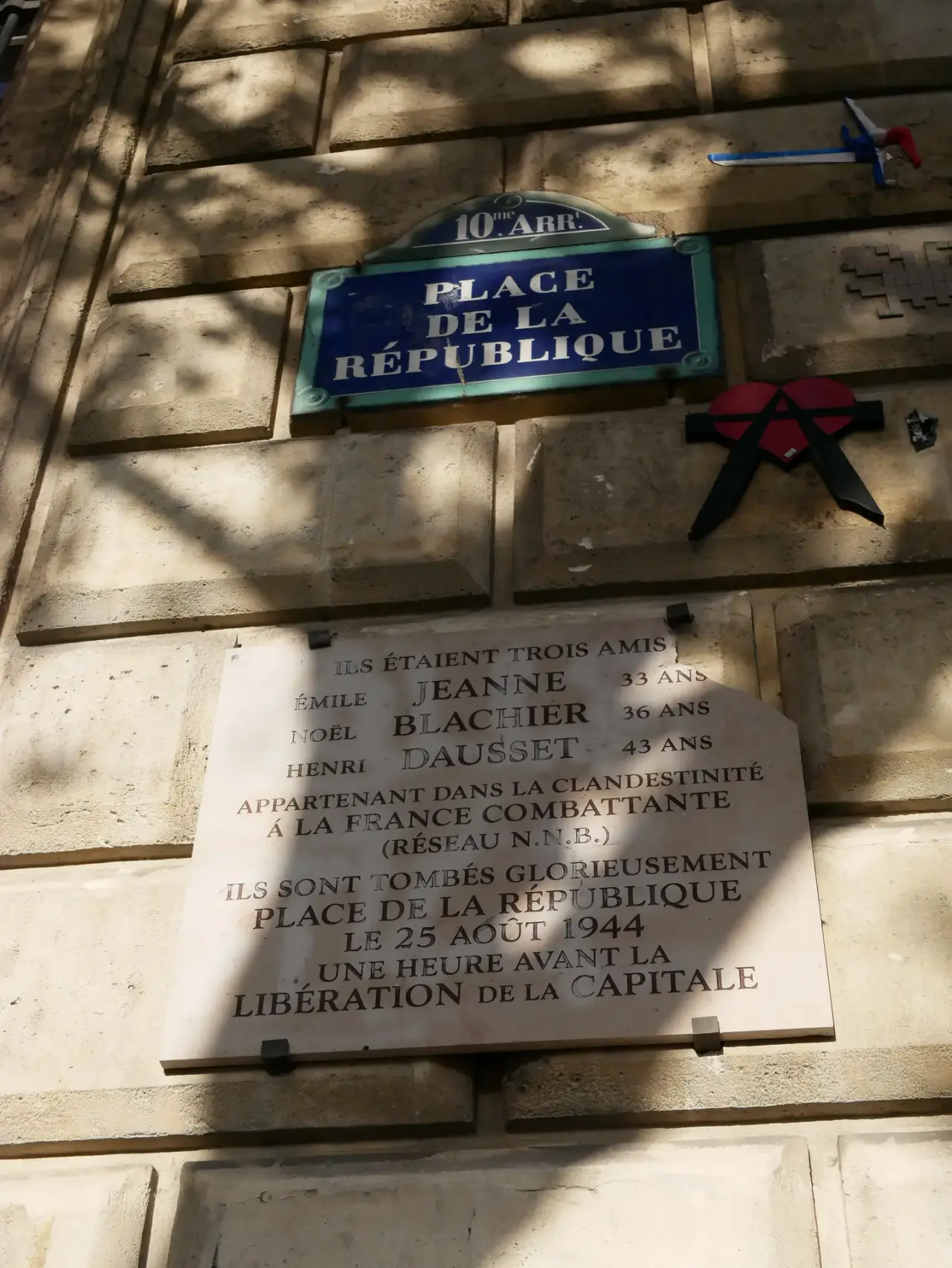
  4. The three friends’ plaque under the “Place de la République” street sign

    Where they fell · 25 August 1944 · 10th arr.

    “They were three friends”, place de la République

    Place de la République, angle rue du Faubourg-du-Temple, 75010 Paris

    Émile Jeanne, Noël Blachier and Henri Dausset fell on 25 August 1944 during the siege of the Prince-Eugène barracks, the last German strongpoint here, which held out until 7.25 pm. Jeanne and Dausset were cut down by a burst of fire on the central island.

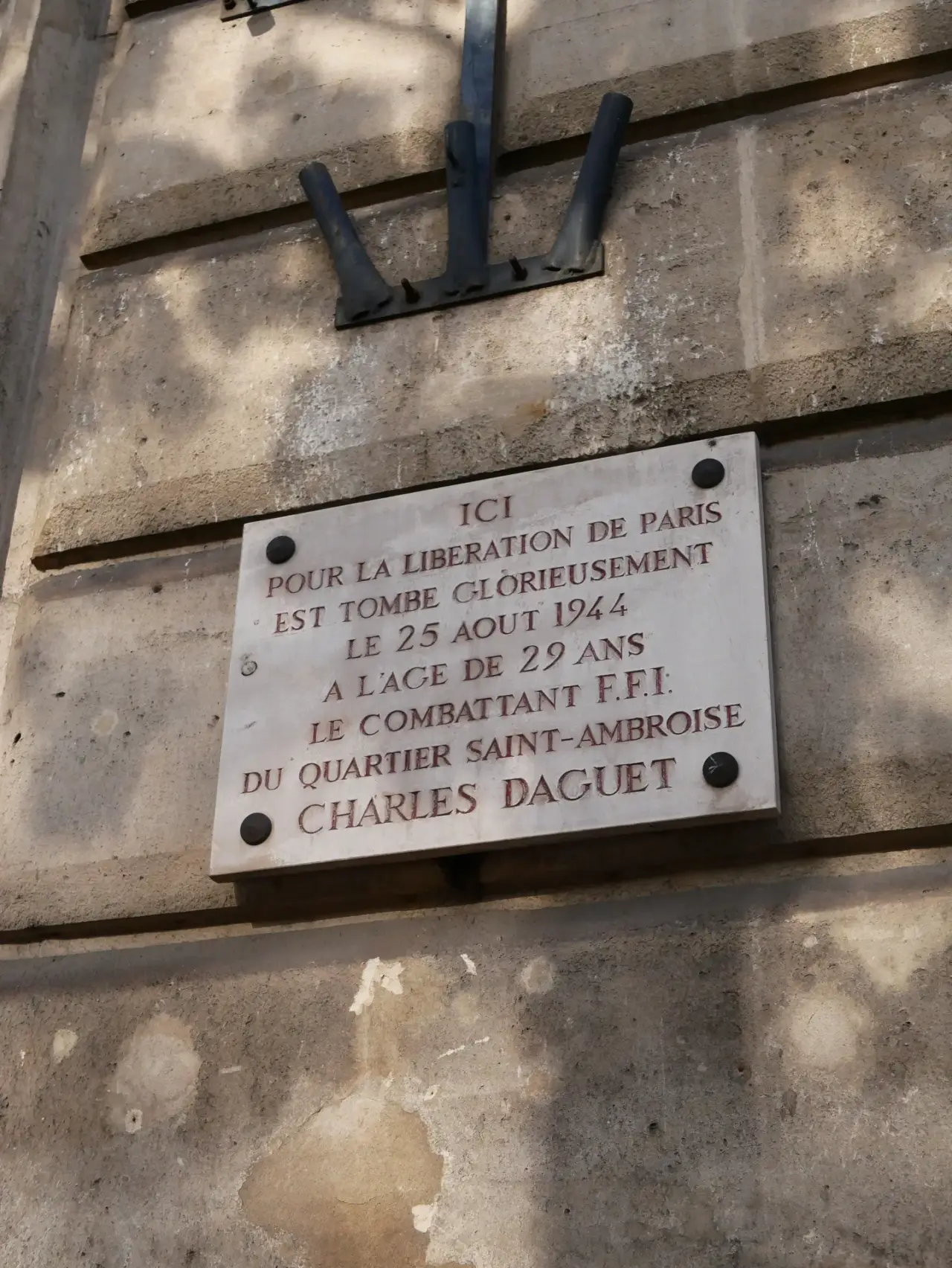
  5. Plaque “Ici pour la libération de Paris est tombé glorieusement… Charles Daguet”

    Where they fell · 25 August 1944 · 10th arr.

    Charles Daguet

    12 place de la République, 75010 Paris

    A barman from the Saint-Ambroise quarter, Charles Daguet was hit on 25 August 1944 in front of the main gate of the Prince-Eugène barracks and died that day at the Hôpital Saint-Louis. He was 28, not 29 as the plaque says; his father had fallen at Verdun.

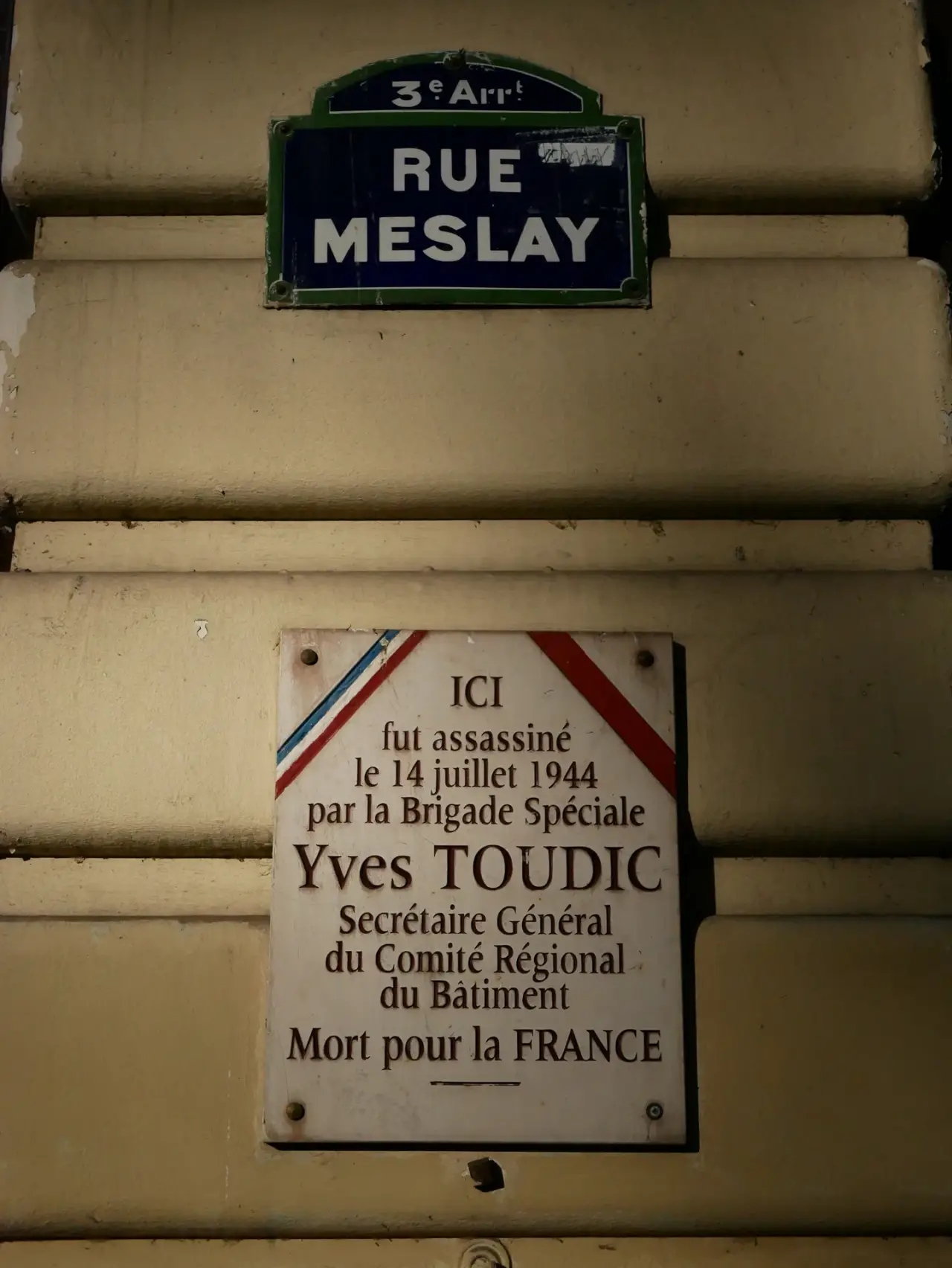
  6. Plaque “Ici fut assassiné le 14 juillet 1944 par la Brigade spéciale Yves Toudic”, rue Meslay

    Where they fell · 14 July 1944 · 3rd arr.

    Yves Toudic, rue Meslay

    2 rue Meslay, 75003 Paris

    A building-trade unionist and Communist activist, Yves Toudic had organised the banned demonstration of 14 July 1944 on place de la République. He was shot that day at the corner of rue du Temple by officers of the Préfecture’s Brigades spéciales.

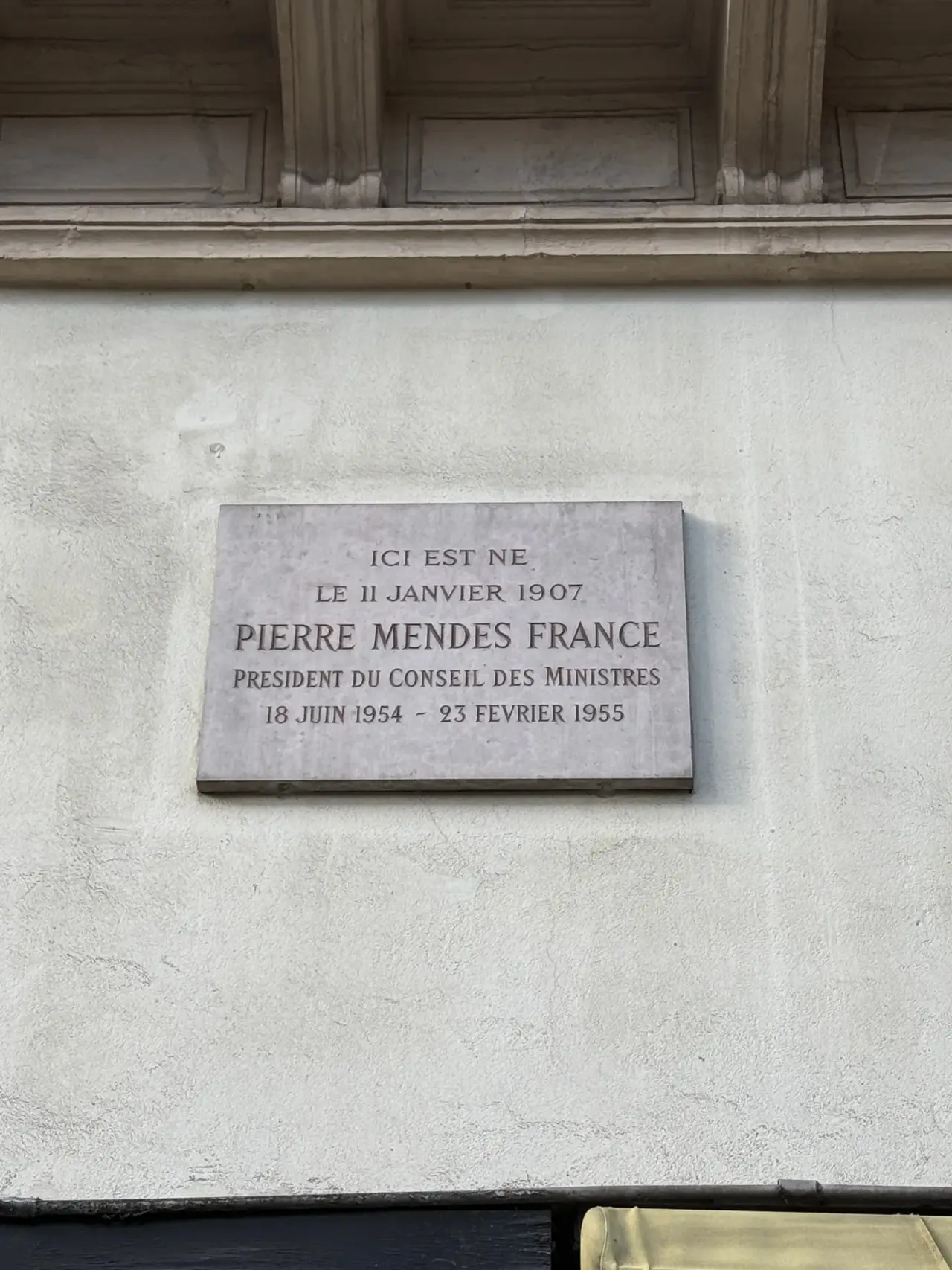
  7. Plaque “Ici est né le 11 janvier 1907 Pierre Mendès France”

    Places of memory · June 1940 – April 1945 · 3rd arr.

    Pierre Mendès France’s birthplace

    71-73 rue de Turbigo, 75003 Paris

    Born here in 1907. He sailed on the Massilia in June 1940 to fight on, was convicted by Vichy, escaped in June 1941, reached London and flew bombing raids with the Free French Lorraine group before joining the provisional government.

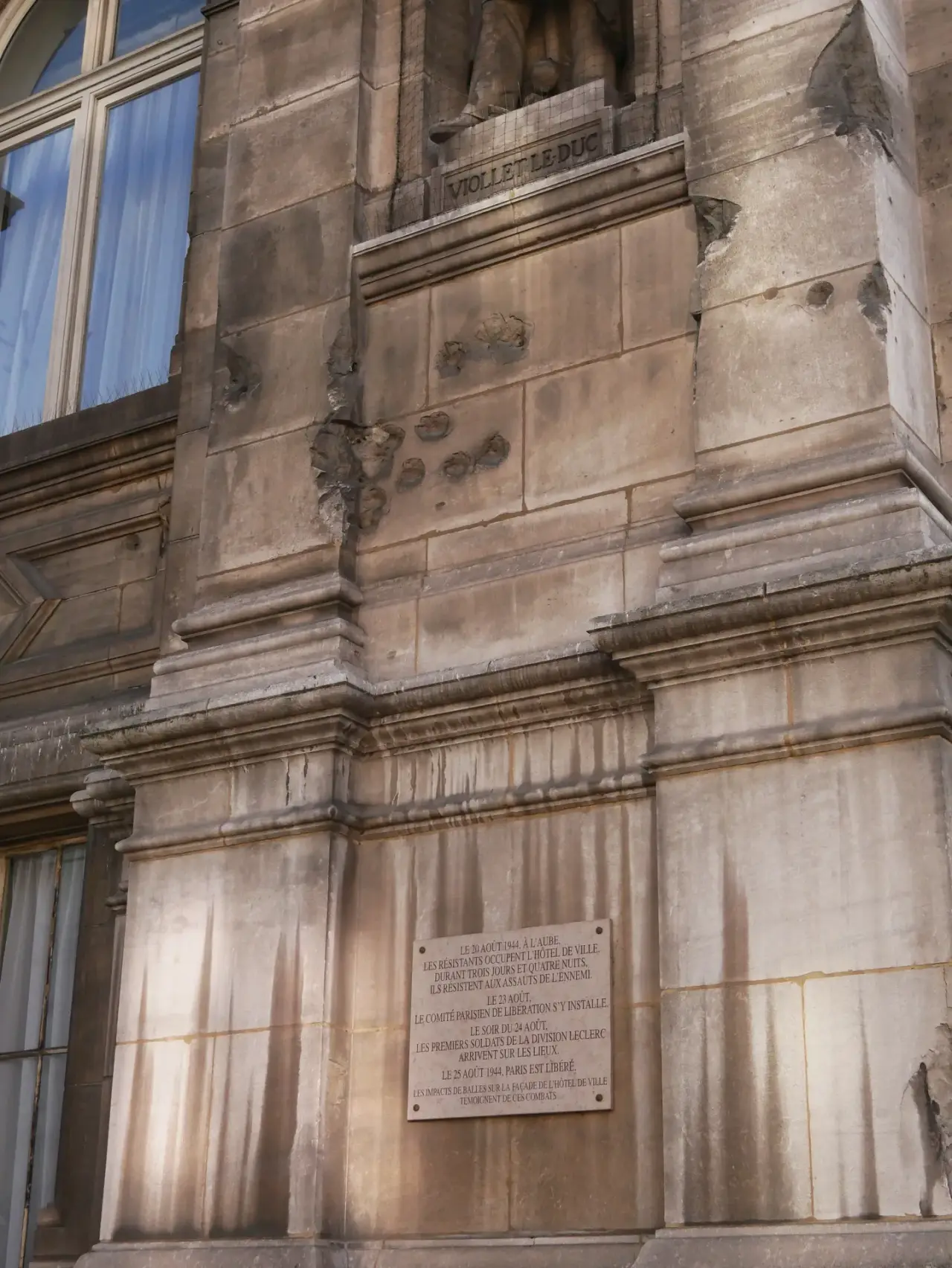
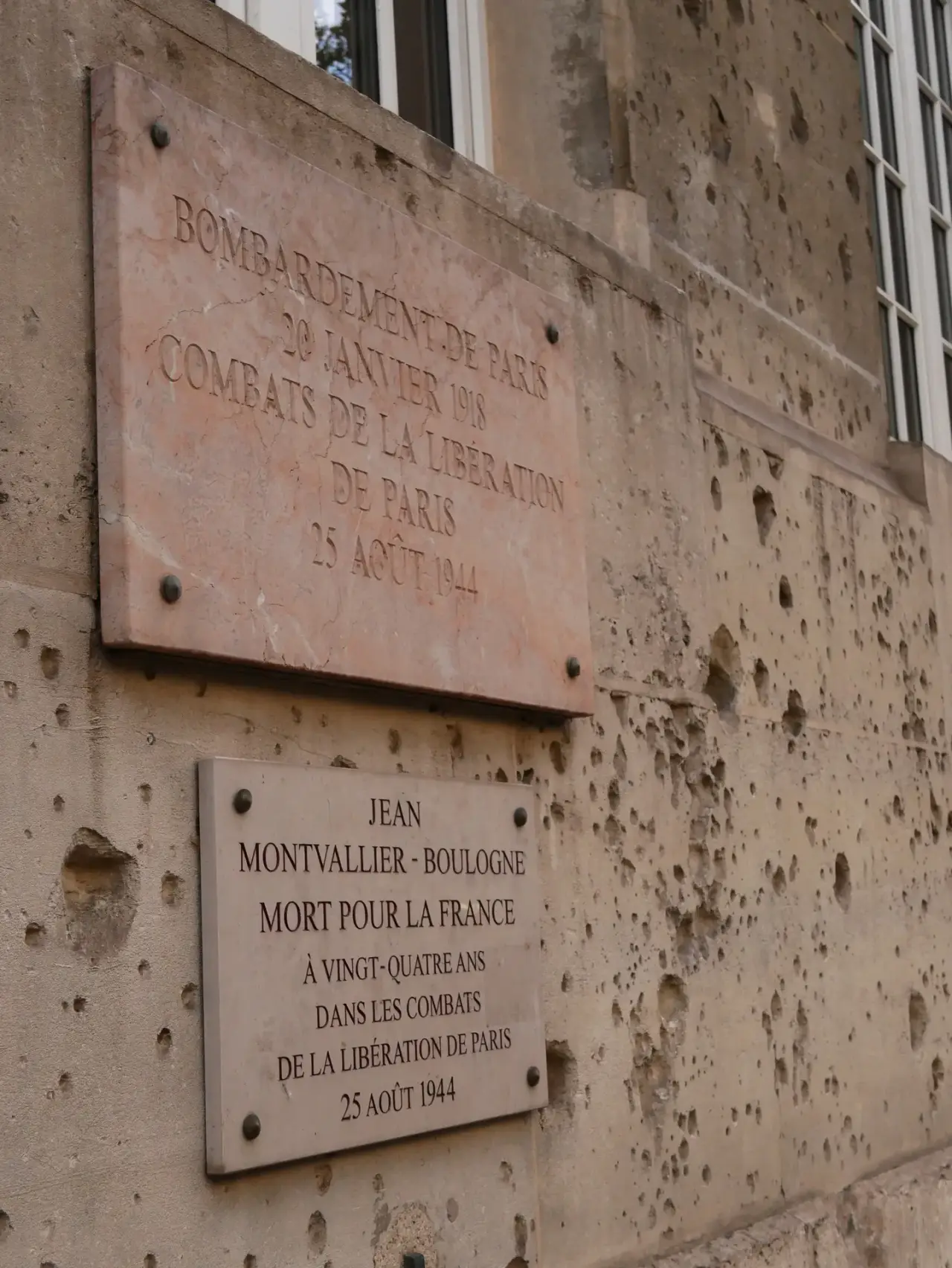
  8. Bullet marks and plaque on the façade of the Hôtel de Ville

    Bullet holes · 20–25 August 1944 · 4th arr.

    Hôtel de Ville

    Rue de Rivoli, face à la rue du Temple, 75004 Paris

    Seized by the Resistance at dawn on 20 August 1944, the Hôtel de Ville held out until Captain Dronne’s column, La Nueve, arrived on the 24th at 9.22 pm. A 2016 plaque says it: the bullet marks on the façade bear witness to the fighting.

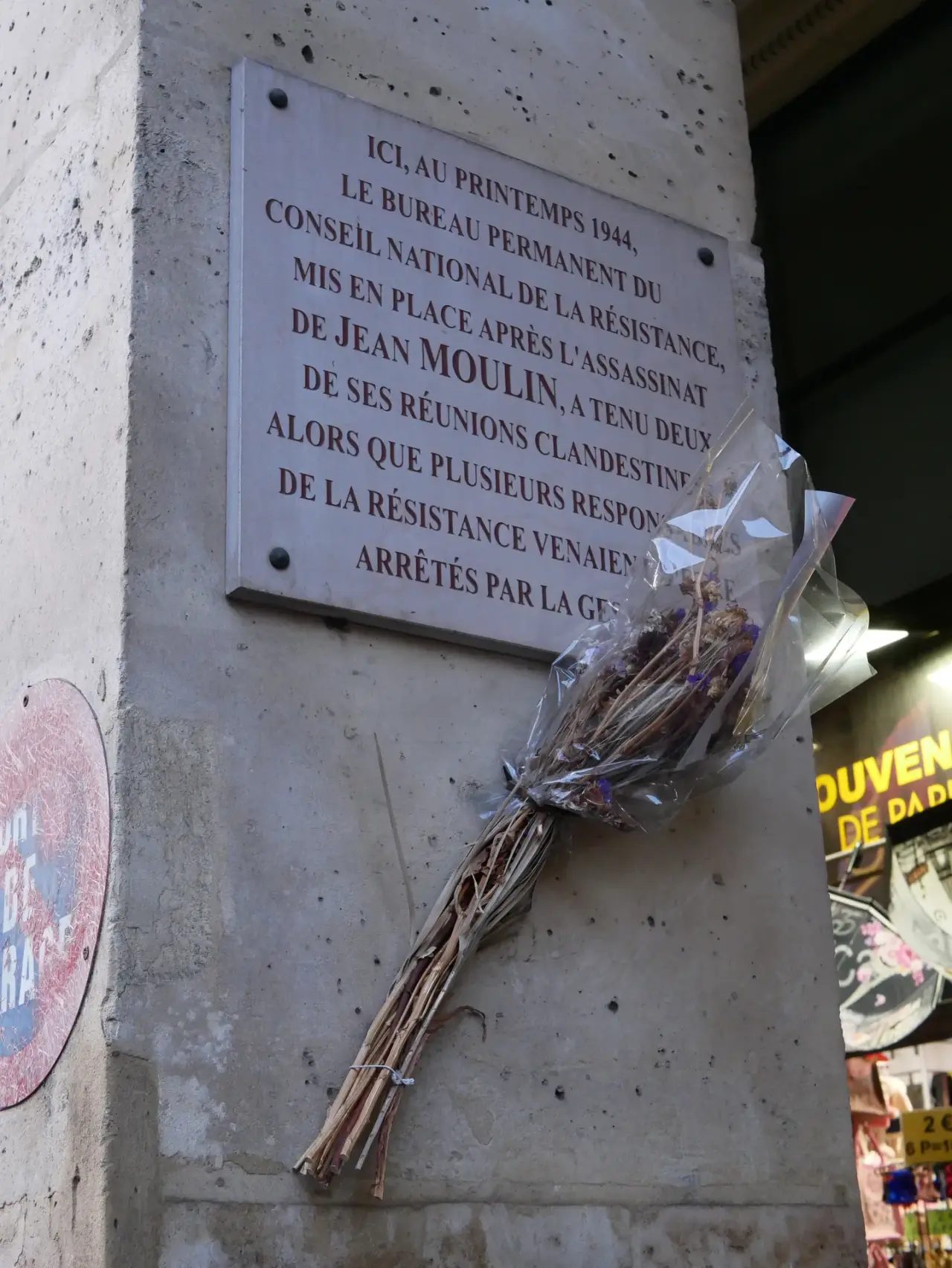
  9. CNR plaque on a pillar of the rue de Rivoli arcades, with flowers

    Places of memory · March 1944 – May 1944 · 1st arr.

    Secret CNR meetings, rue de Rivoli

    182 rue de Rivoli, 75001 Paris

    In spring 1944, the bureau of the National Council of the Resistance (Bidault, Saillant, Villon, Copeau, Blocq-Mascart) held two of its secret meetings here, just as several Resistance leaders had been arrested.

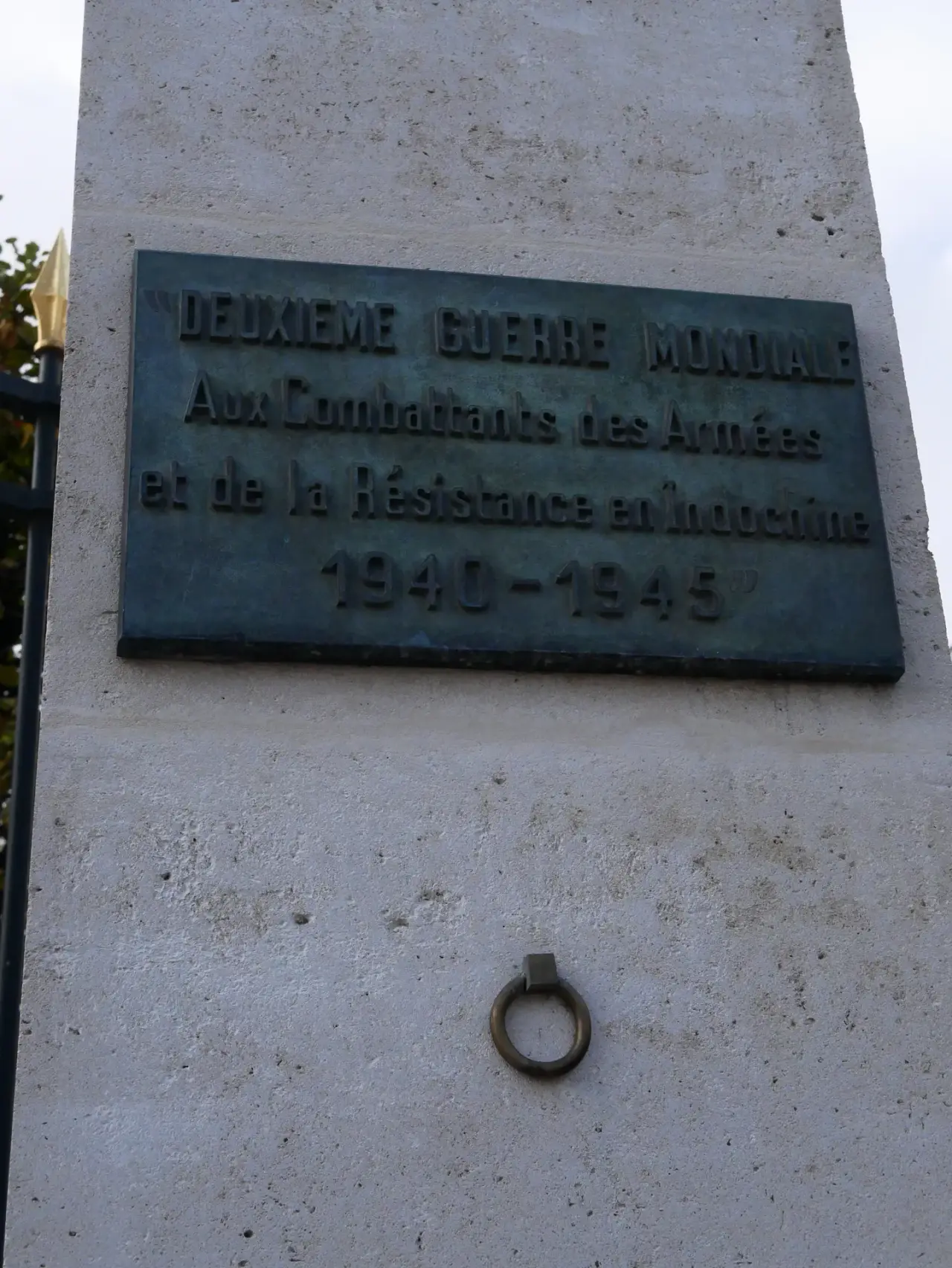
  10. Bronze plaque “To the soldiers and Resistance fighters in Indochina 1940–1945”

    Places of memory · 1940 – 1945 · 1st arr.

    Indochina memorial, Tuileries

    Avenue du Général-Lemonnier, angle rue de Rivoli, 75001 Paris

    A plaque to those who fought in Indochina in 1940–1945. The avenue is named after General Lemonnier, beheaded by the Japanese at Lang Son for refusing to surrender during their coup of 9 March 1945.

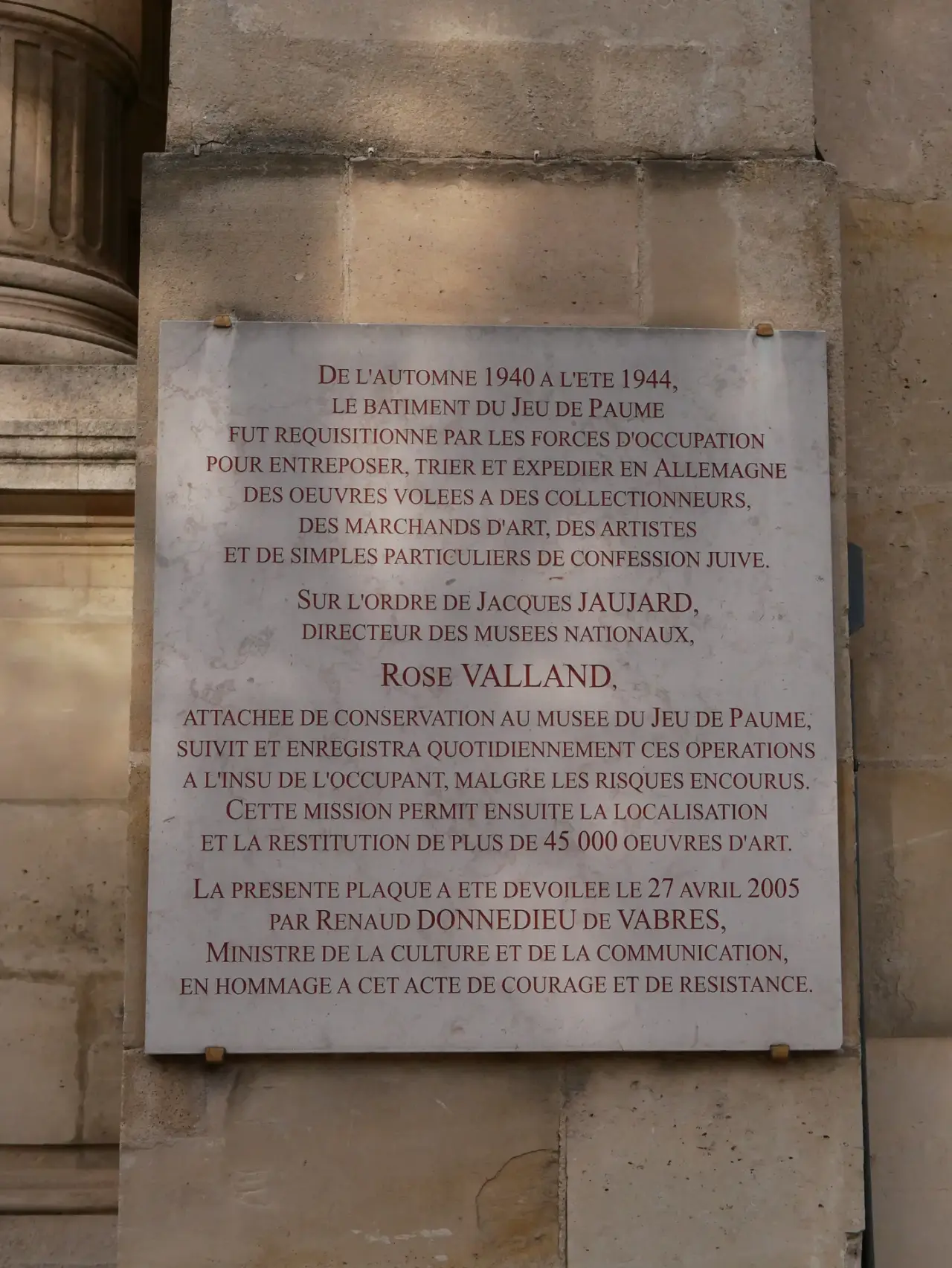
  11. Plaque honouring Rose Valland on the Jeu de Paume

    Places of memory · October 1940 – August 1944 · 1st arr.

    Rose Valland, Jeu de Paume

    Jardin des Tuileries, place de la Concorde, 75001 Paris

    From October 1940 to summer 1944, the Nazis stored here the artworks looted from Jewish collectors before shipping them to Germany. Rose Valland secretly recorded everything, which after the war helped trace and return tens of thousands of works.

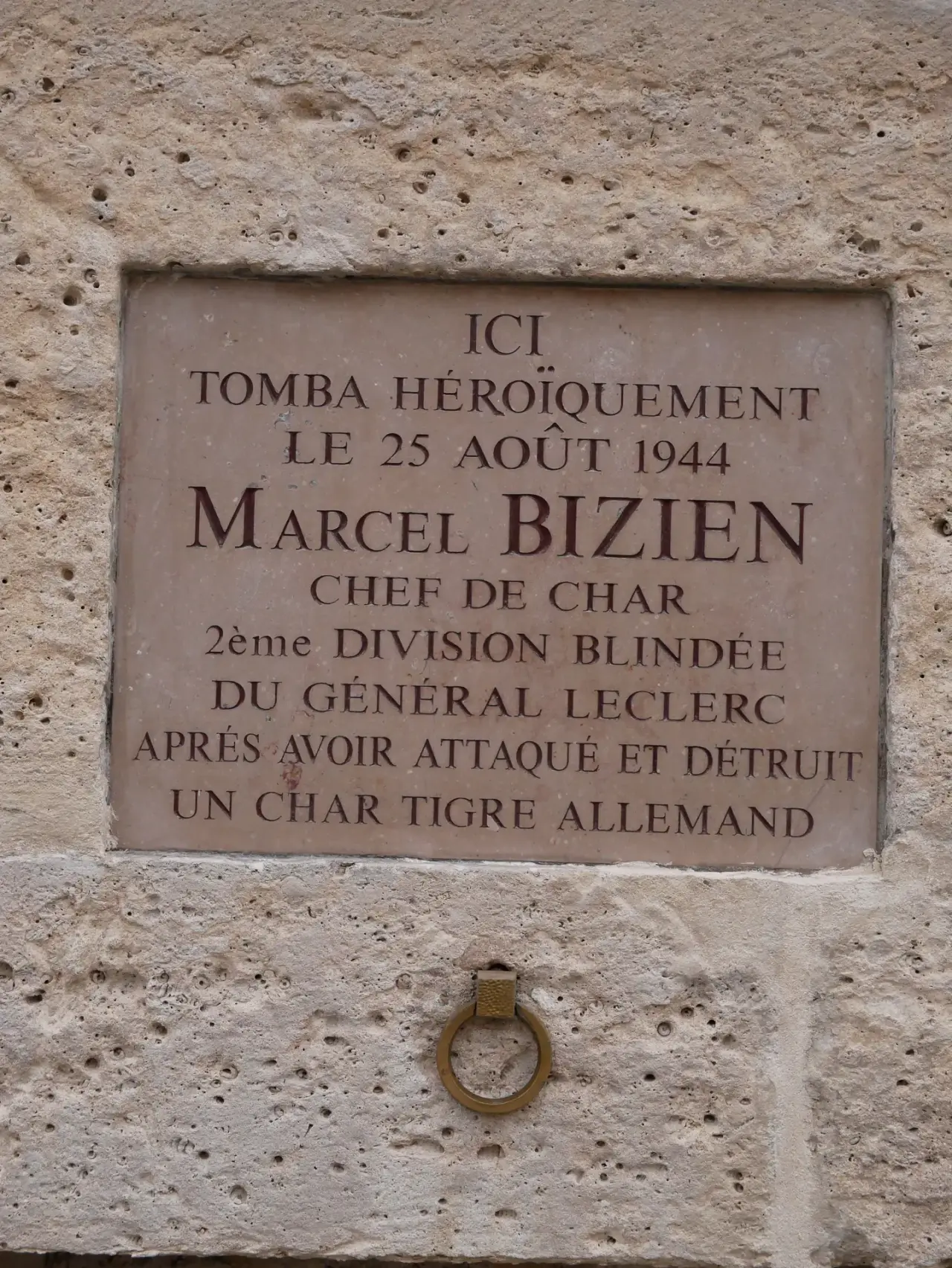
  12. Plaque “Ici tomba héroïquement le 25 août 1944 Marcel Bizien, chef de char”

    Where they fell · 25 August 1944 · 1st arr.

    The ten plaques of the Concorde

    Mur des Tuileries, angle rue de Rivoli et place de la Concorde, 75001 Paris

    Ten plaques to those killed on the square on 25 August 1944: tank men, Chad Regiment soldiers, an FFI, a student, a fireman, a nurse, an 18-year-old first-aider. Marcel Bizien rammed a German tank here, a Panther rather than a Tiger, before a sniper killed him.

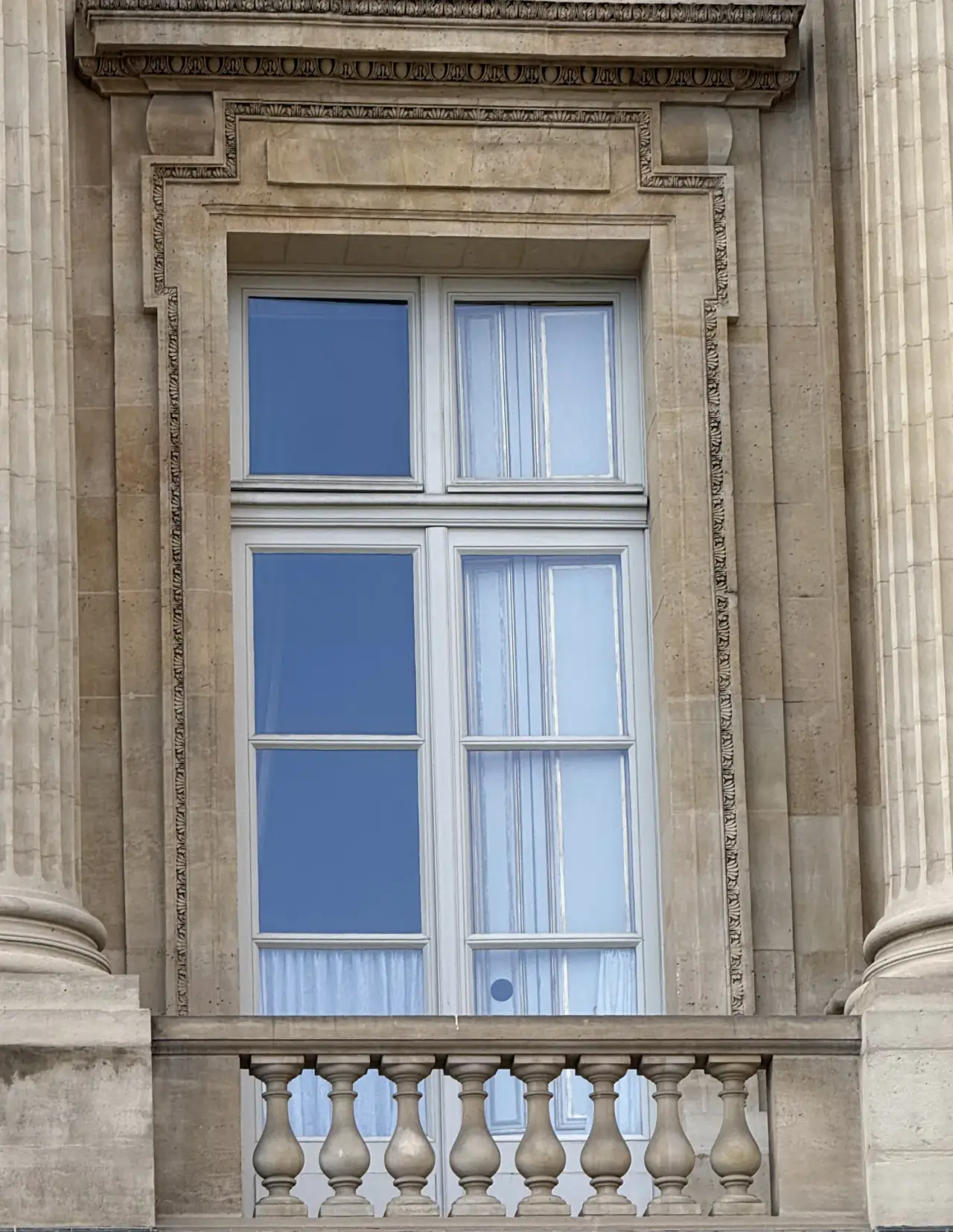
  13. Corner window of the Hôtel de la Marine: a small round hole in the lower right pane

    Places of memory · 1940 – 25 August 1944 · 8th arr.

    Hôtel de la Marine, the peephole

    2 place de la Concorde, angle rue Saint-Florentin, 75008 Paris

    Kriegsmarine headquarters from 1940 to 1944. In the inner shutter of a corner window, a peephole made by the occupiers looks straight down rue de Rivoli: a lookout, perhaps a firing post. The last Germans inside surrendered on 25 August 1944 at 4.30 pm.

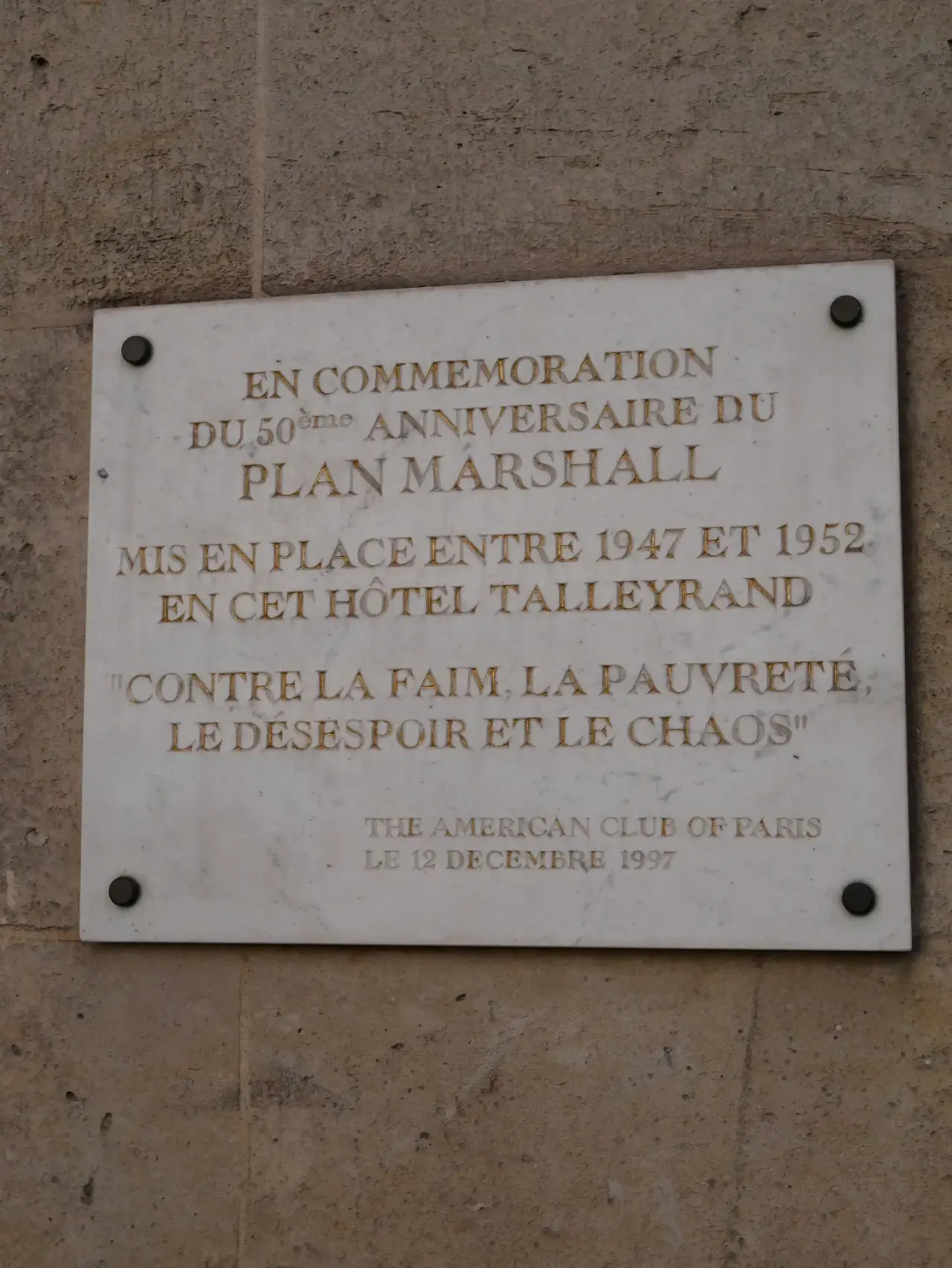
  14. Plaque commemorating the 50th anniversary of the Marshall Plan at the Hôtel Talleyrand

    Places of memory · 1948 – 1952 · 1st arr.

    Hôtel de Talleyrand, the Marshall Plan

    258 rue de Rivoli, 75001 Paris

    After the war, the Marshall Plan was run from here: from 1948 the Hôtel de Talleyrand housed its European headquarters, led by Averell Harriman. Passed in Washington in April 1948, the plan paid for Europe’s reconstruction.

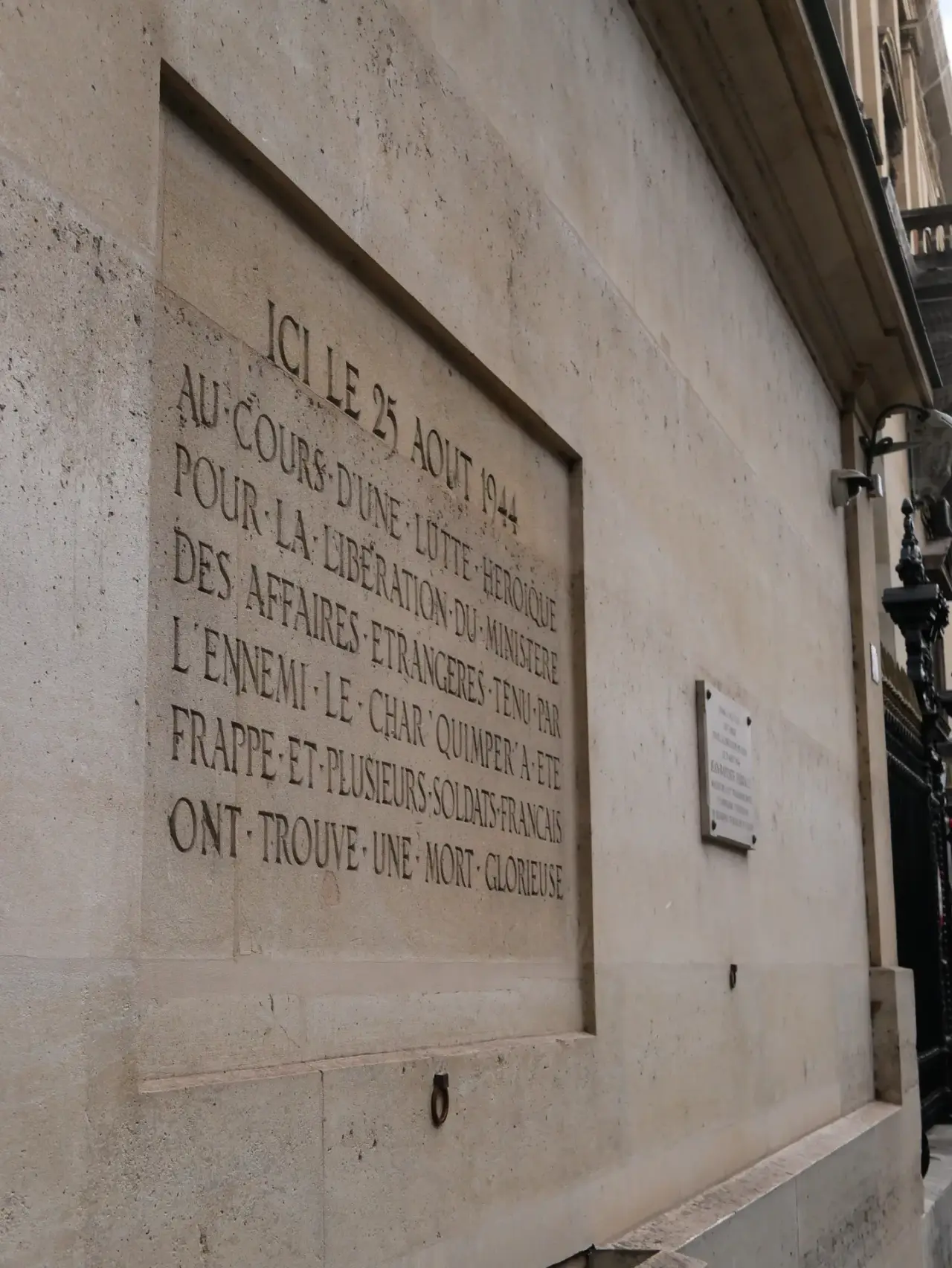
  15. Carved inscription “Ici le 25 août 1944… le char Quimper a été frappé”

    Bullet holes · 25 August 1944 · 7th arr.

    Quai d’Orsay, the tank Quimper

    1 rue Robert-Esnault-Pelterie, 75007 Paris

    On 25 August 1944 German troops held the Foreign Ministry. The 12e Cuirassiers’ Sherman “Quimper” was destroyed here and several soldiers killed; the boundary wall still bears the marks. The garrison only surrendered at 6.30 pm.

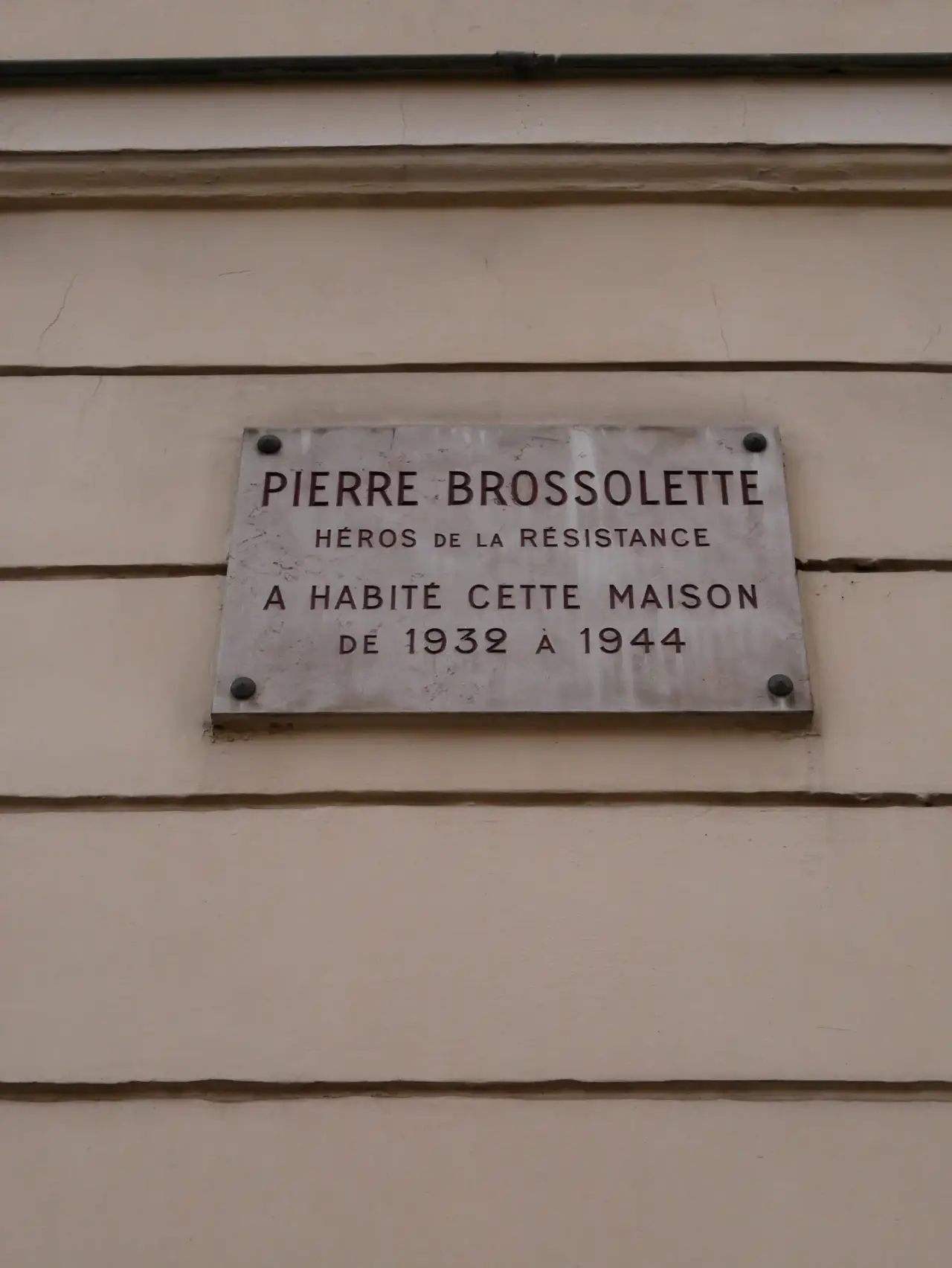
  16. Plaque “Pierre Brossolette, hero of the Resistance, lived in this house from 1932 to 1944”

    Places of memory · 1932 – 1944 · 7th arr.

    Pierre Brossolette

    123 rue de Grenelle, 75007 Paris

    Brossolette lived here from 1932 to 1944. A Free French mission leader arrested in Brittany in February 1944, he threw himself from a window of the SD headquarters, 84 avenue Foch, on 22 March rather than talk. He has lain in the Panthéon since 2015.

    Private building: seen from the street

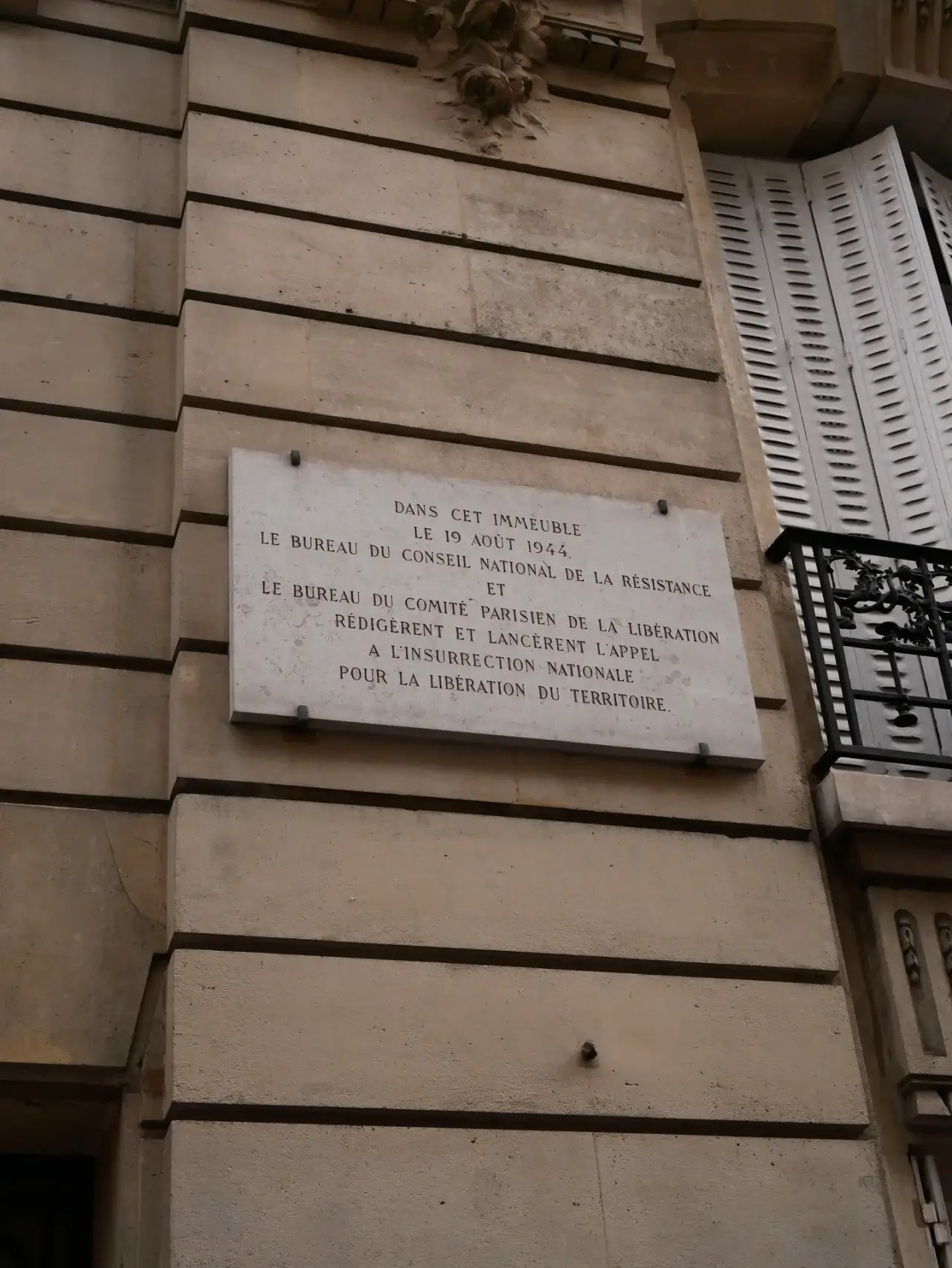
  17. Plaque “Dans cet immeuble le 19 août 1944… l’appel à l’insurrection nationale”

    Places of memory · 19 August 1944 · 7th arr.

    The call to insurrection, rue de Bellechasse

    41 rue de Bellechasse, 75007 Paris

    On 19 August 1944, in these Education Ministry offices, the bureaus of the CNR and of the Paris Liberation Committee decided to issue the call to insurrection, posted all over Paris that same day.

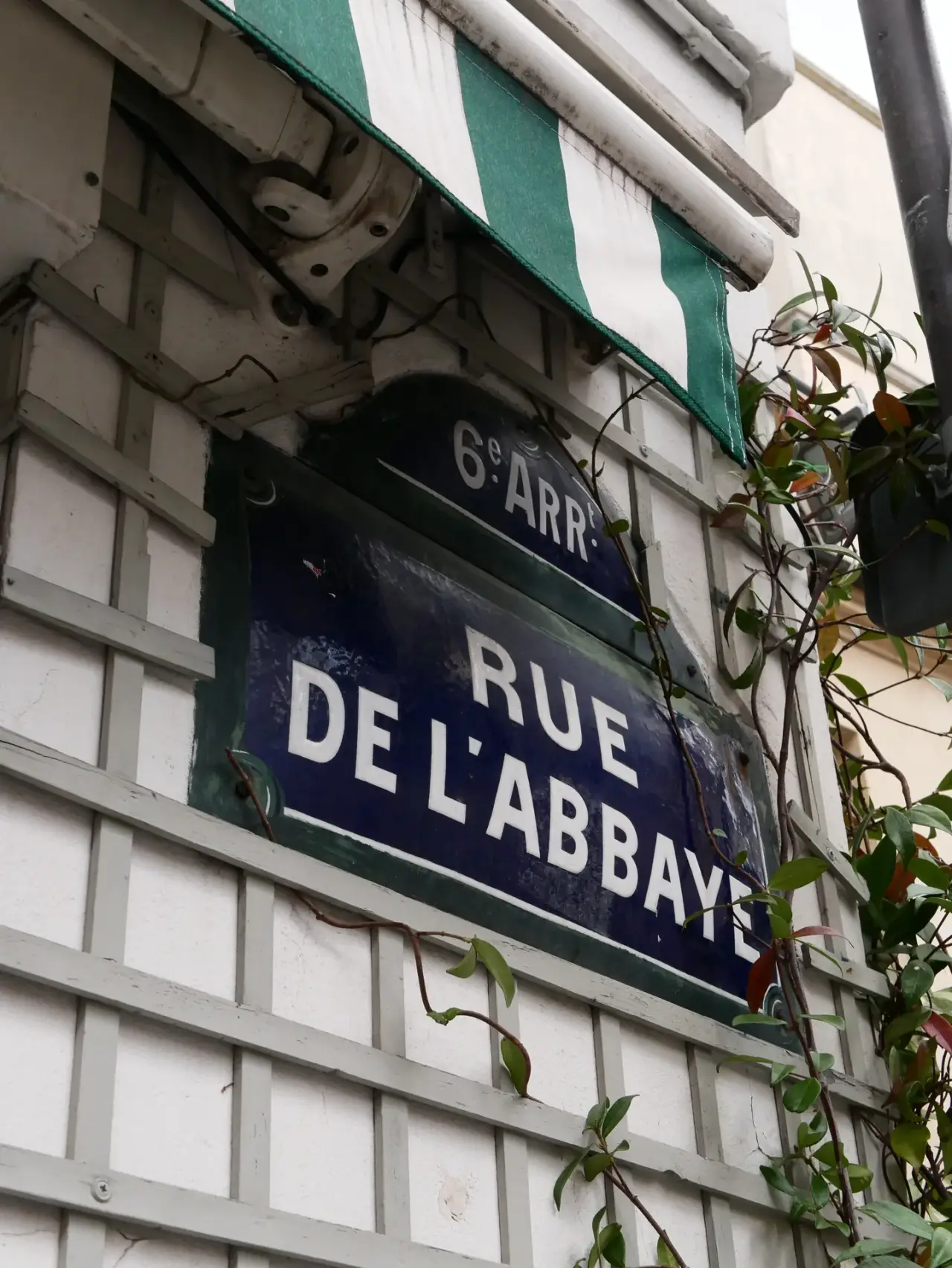
  18. Street sign “Rue de l’Abbaye, 6th arr.”

    Places of memory · September 1940 – December 1940 · 6th arr.

    Rue de l’Abbaye, at the Émile-Paul publishers

    14 rue de l’Abbaye, 75006 Paris

    In autumn 1940, Jean Cassou, Agnès Humbert, Claude Aveline and Marcel Abraham met every week at the Émile-Paul publishing house, under cover of a literary society, the “Friends of Alain-Fournier”. Their group joined the Musée de l’Homme network.

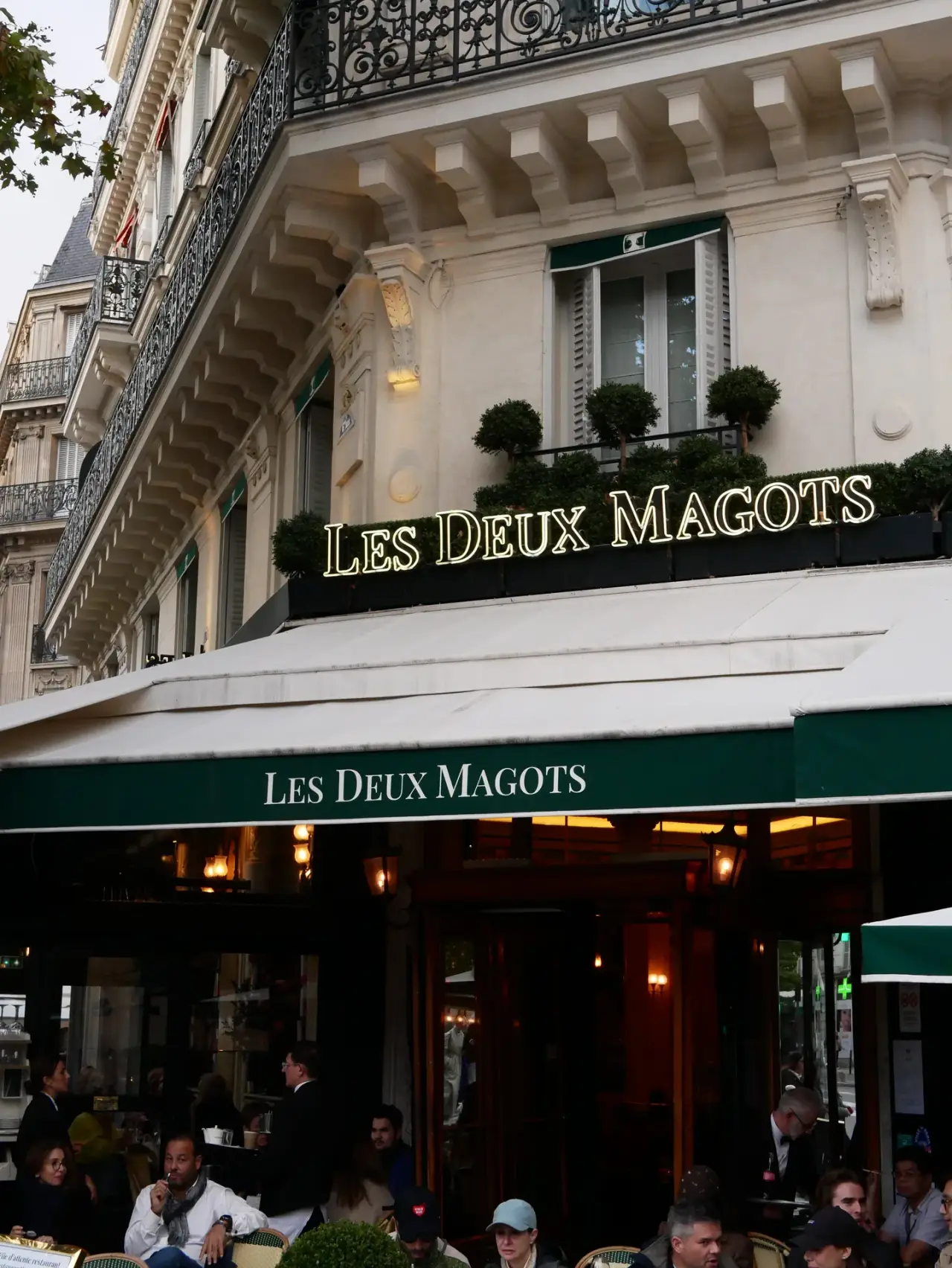
  19. The Deux Magots café, place Saint-Germain-des-Prés

    Places of memory · 19 August 1944 · 6th arr.

    Les Deux Magots

    6 place Saint-Germain-des-Prés, 75006 Paris

    According to police tradition, this is where FFI police officers came for Charles Luizet, de Gaulle’s prefect of police, on 19 August 1944, once the insurgent police had taken the Préfecture. He took office there that morning.

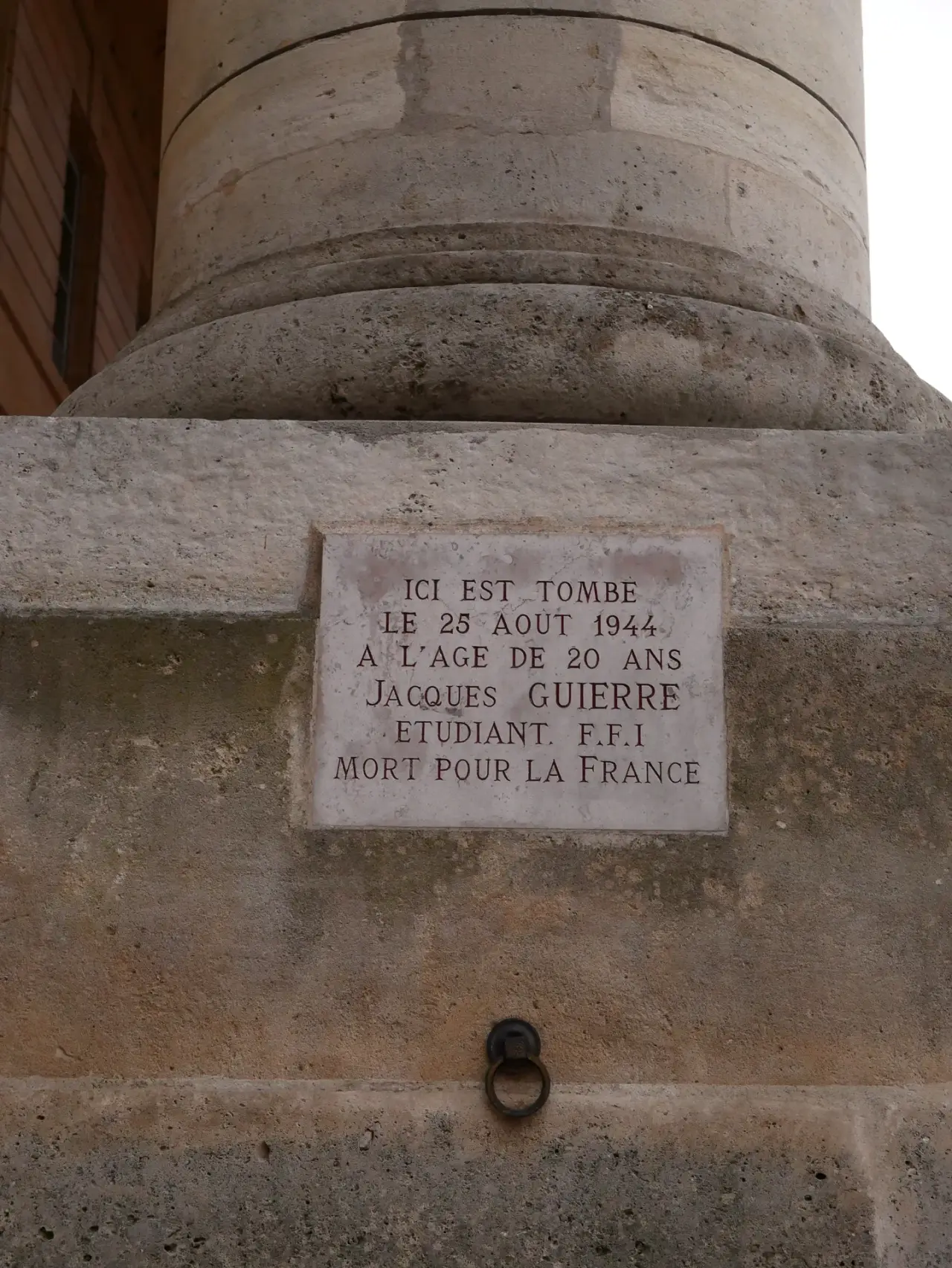
  20. Jacques Guierre’s plaque at the foot of a column of the Odéon

    Where they fell · 25 August 1944 · 6th arr.

    Jacques Guierre, Odéon

    Place de l’Odéon, 75006 Paris

    A 20-year-old student in the FFI, Jacques Guierre was mortally wounded here on 25 August 1944 and died at the first-aid post of the medical school. The plaque is at the foot of the left-hand column, rue Corneille side.

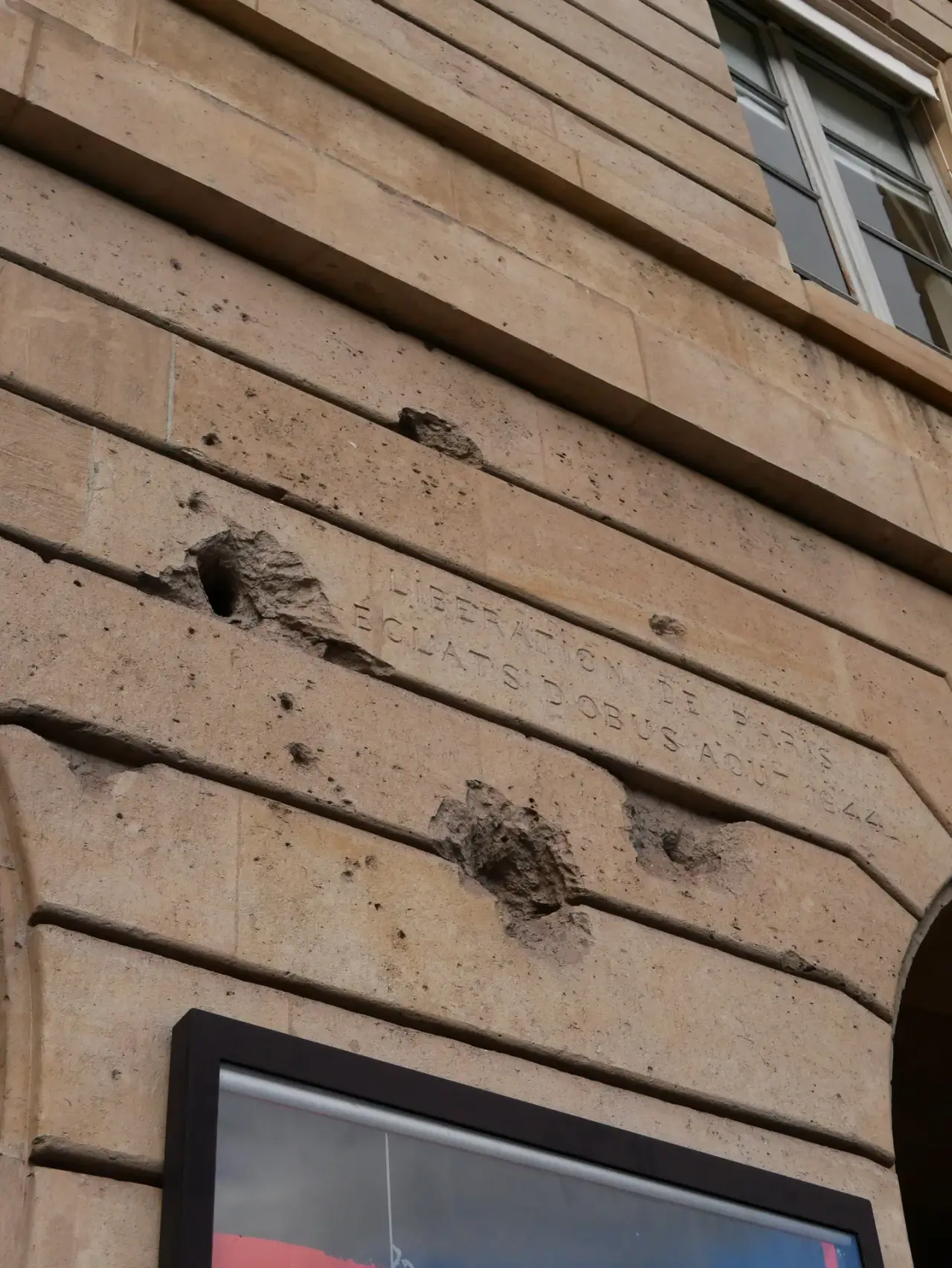
  21. Shell and bullet marks on the arches at the back of the Odéon theatre

    Bullet holes · 25 August 1944 · 6th arr.

    Odéon, rear façade

    Place Paul-Claudel, 75006 Paris

    Facing the Luxembourg, still held by the Germans, the back of the Odéon took bullets and shell splinters on 25 August 1944. They were left as they are; an inscription carved above an arch recalls it.

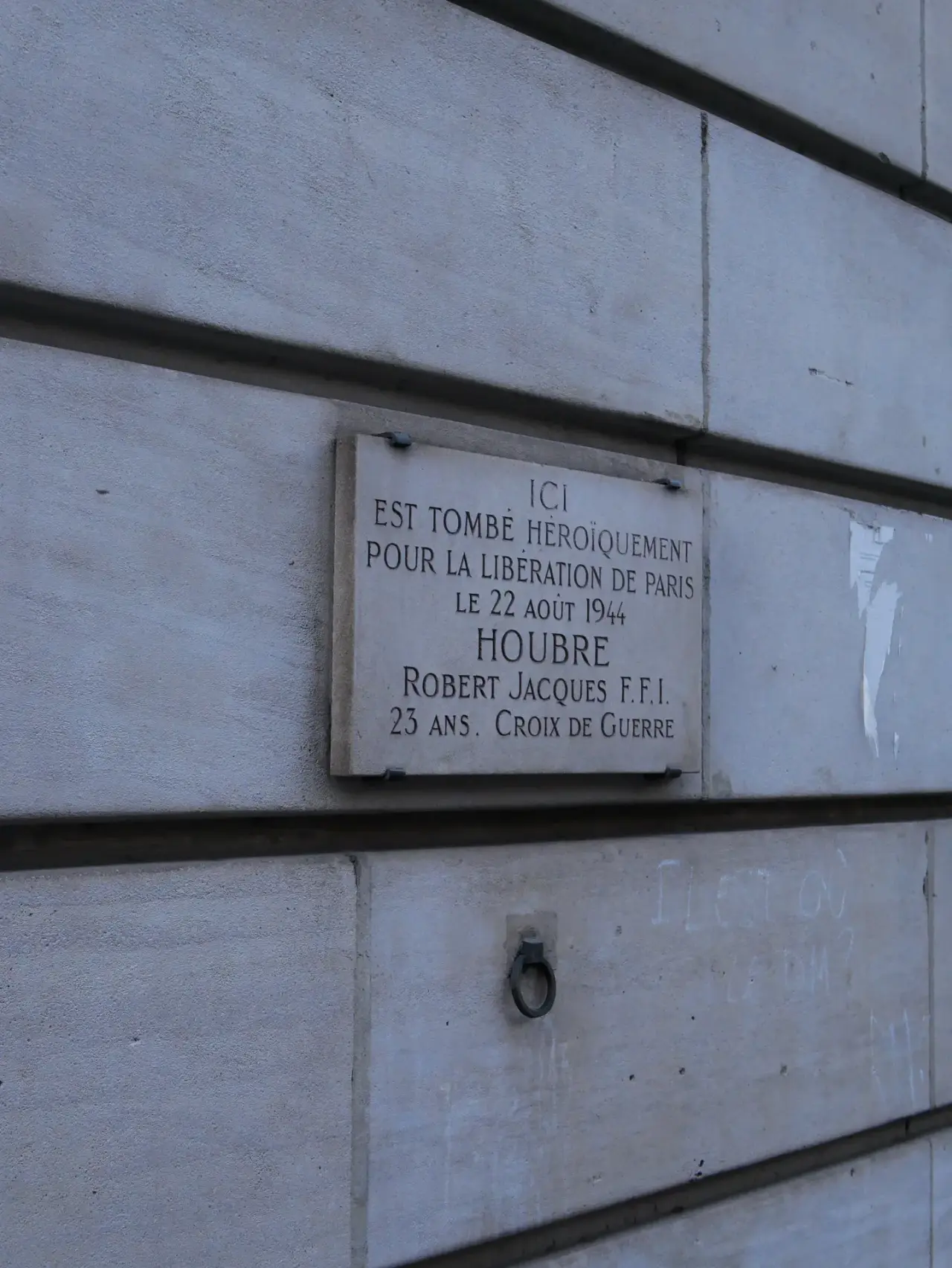
  22. Plaque to Robert Jacques Houbré, F.F.I., rue de Vaugirard

    Where they fell · 21 August 1944 · 6th arr.

    Robert Houbré

    2 rue de Vaugirard, 75006 Paris

    Robert Houbré, a 23-year-old FFI fighter, was mortally wounded at this corner of boulevard Saint-Michel on 21 August 1944, opposite the Lycée Saint-Louis. He died the next day at the Val-de-Grâce: the plaque gives that date, the 22nd.

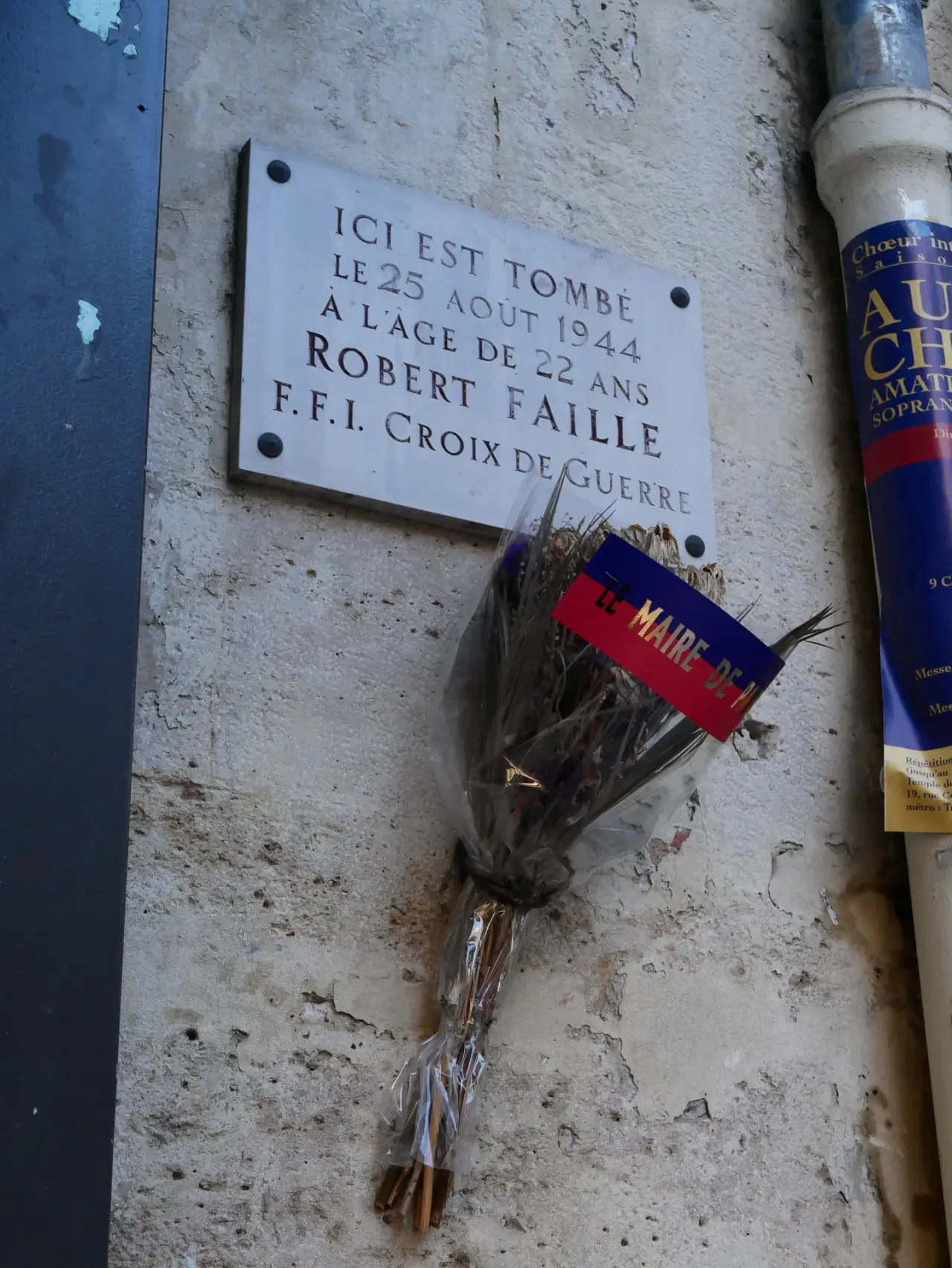
  23. Plaque to Robert Faille, F.F.I., with flowers, rue Monsieur-le-Prince

    Where they fell · 25 August 1944 · 6th arr.

    Robert Faille

    64 rue Monsieur-le-Prince, 75006 Paris

    An École Centrale student in the CDLR resistance movement, Robert Faille, 22, was guiding 2e DB tanks around the Senate when he was mortally wounded here on 25 August 1944. His citation credits him with a share in destroying a Panther.

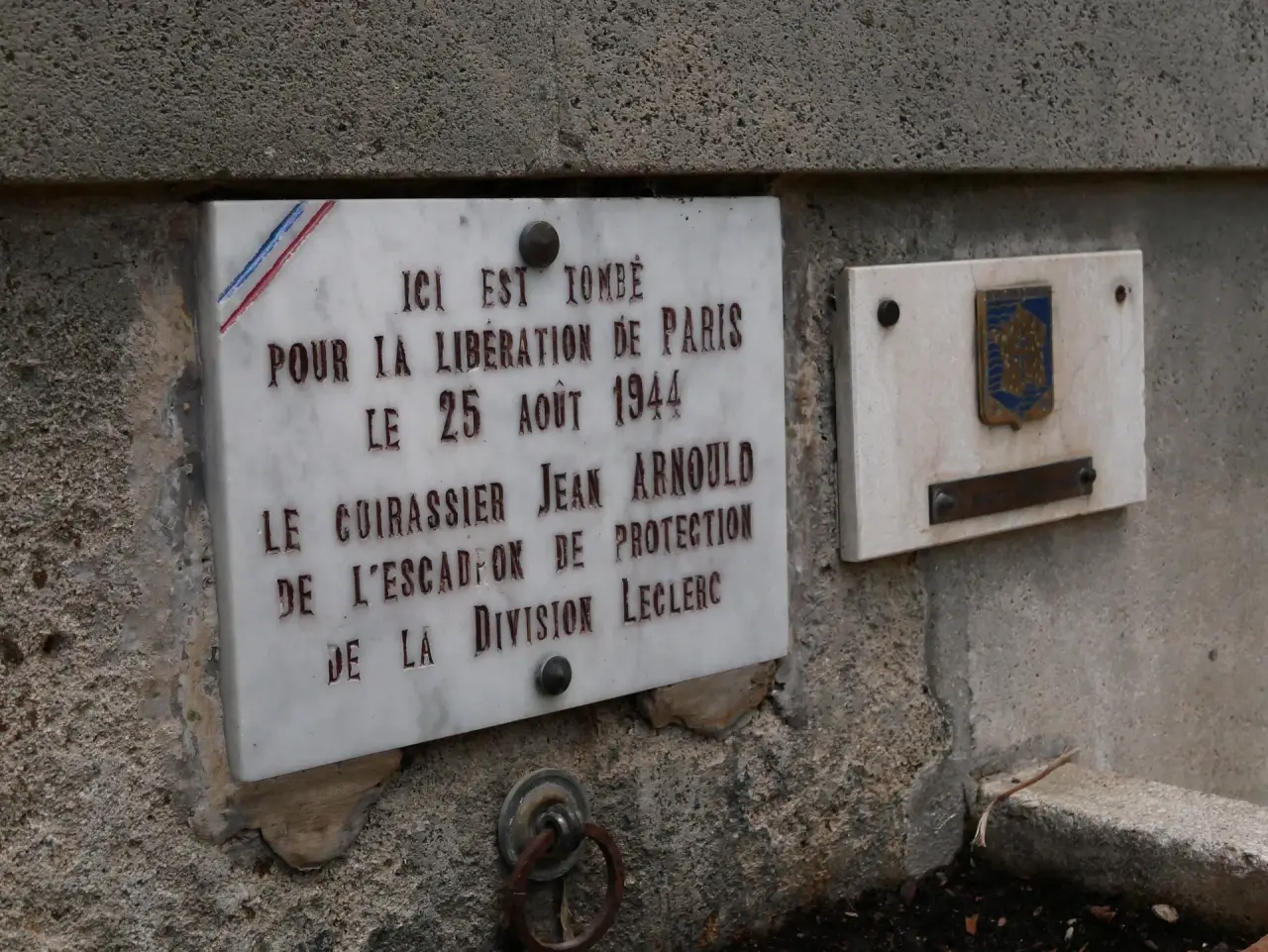
  24. Plaque to trooper Jean Arnould on the Luxembourg garden wall

    Where they fell · 25 August 1944 · 6th arr.

    Jean Arnould, Luxembourg

    Grille du Luxembourg, face au 73 boulevard Saint-Michel, 75006 Paris

    A trooper of General Leclerc’s escort squadron, Jean Arnould, 23, was mortally wounded on 25 August 1944 trying to get into the Luxembourg to attack a Panther tank with grenades. His comrades forced the railings apart under fire to bring him out.

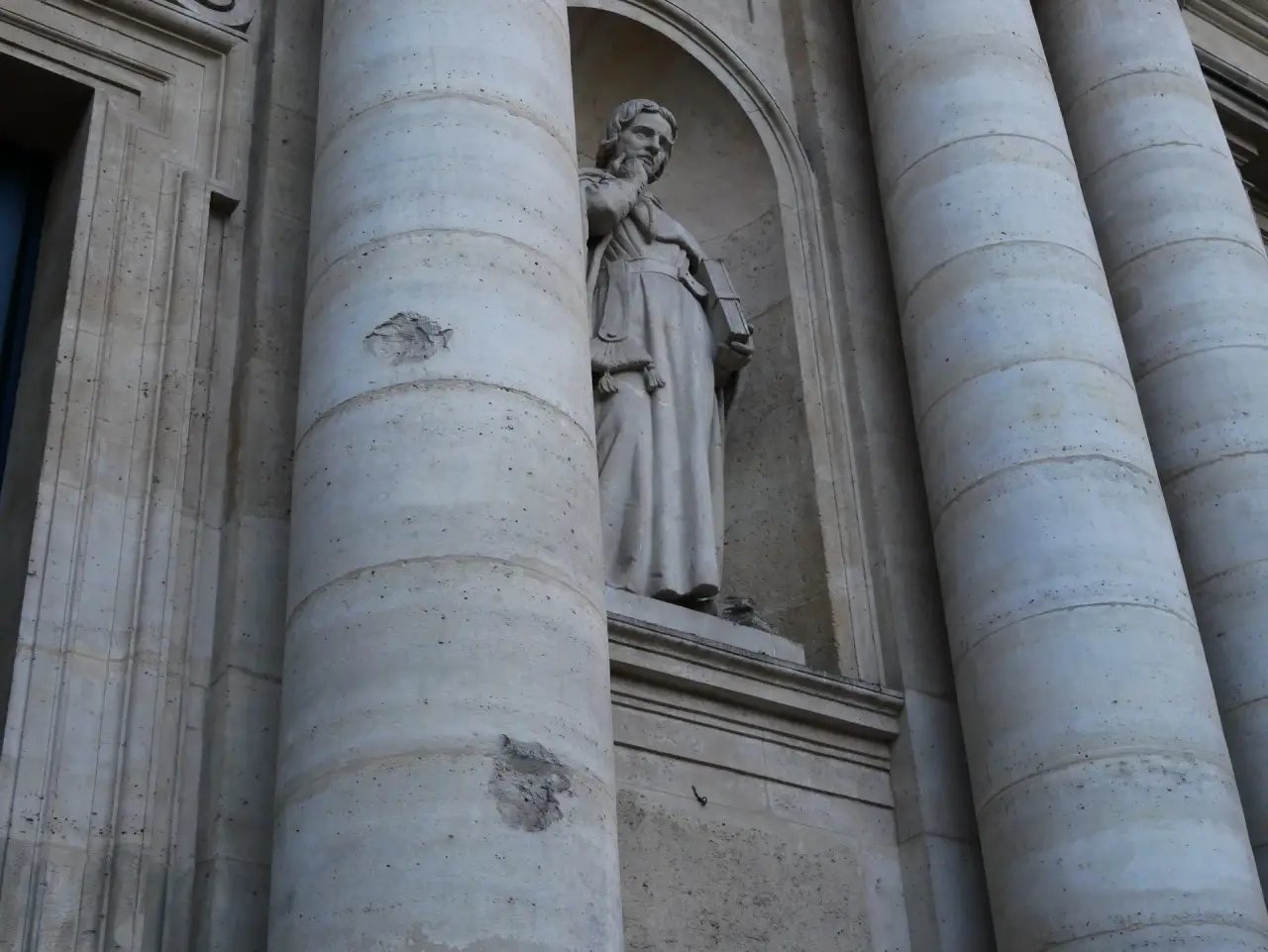
  25. Bullet marks on a column of the Sorbonne, beside a statue in its niche

    Bullet holes · 19–25 August 1944 · 5th arr.

    Sorbonne, the columns

    Chapelle de la Sorbonne, place de la Sorbonne, 75005 Paris

    On the chapel front, place de la Sorbonne, the columns still bear marks from the Liberation week. The Latin Quarter was one of the hotspots of the Left Bank fighting in August 1944.

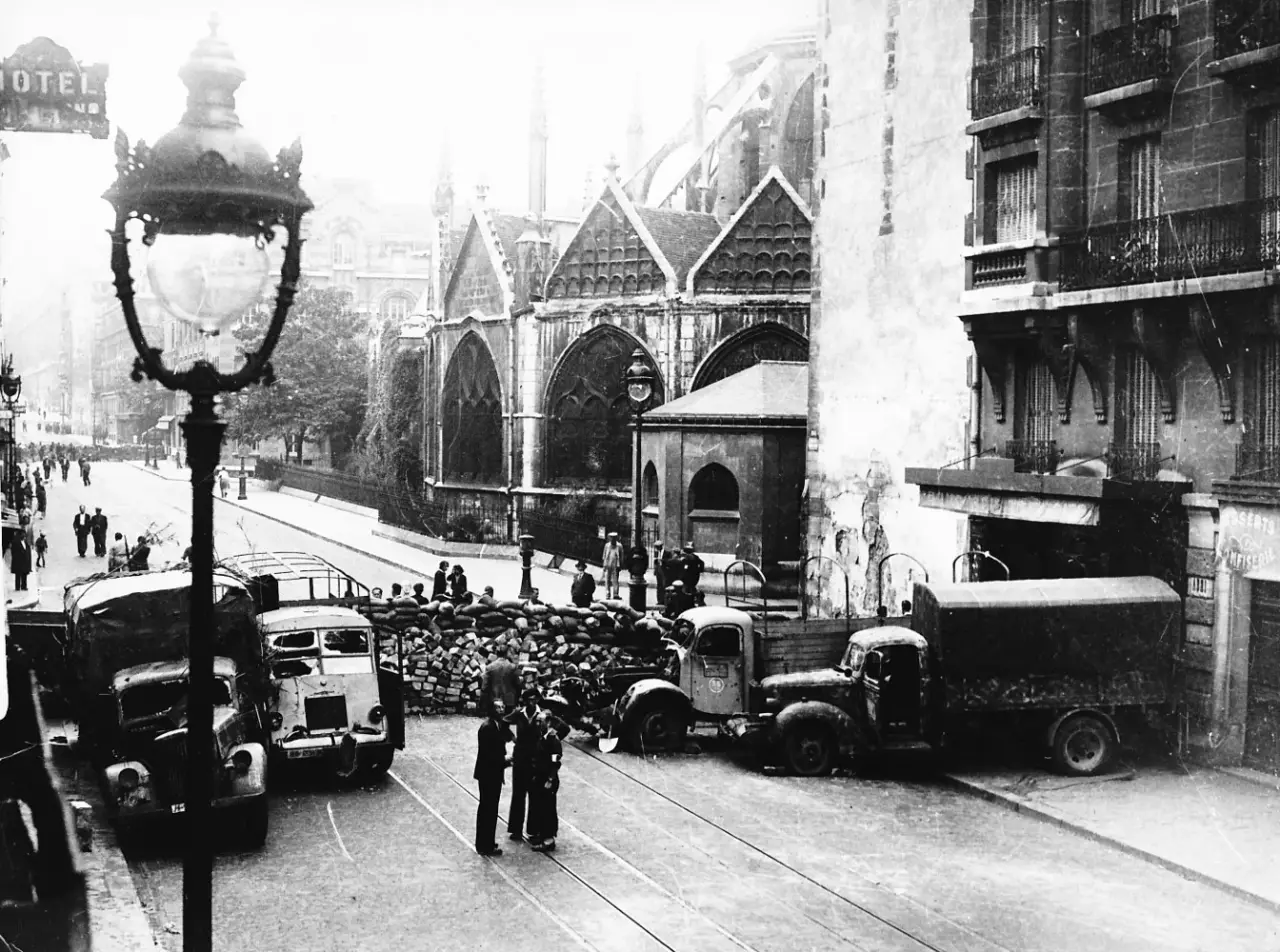
  26. Barricade of paving stones and lorries by the church of Saint-Séverin, August 1944
    Photo : Agence Presse Libération F.F.I., musée Carnavalet

    Archive photos, 1944 · 22–24 August 1944 · 5th arr.

    Barricade by Saint-Séverin

    Angle rue Saint-Jacques et rue Saint-Séverin, 75005 Paris

    Paving stones, sandbags and lorries across rue Saint-Jacques, by the apse of Saint-Séverin. After the call to build barricades on the evening of 21 August, the Latin Quarter was covered with them overnight.

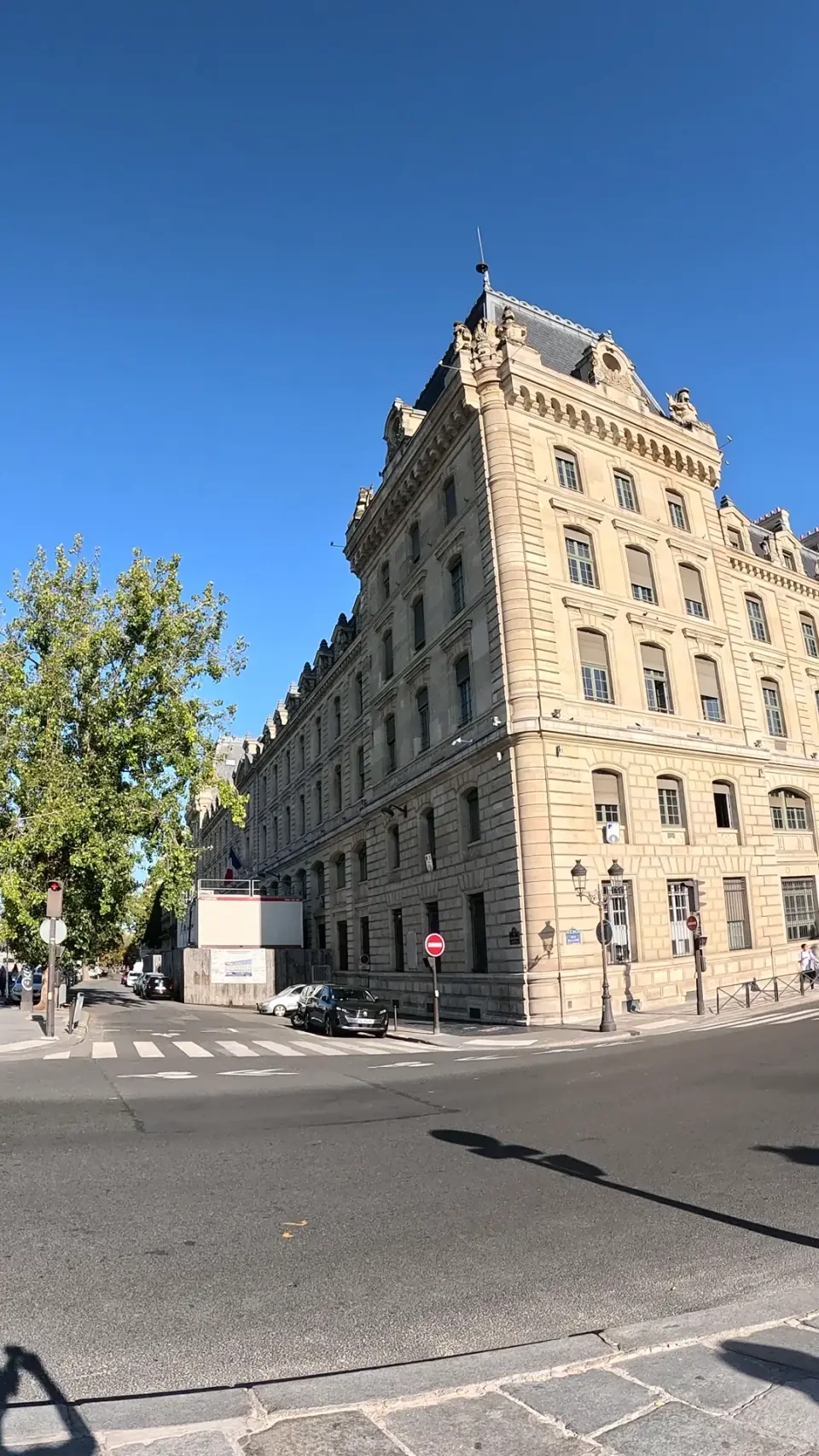
  27. The Préfecture de Police at the corner of rue de la Cité, facing the parvis

    Places of memory · 19 August 1944 · 4th arr.

    Préfecture de Police, 19 August 1944

    Rue de la Cité, face au parvis Notre-Dame, 75004 Paris

    On the morning of 19 August 1944, over 2,000 striking policemen walked into the Préfecture and raised the tricolour: the uprising had begun. In the afternoon they drove back German infantry and tanks, partly with Molotov cocktails, until the evening truce.

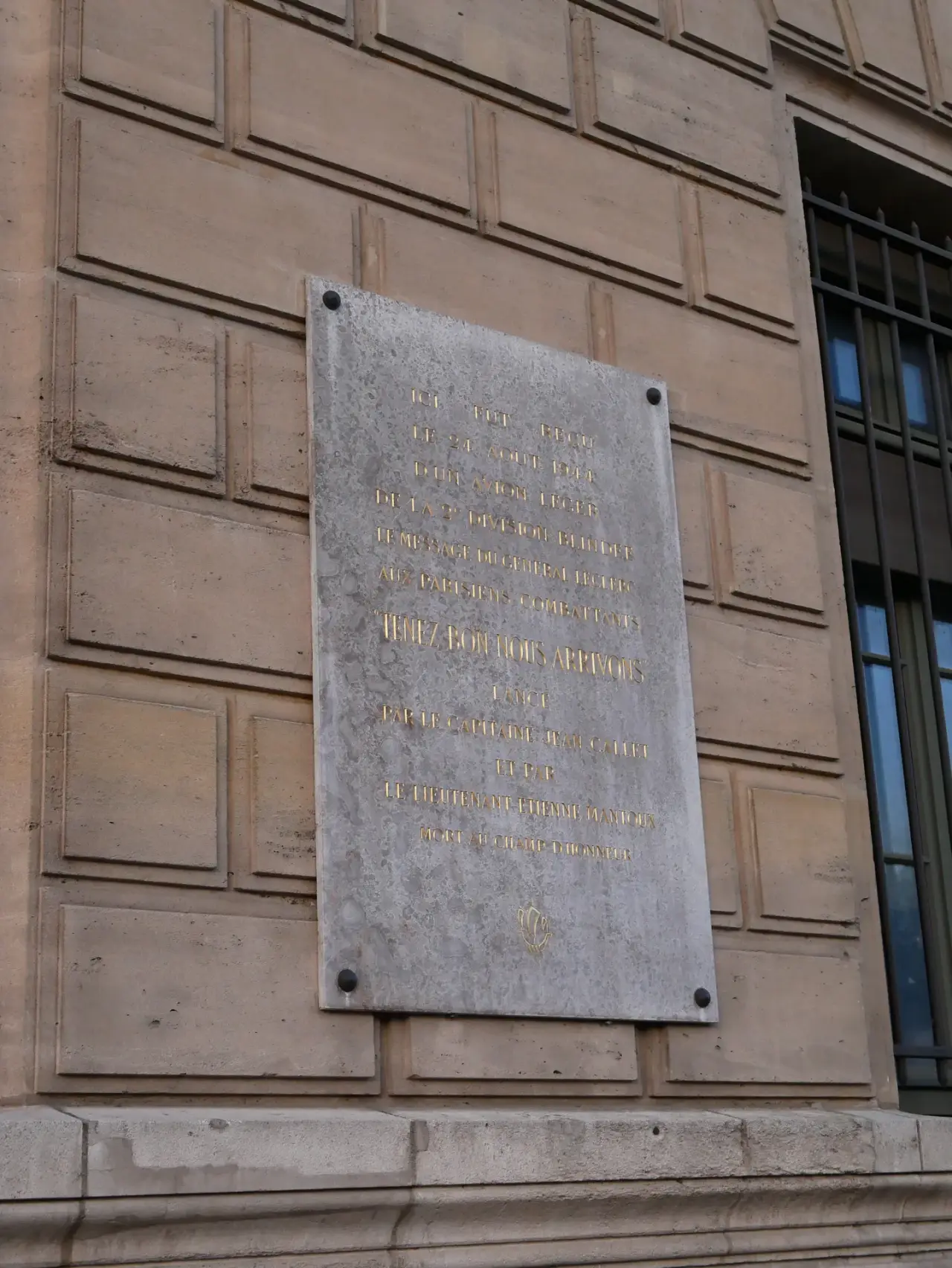
  28. Plaque “Tenez bon nous arrivons” on the façade of the Préfecture de Police

    Places of memory · 24 August 1944 · 4th arr.

    “Hold on, we’re coming”, Préfecture de Police

    Quai du Marché-Neuf, 75004 Paris

    On 24 August 1944 a 2e DB Piper Cub flew over the Préfecture, held by insurgent police since the 19th, and dropped Leclerc’s message: “Hold on, we’re coming.” On board were Captain Jean Callet and Lieutenant Étienne Mantoux.

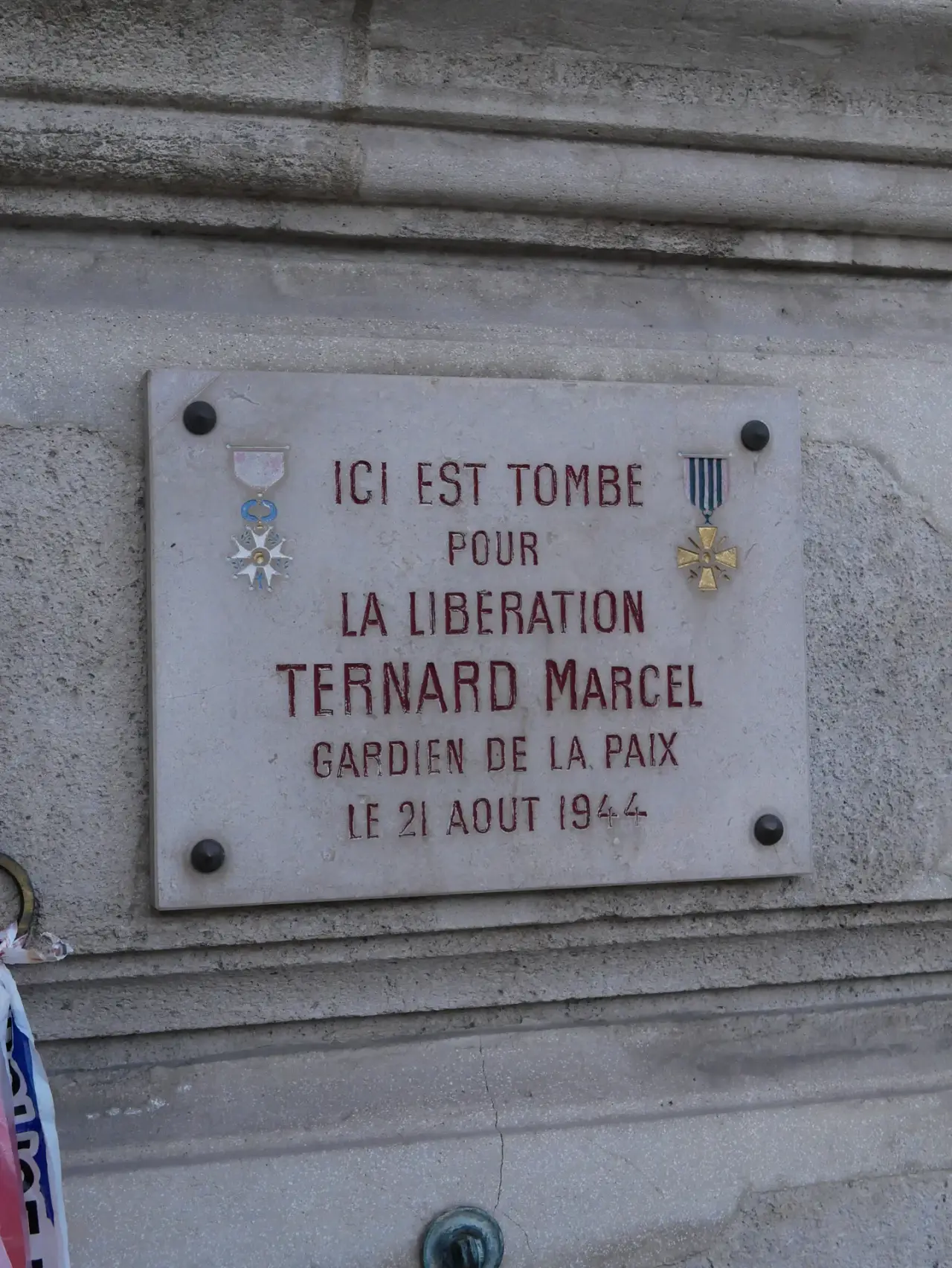
  29. Plaque “Ici est tombé pour la Libération Ternard Marcel, gardien de la paix, le 21 août 1944”

    Where they fell · 21 August 1944 · 4th arr.

    Marcel Ternard

    2 quai du Marché-Neuf, 75004 Paris

    A 24-year-old police officer, Marcel Ternard was among the men who seized the Préfecture on 19 August 1944. On the 21st his car, setting out for supplies, met a hail of bullets as it left; he died that day at the Hôtel-Dieu.

Read before you go

How to read a wall

What a bullet leaves in limestone, what the plaques say, where the shelters were: the guide that goes with this map.

Where to see the traces of WWII in Paris

With a guide

See these traces with me

Most of the Left Bank and Right Bank points are stops on our WWII walks: two hours, in a small group or private, with the archive photos of the same spots.

WW2 Left Bank Tour WW2 Right Bank Tour The self-guided audio tour
From €59 Small group · 2h walk
Book a Tour