Museums Tell the Story, Streets Show Where It Happened
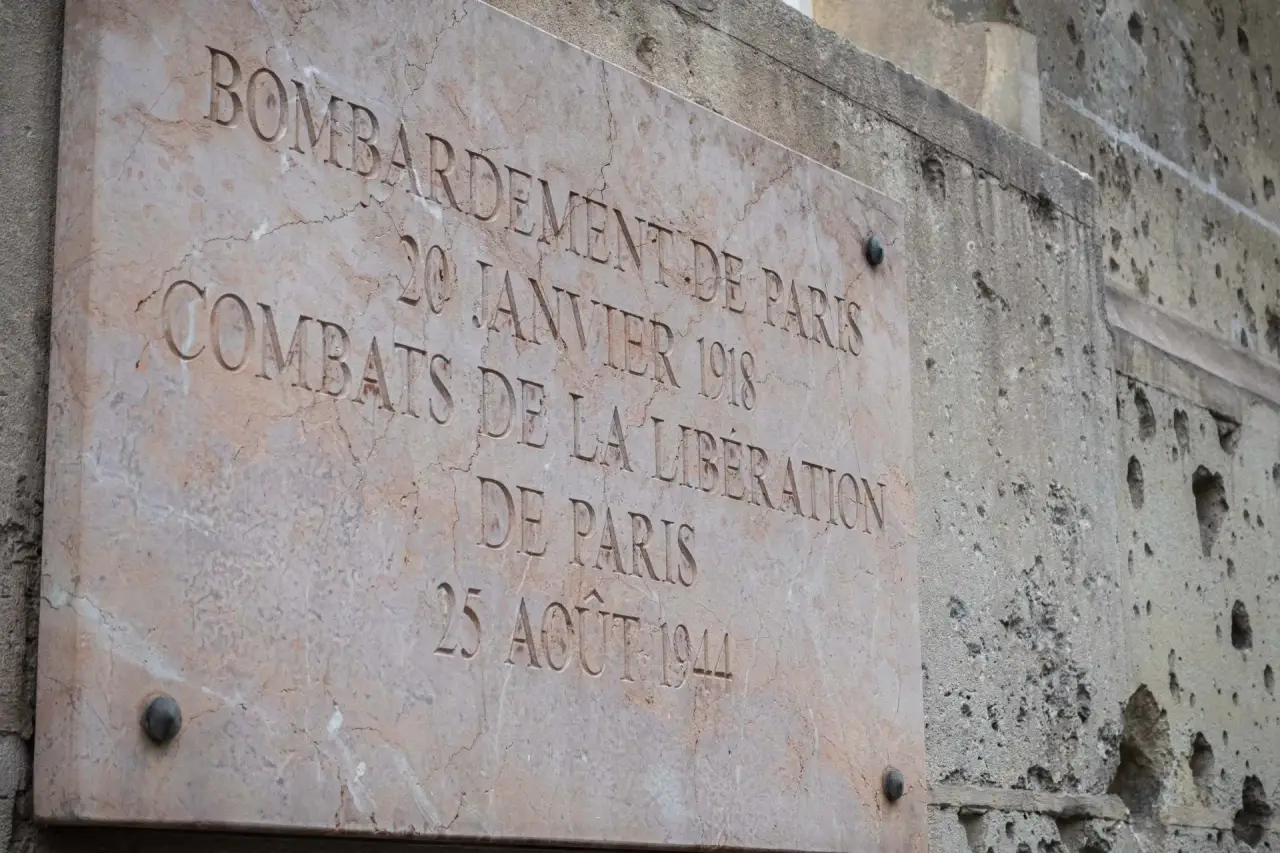
Paris kept very few visible scars of the Second World War. The city was spared destruction in 1944, and most of what happened between 1940 and 1944 left no ruins behind: a plaque on a wall, bullet marks on a façade, a name on a street corner. To understand those years, you need two things: the places where it happened, and the documents, objects and testimonies that explain them.
This guide covers the second half: the five museums and memorials in and around Paris that tell the story best. For each one, where it is, what you will see, and how to combine it with a walk through the city.
1. Musée de la Libération de Paris (Denfert-Rochereau)
Where: 4, avenue du Colonel Henri Rol-Tanguy, 14th arrondissement. Métro lines 4 and 6, RER B: Denfert-Rochereau.
The newest of the five, and the one devoted to Paris itself. Its full name says what it brings together: the Musée de la Libération de Paris – Musée du Général Leclerc – Musée Jean Moulin. It opened on August 25, 2019, for the 75th anniversary of the Liberation, in the two pavilions of the former Barrière d’Enfer on Place Denfert-Rochereau.
The collections follow the war through two figures: General Leclerc, whose 2nd Armored Division entered Paris in August 1944, and Jean Moulin, who unified the Resistance before his arrest in 1943. Then the visit goes underground. Twenty metres beneath the museum, a civil-defence shelter became, on August 20, 1944, the command post of Colonel Rol-Tanguy, the leader of the Resistance forces of the Paris region during the insurrection. It has been kept as it was in 1944.
Good to know: the permanent collection is free. The command post is reached by a long staircase only; for visitors who cannot take it, a 360° virtual visit is offered on a tablet. The museum is closed on Mondays; check the official site for opening hours and temporary exhibitions.
2. Mémorial des Martyrs de la Déportation (Île de la Cité)
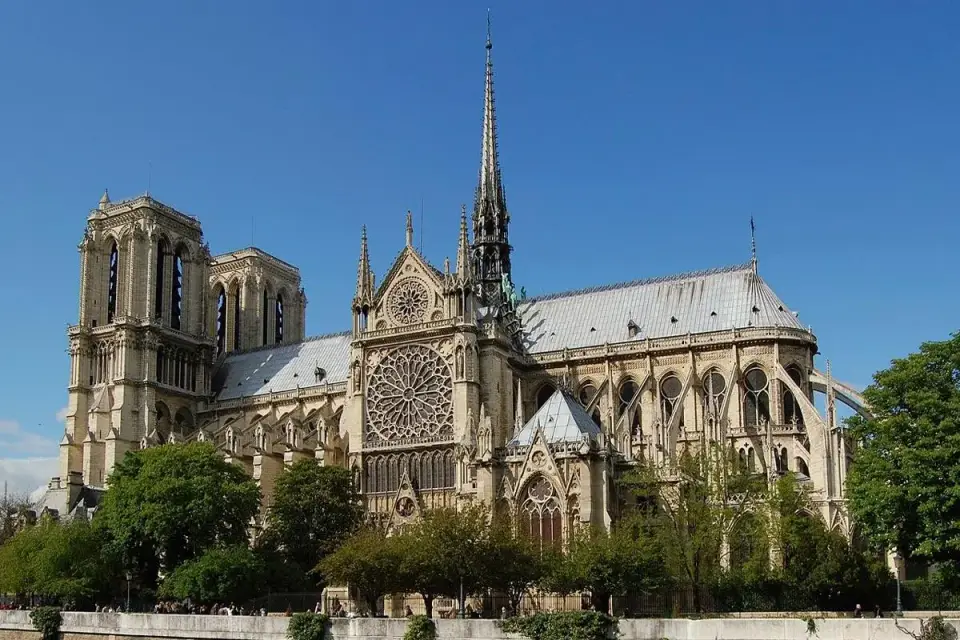
Where: square de l’Île-de-France, 7, quai de l’Archevêché, 4th arrondissement, at the eastern tip of the Île de la Cité, just behind Notre-Dame.
You walk down a narrow staircase towards the Seine, into a courtyard closed off from the city, and then into a crypt. The memorial, designed by the architect Georges-Henri Pingusson and inaugurated by General de Gaulle in 1962, is dedicated to the roughly 200,000 people deported from France to the Nazi camps. Its architecture is meant to make you feel confinement and the impossibility of escape before it tells you anything.
Inside lies the tomb of an unknown deportee, with urns containing soil and ashes from the camps. Since 2022, an exhibition path set out with recent historical research explains the different deportations: of resisters, of political prisoners, and of the Jews of France.
Good to know: entry is free; the memorial is closed on Mondays. Our Left Bank WWII tour ends on the Notre-Dame square, a few minutes’ walk away.
3. Mémorial de la Shoah (Le Marais)
Where: 17, rue Geoffroy-l’Asnier, 4th arrondissement. Métro Saint-Paul or Hôtel de Ville (line 1), Pont-Marie (line 7).
On a quiet street of the Marais, the Mémorial de la Shoah is the main place in France devoted to the persecution and murder of the Jews during the war. At the entrance, the Wall of Names lists the Jews deported from France; below, the crypt; outside, along the side of the building, the Wall of the Righteous honours the people in France who saved Jews at the risk of their own lives. The permanent exhibition traces the history of the Jews of France, the anti-Jewish laws of Vichy, the round-ups in Paris and the deportations.
Good to know: entry is free and no booking is needed. The memorial is open from Sunday to Friday and closed on Saturdays. From the Deportation memorial, it is about a fifteen-minute walk across the Seine.
4. Musée de l’Armée at the Invalides
Where: Hôtel des Invalides, 7th arrondissement. Métro Invalides, La Tour-Maubourg or Varenne.
The Army Museum covers centuries of French military history, but two parts of it concern the Second World War directly. The modern galleries devoted to the two world wars hold a remarkable collection of uniforms, weapons, maps and documents. The Historial Charles de Gaulle, an underground multimedia space, tells the life of the general. And the Musée de l’Ordre de la Libération, in the same buildings, is dedicated to the 1,038 people, five towns and eighteen military units made Companions of the Liberation by de Gaulle for their role in Free France and the Resistance.
Good to know: this one is not free: a standard ticket covers the permanent collections, Napoleon’s tomb under the Dome, and the Museum of the Order of the Liberation. Buy it online to avoid the queue, and allow at least two hours. Our Right Bank WWII tour starts at the Pont Alexandre III, at the other end of the Invalides esplanade.
5. Mont-Valérien (Suresnes)
Where: 1, avenue du Professeur Léon-Bernard, Suresnes, just west of Paris.
During the Occupation, the fortress of Mont-Valérien was the main place in France where the German army executed resisters and hostages: 1,008 people were shot there. Among them were the seven men of the Musée de l’Homme network, executed on February 23, 1942, and the members of the Manouchian group, in February 1944.
General de Gaulle inaugurated the Mémorial de la France combattante there on June 18, 1960. The guided visit follows the path of the condemned, from the chapel where they waited, whose walls still carry the words some of them carved, to the clearing where they were shot.
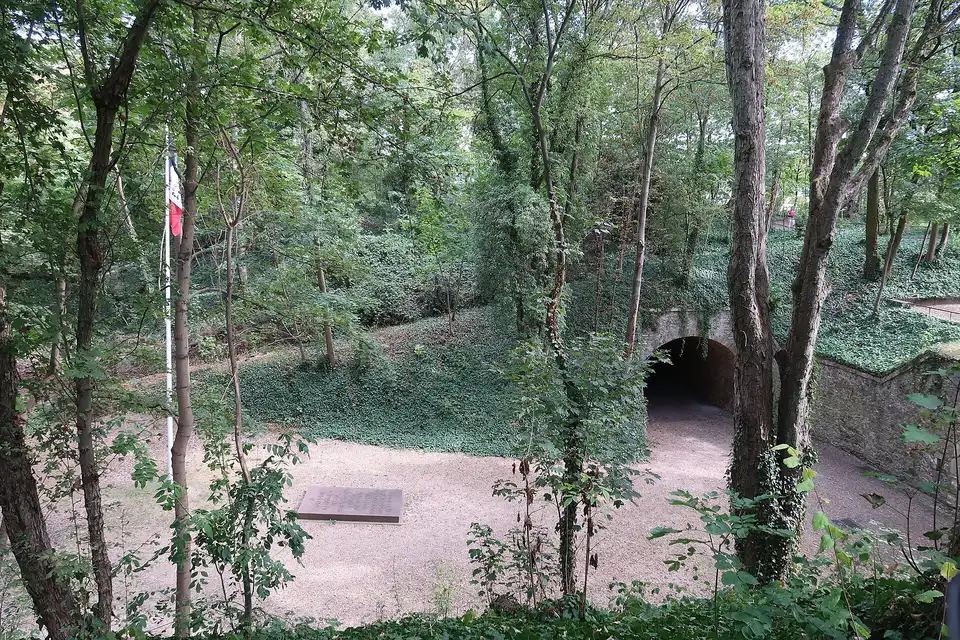
Good to know: the guided visits are free but must be booked in advance; they last about an hour and a half. Allow half a day with the journey from Paris.
How to Plan Your Visits
- One day on the Left Bank and the islands: the Left Bank WWII tour in the morning, ending at Notre-Dame; the Deportation memorial next door; then the Mémorial de la Shoah across the river in the afternoon.
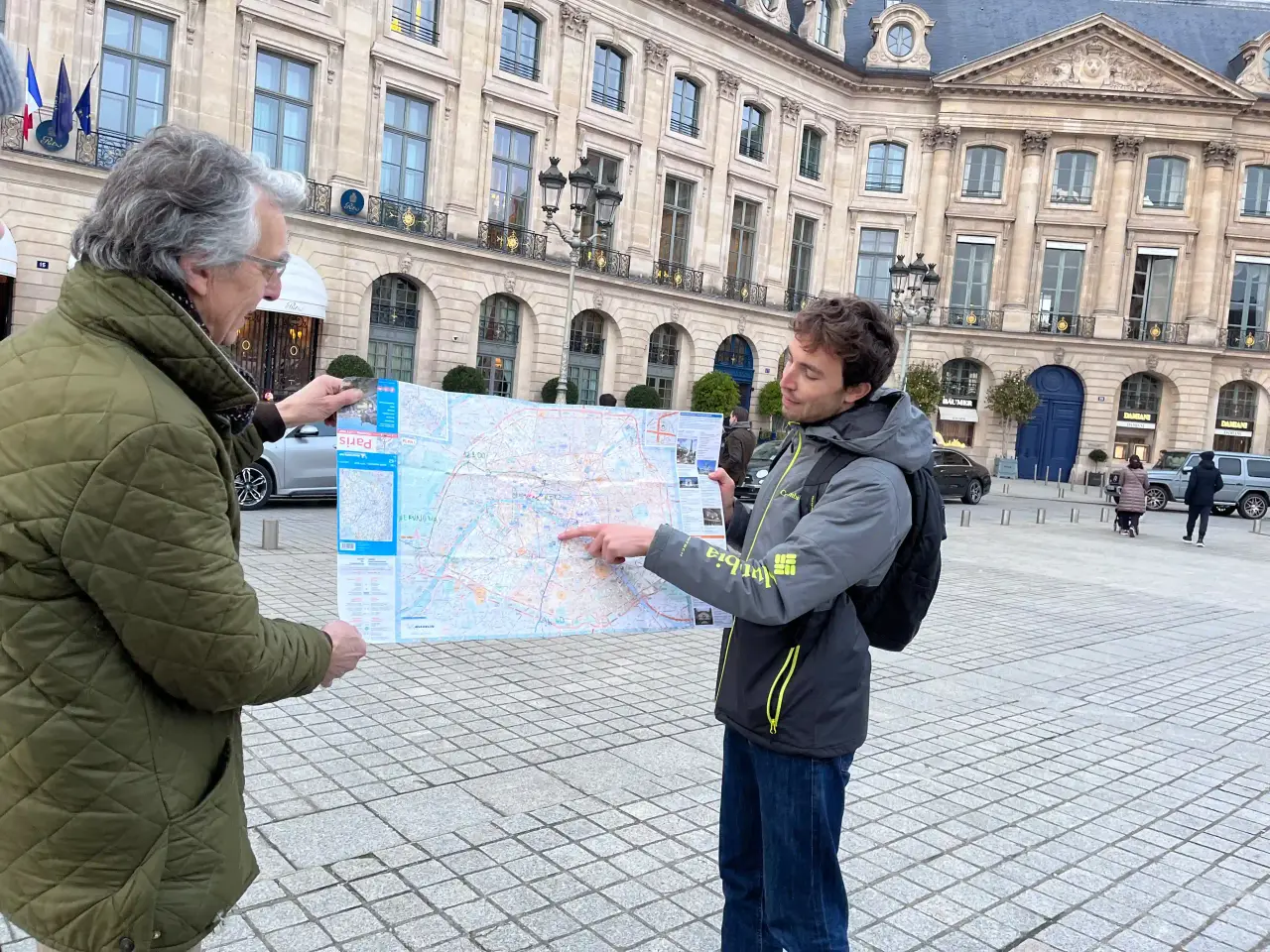
- One day on the Right Bank: the Invalides in the morning, then the Right Bank WWII tour from the Pont Alexandre III to Place Vendôme.
- The Liberation, from both sides: the Musée de la Libération at Denfert-Rochereau, then the story of the Liberation week on foot.
- On your own: the self-guided audio tour of the Left Bank walk can be done any day, before or after a museum.
For the places in the street rather than in museums, see our guide to the traces of the war still visible in Paris and our walking itinerary of WWII sites.
Questions
- Which WWII museums and memorials in Paris are free?
- The permanent collection of the Musée de la Libération de Paris, the Mémorial de la Shoah and the Mémorial des Martyrs de la Déportation are free, as are the guided visits of Mont-Valérien (on booking). The Musée de l'Armée at the Invalides requires a ticket.
- What is the best WWII museum in Paris?
- For the story of Paris itself, the Musée de la Libération at Denfert-Rochereau: it covers the Occupation, the Resistance and the Liberation, and lets you go down into Colonel Rol-Tanguy's command post. For the war as a whole and Free France, the Invalides.
- Can I see several of them in one day?
- Yes, if you group them. The Deportation memorial, behind Notre-Dame, is a short walk from the Mémorial de la Shoah across the Seine in the Marais. The Invalides fit naturally with the Right Bank walk, which starts at the Pont Alexandre III. Mont-Valérien, in Suresnes, deserves half a day of its own.
- How do the museums fit with a walking tour?
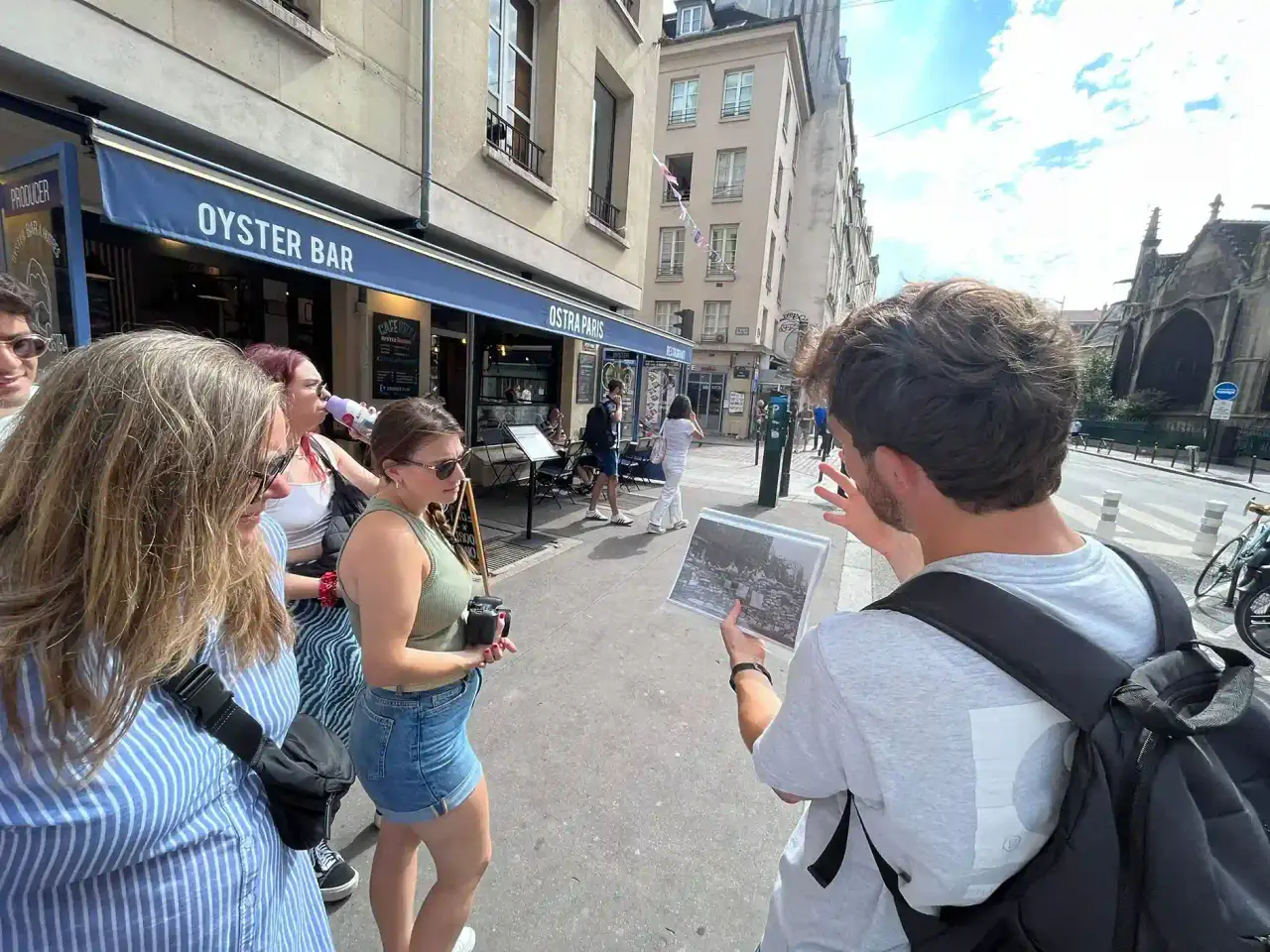
- The museums show the objects and the documents; the walk shows the places where it happened. Our Left Bank tour ends at Notre-Dame, a few minutes from the Deportation memorial, and the Right Bank tour begins opposite the Invalides.
Sources
- Paris Musées, Musée de la Libération de Paris – Musée du Général Leclerc – Musée Jean Moulin: useful information, 2026.
- Mémorial de la Shoah, Mémorial de la Shoah: access, hours and practical information, 2026.
- French Ministry of the Armed Forces, Le mémorial du Mont-Valérien, 2026.
- Musée de l'Armée, Musée de l'Armée – Invalides, 2026.