A Palace Built for a Queen, Seized by an Air Force
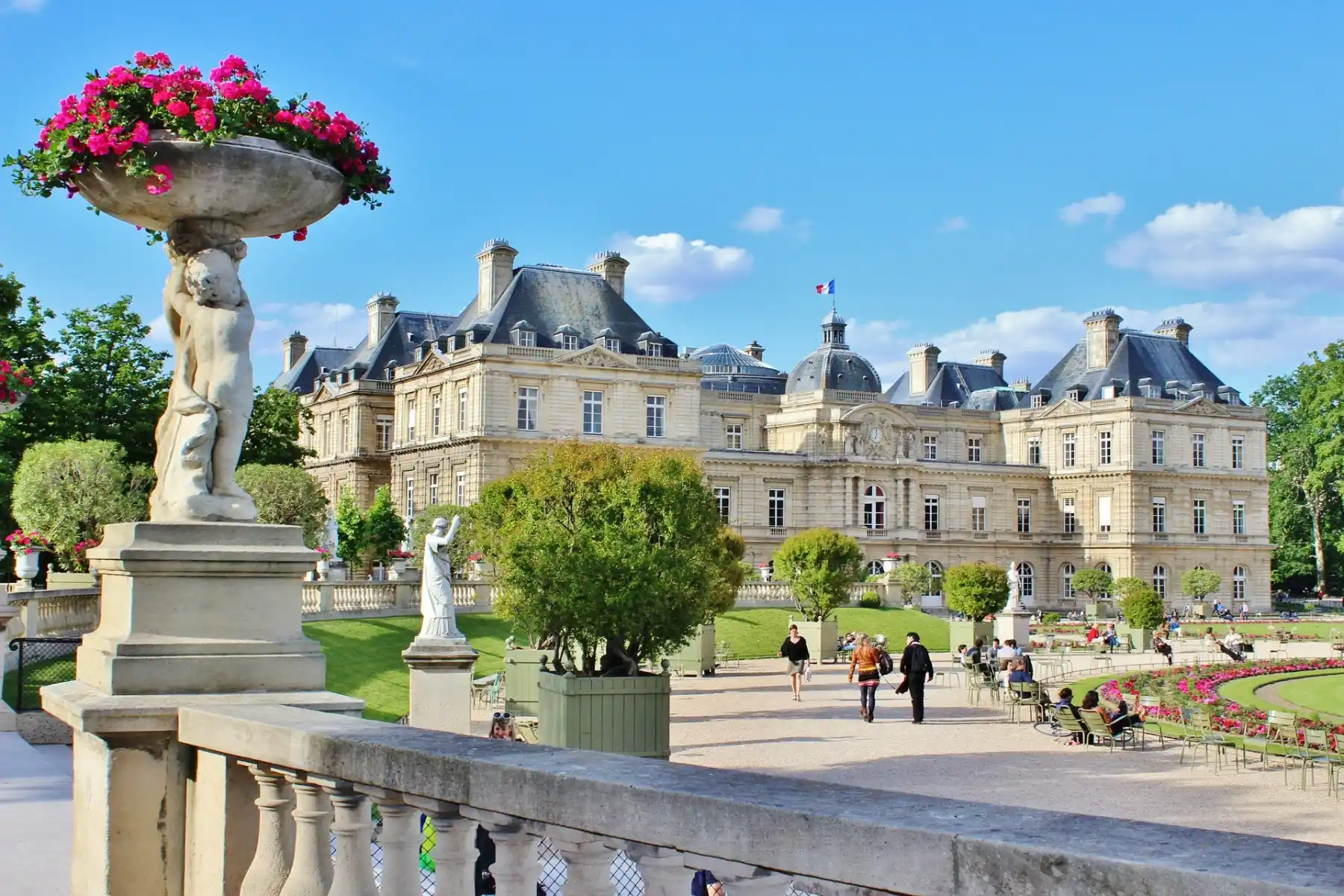
Every time I walk through the gates of the Luxembourg Gardens with a tour group, I pause at the same spot. We stand on the gravel path facing the palace, the octagonal basin gleaming in front of us, children pushing toy sailboats across the water. It is one of the most serene places in Paris. And then I tell them what happened here.
In June 1940, barely two weeks after the French government fled south, German officers walked through these same gates and requisitioned the Luxembourg Palace. The building that had housed the French Senate since 1799 — the upper chamber of the Republic — became the headquarters of the Luftwaffe’s Western Front command. The institution that embodied French democratic deliberation was turned into a nerve center for aerial warfare against Britain.
The transformation was swift, thorough, and deliberate. It was not random. The Germans chose this building for what it represented.
Marie de Medici’s Vision, Three Centuries Earlier
The palace owes its existence to homesickness. In 1615, Marie de Medici, the widow of Henri IV and regent of France, commissioned architect Salomon de Brosse to build her a residence that would remind her of the Palazzo Pitti in Florence, where she had grown up. The result was a Florentine-inspired masterpiece set amid formal French gardens — a hybrid that mirrored Marie’s own displaced identity.
Over the following centuries, the palace served as a royal residence, a revolutionary prison during the Terror, and finally, from 1799 onward, the seat of the French Senate. By 1940, it had accumulated over three hundred years of political and cultural weight. The hemicycle where senators debated, the Delacroix murals in the library, the Medici Fountain tucked in its northeastern corner — all of it bore witness to the arc of French governance.
When I stand with visitors near the Medici Fountain today, its moss-covered stones dripping quietly into the basin, I remind them that this tranquil grotto survived everything. Revolution, occupation, liberation. It was here before the Luftwaffe arrived, and it remained after they left.
June 1940: The Requisition
Paris was declared an open city on June 12, 1940. Two days later, German troops marched down the Champs-Elysees. Within days, the military administration began distributing the city’s landmarks among its branches. The Wehrmacht took the Hotel Meurice on Rue de Rivoli. The Kriegsmarine settled into offices near Place de la Concorde. And the Luftwaffe — the German air force — claimed the Luxembourg Palace.
The choice was strategic and symbolic. The palace offered vast interior spaces suitable for a command center, secure stone walls, and a location deep in the Left Bank, away from the more conspicuous Right Bank axis of power. But it also sent a message: the institutions of the French Republic were now at the disposal of the Reich.
The Senate’s furniture was moved or stored. German communications equipment was installed in the grand salons. Maps of British airfields and Atlantic convoy routes replaced legislative documents. The hemicycle, where senators had once argued about budgets and colonial policy, fell silent.
Hugo Sperrle and Luftflotte 3
The man who took command of the palace was Generalfeldmarschall Hugo Sperrle, one of the Luftwaffe’s most senior officers. Sperrle had led the Condor Legion during the Spanish Civil War, overseeing the bombing of Guernica in 1937. He was a large, imposing figure — even Goering reportedly found him intimidating — and he brought to Paris a taste for luxury that matched his rank.
Sperrle commanded Luftflotte 3 (Air Fleet 3), responsible for operations over the English Channel, the Atlantic, and eventually the defense of occupied France against Allied air attacks. From the Luxembourg Palace, his staff coordinated bombing raids on British cities during the Blitz, planned anti-shipping operations, and later scrambled to counter the growing Allied air superiority that would culminate in D-Day.
The palace became a hive of military activity. Officers moved through corridors where senators had once walked. Radio operators worked in rooms decorated with 17th-century ceiling paintings. The contrast between the building’s elegance and its wartime function was absolute.
Sperrle himself lived lavishly during his Paris years. He frequented the city’s finest restaurants, requisitioned a personal residence, and cultivated a lifestyle that would later draw criticism even from within the German military. Paris was, for the senior occupation officers, a posting of considerable comfort — a fact that did not go unnoticed by ordinary Parisians struggling with rationing and curfews.
The Gardens Under Occupation
The Luxembourg Gardens, normally one of the most democratic spaces in Paris — open to everyone, from students to retirees, from children to lovers — were transformed under the occupation. The Germans restricted access to large sections of the park. Anti-aircraft batteries were positioned within the gardens, their barrels pointed skyward, surrounded by sandbags and wire.
The famous tree-lined allees became off-limits in places. The tennis courts were repurposed. The open lawns where Parisians had picnicked on Sunday afternoons were now military zones. For residents of the 5th and 6th arrondissements, the gardens — their daily refuge — had been confiscated.
I often ask visitors to imagine what it would have felt like. You live on Rue de Vaugirard or near the Odeon. Every morning, you used to walk through these gardens on your way to work. Now there are German soldiers at the gates. The benches where you read your newspaper are behind a barrier. The palace that represented your Republic is flying a different flag.
That psychological weight — the daily, visible evidence of dispossession — is something I try to convey on every tour. Occupation was not just about military control. It was about the slow erosion of normality.
Life in the Latin Quarter
The Luxembourg Palace sits at the junction of the Latin Quarter and Saint-Germain-des-Pres, two neighborhoods that defined Parisian intellectual and artistic life. The Sorbonne is a short walk to the east, down Boulevard Saint-Michel. The cafes of Saint-Germain — the Flore, the Deux Magots — are minutes to the west.
During the occupation, these neighborhoods continued to function, but under profound constraint. Students at the Sorbonne attended classes while German censorship dictated what could be taught. Professors who refused to sign loyalty oaths were dismissed. On November 11, 1940 — barely five months into the occupation — thousands of students marched from the Sorbonne to the Arc de Triomphe to commemorate Armistice Day. German soldiers fired on the crowd. It was one of the first acts of public resistance in occupied Paris.
Boulevard Saint-Michel, the artery that runs from the Seine to the Luxembourg Gardens, became a space of quiet tension. German soldiers walked its sidewalks. French students passed them in silence. The bookshops remained open. The cafes served ersatz coffee. Life went on, but it was life under surveillance, life with checkpoints, life with the constant awareness that the palace at the top of the boulevard was no longer French.
August 1944: Liberation
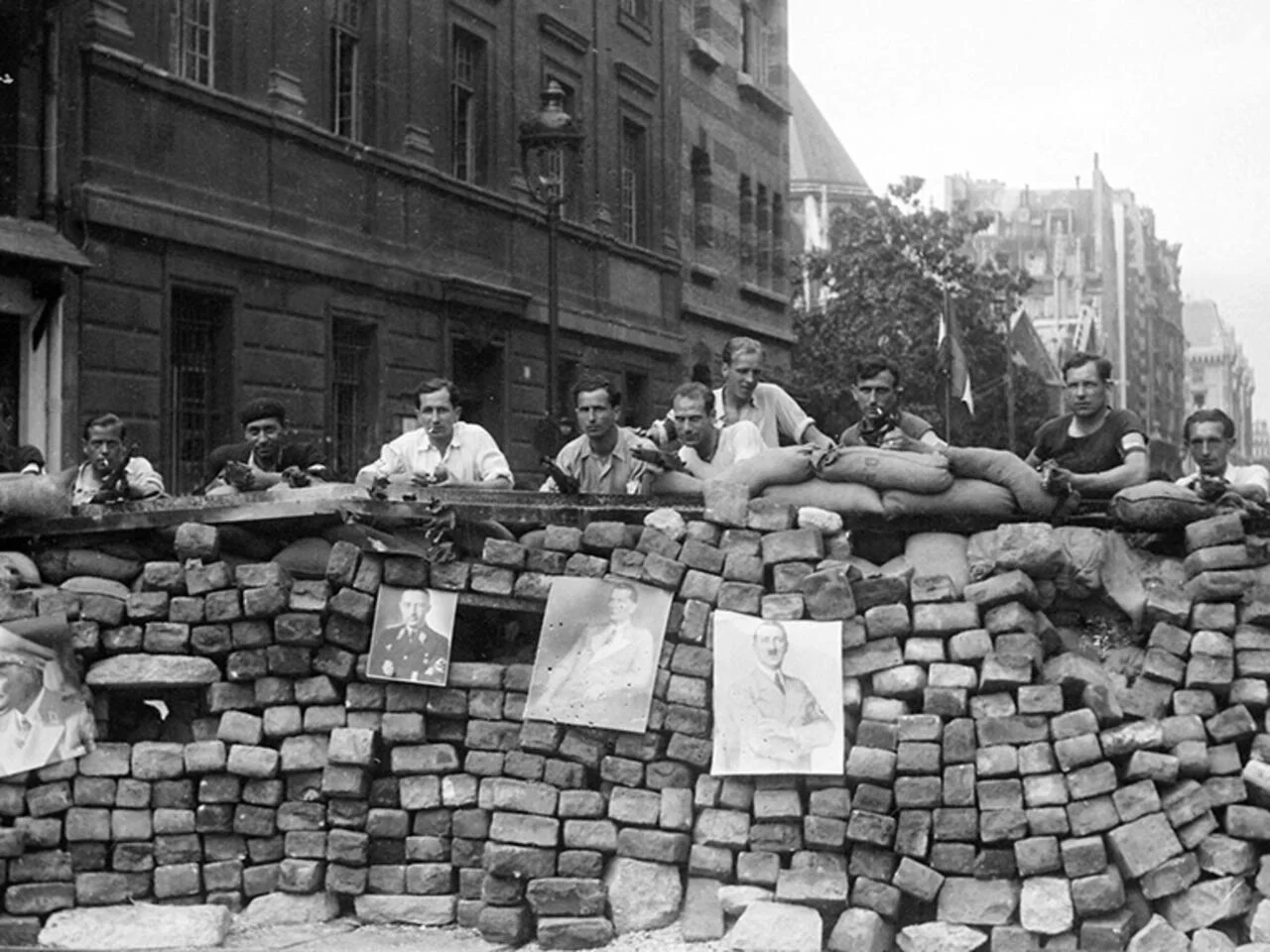
The liberation of Paris in August 1944 brought some of the fiercest fighting to the Left Bank. As the French Forces of the Interior (FFI) rose up across the city, barricades went up on the streets surrounding the Luxembourg Gardens. The palace, as a major German military installation, became a target.
Fighting raged in the surrounding streets. Resistance fighters, many of them students from the nearby Sorbonne, engaged German troops in the narrow streets of the 5th and 6th arrondissements. Bullet holes from these engagements are still visible on buildings along Rue de Medicis and near the Odeon.
The German garrison at the Luxembourg Palace held out longer than many other positions in the city. When they finally surrendered, it marked the end of four years of occupation for one of France’s most important civic buildings. The Tricolore replaced the Swastika on the palace’s flagpole. The hemicycle that had been silent since 1940 would soon hear French voices again.
The Senate Returns
The French Senate reconvened in the Luxembourg Palace after the war, resuming its function as though reclaiming not just a building but an idea. The restoration was both physical and symbolic. German modifications were removed. The legislative chambers were restored. The gardens were reopened to the public.
Today, the palace functions as it did before the war. Senators debate in the hemicycle. The gardens welcome twenty-five million visitors a year. Children still push sailboats across the octagonal basin. The Medici Fountain still drips quietly in its shaded corner.
But the history is there, embedded in the stones, if you know where to look. The palace’s wartime story is not prominently commemorated — there are no large plaques or monuments within the gardens dedicated specifically to the Luftwaffe occupation. The memory lives instead in archives, in photographs of Sperrle’s staff posing on the palace terrace, in the accounts of Parisians who watched their gardens disappear behind barriers.
Walking Through History
This is why I lead these tours. Standing in the Luxembourg Gardens on a spring afternoon, surrounded by joggers and students and tourists, it is almost impossible to imagine anti-aircraft guns among the chestnut trees. That gap between the present calm and the past violence is exactly what makes this history so important to tell.
When I guide visitors from the Medici Fountain to the palace facade, from the garden gates to Boulevard Saint-Michel, I am tracing a path through layers of time. The 17th-century queen who built it, the senators who governed from it, the Luftwaffe officers who commanded from it, the resistance fighters who fought to reclaim it — they all walked the same gravel paths.
You can visit this exact spot on our Left Bank WWII walking tour. I will take you through the gardens, past the palace, and along the streets where the liberation was fought. You will see the bullet holes, hear the stories, and understand why this place — so peaceful today — carries such weight.
Want to walk through the Luxembourg Gardens with a guide who knows every layer of its history? Book a private Left Bank tour and discover the WWII stories hidden in plain sight across the Latin Quarter.