Introduction
The German occupation of Paris lasted four years, two months, and eleven days. From June 14, 1940 to August 25, 1944, the city that had defined Western civilization for centuries found itself under the authority of the Third Reich.
As a guide who walks these streets daily, I find that the most powerful way to understand this period is chronologically. Each year of the occupation had its own character — its own texture of fear, adaptation, resistance, and survival. What follows is a detailed timeline of how Paris experienced the darkest chapter in its modern history.
1940: The Fall
The Military Collapse (May-June 1940)
On May 10, 1940, Germany launched its western offensive. The speed of the German advance stunned the world. By early June, the French army was in full retreat, and the government declared Paris an open city on June 10 to spare it from bombardment.
What followed was the Exode — one of the largest civilian displacements in European history. Between six and ten million French civilians fled southward. Paris, which normally held around 2.8 million people, was reduced to fewer than 700,000 by the time German troops arrived.
June 14, 1940: The Germans Enter Paris
At dawn on June 14, the first German units entered Paris through the Porte de la Villette. By mid-morning, the swastika flag was raised over the Arc de Triomphe and the Place de la Concorde. German troops marched down the Champs-Elysees in a calculated display of power.
The city was eerily quiet. Shutters were closed, streets were empty. Most shops had been boarded up. The few Parisians who remained watched from behind curtains.
Within days, the Germans established their command structure. The Hotel Meurice on Rue de Rivoli became the headquarters of the Kommandant von Gross-Paris, the military governor of Paris. The Palais du Luxembourg, seat of the French Senate, was requisitioned as the headquarters of the Luftwaffe in France. The Gestapo would later take over buildings on Avenue Foch and Rue des Saussaies, addresses that became synonymous with terror.
The Armistice and the Vichy Regime
On June 22, 1940, Marshal Philippe Petain signed the armistice with Germany at Rethondes, in the same railway carriage where Germany had signed its surrender in 1918 — a deliberate humiliation orchestrated by Hitler.
France was divided. The northern zone, including Paris, was placed under direct German military occupation. The southern zone was administered by the Vichy government under Petain’s authority, though its sovereignty was largely nominal.
From London, General Charles de Gaulle broadcast his famous appeal on June 18, calling on the French to continue the fight. Very few people heard it at the time, but it would become the founding act of the Free French movement.
The First Months
By the autumn of 1940, a new reality was settling over Paris. German military time (Berliner Zeit) was imposed — clocks were set forward one hour. Street signs appeared in German. The occupation authorities issued a cascade of ordinances: curfews from 11 PM to 5 AM, mandatory identity cards, restrictions on movement between zones.
The first act of public resistance occurred on November 11, 1940, when students and young Parisians gathered at the Arc de Triomphe to mark Armistice Day despite a German ban. German soldiers fired into the crowd. Several students were arrested, and the universities were temporarily closed. It was a signal that not everyone would accept the new order quietly.
1941: Tightening the Grip
Daily Life Under Occupation
By 1941, rationing defined daily existence. The official ration allowed approximately 1,200 calories per day for an adult — roughly half of what is needed. Bread, meat, butter, sugar, cheese, and tobacco were all rationed through a system of tickets and coupons. The categories were starkly hierarchical: manual laborers received more than office workers, who received more than the elderly.
A massive black market emerged. Prices on the marche noir were often ten times official rates. Those with money or connections in the countryside could eat well; those without went hungry. By the winter of 1941-1942, malnutrition was widespread, and Parisian children were measurably shorter and lighter than pre-war averages.
Fuel was almost nonexistent for civilian use. The Metro became the primary means of transport, though several stations were closed during the occupation — some of which remain ghost stations to this day. Bicycles and velo-taxis replaced automobiles on the boulevards.
The Resistance Takes Shape
The earliest resistance networks were small, fragmented, and extraordinarily dangerous. Agnes Humbert, an art historian at the Musee de l’Homme, helped found one of the first organized resistance groups in Paris. They produced an underground newspaper, Resistance, and gathered intelligence on German troop movements. The group was infiltrated and dismantled by early 1941; Humbert was arrested in April and eventually deported to Germany.
Other networks formed around different poles — communist, Gaullist, Catholic, or simply patriotic. The clandestine press expanded. By mid-1941, dozens of underground newspapers circulated in Paris, passed hand to hand in extraordinary secrecy.
In May 1943, Jean Moulin, de Gaulle’s envoy to the Resistance, succeeded in unifying the major resistance movements under the Conseil National de la Resistance (CNR). Moulin was arrested by the Gestapo in Caluire, near Lyon, on June 21, 1943, and died from torture without revealing any names. He remains the most revered figure of the French Resistance.
1942: The Darkest Year
The Vel’ d’Hiv Roundup: July 16-17, 1942
The most shameful event of the occupation occurred on July 16-17, 1942. In what is known as the Rafle du Vel’ d’Hiv, French police — acting on German orders but organized by the Vichy authorities — arrested 13,152 Jews in Paris and its suburbs. Among them were 4,115 children.
The arrested families were taken to the Velodrome d’Hiver, a cycling stadium near the Eiffel Tower, where they were held in appalling conditions for days with almost no food, water, or sanitation. From there, they were transported to transit camps, primarily Drancy in the northeastern suburbs of Paris, and then deported to Auschwitz-Birkenau.
Of the roughly 13,000 people arrested in the Vel’ d’Hiv roundup, fewer than 100 survived the war.
The roundup was not an isolated event. Throughout 1942, 1943, and 1944, deportation convoys left Drancy on a regular schedule. In total, approximately 76,000 Jews were deported from France during the occupation. Fewer than 2,500 returned.
The Occupation Hardens
In November 1942, the Allies landed in North Africa, and Germany responded by occupying the previously “free” southern zone of France. The fiction of Vichy sovereignty was effectively ended. Across France, repression intensified.
In Paris, the German security apparatus expanded. The Gestapo and the SS operated with growing brutality. Hostage-taking and reprisal executions became routine: for every German soldier killed, dozens of French civilians or political prisoners were shot.
1943: Resistance and Repression
Saving the Art
One of the most remarkable stories of the occupation unfolded at the Jeu de Paume museum in the Tuileries. The Nazis used this building as a sorting point for art looted from Jewish collectors across France — an operation run by the Einsatzstab Reichsleiter Rosenberg (ERR).
Rose Valland, a quiet and unassuming art historian who worked at the Jeu de Paume, secretly documented every piece that passed through the museum: where it came from, where it was sent, which train carried it. For four years, she compiled a meticulous record at enormous personal risk. Her documentation would prove essential after the war in recovering thousands of stolen artworks.
Forced Labor
In February 1943, the Service du Travail Obligatoire (STO) was established, requiring young French men to work in German factories. The STO was deeply unpopular and drove many young men into hiding — and into the Resistance. The maquis groups in rural France swelled with STO evaders.
In Paris, the STO added another layer of fear to daily life. Identity checks became more frequent, and any young man on the street risked being stopped and questioned about his work status.
1944: From D-Day to Liberation
June 6, 1944: The Allied Landings
When news of the Normandy landings reached Paris on June 6, 1944, hope surged through the city. People gathered around illicit radio sets, listening to the BBC despite the severe penalties for doing so. But liberation did not come quickly. The Battle of Normandy would last nearly three months.
During the summer of 1944, the Resistance in Paris intensified its operations. Railway workers sabotaged train lines. Policemen passed intelligence to the FFI. The city was preparing for an uprising.
The Parisian Insurrection: August 19-25, 1944
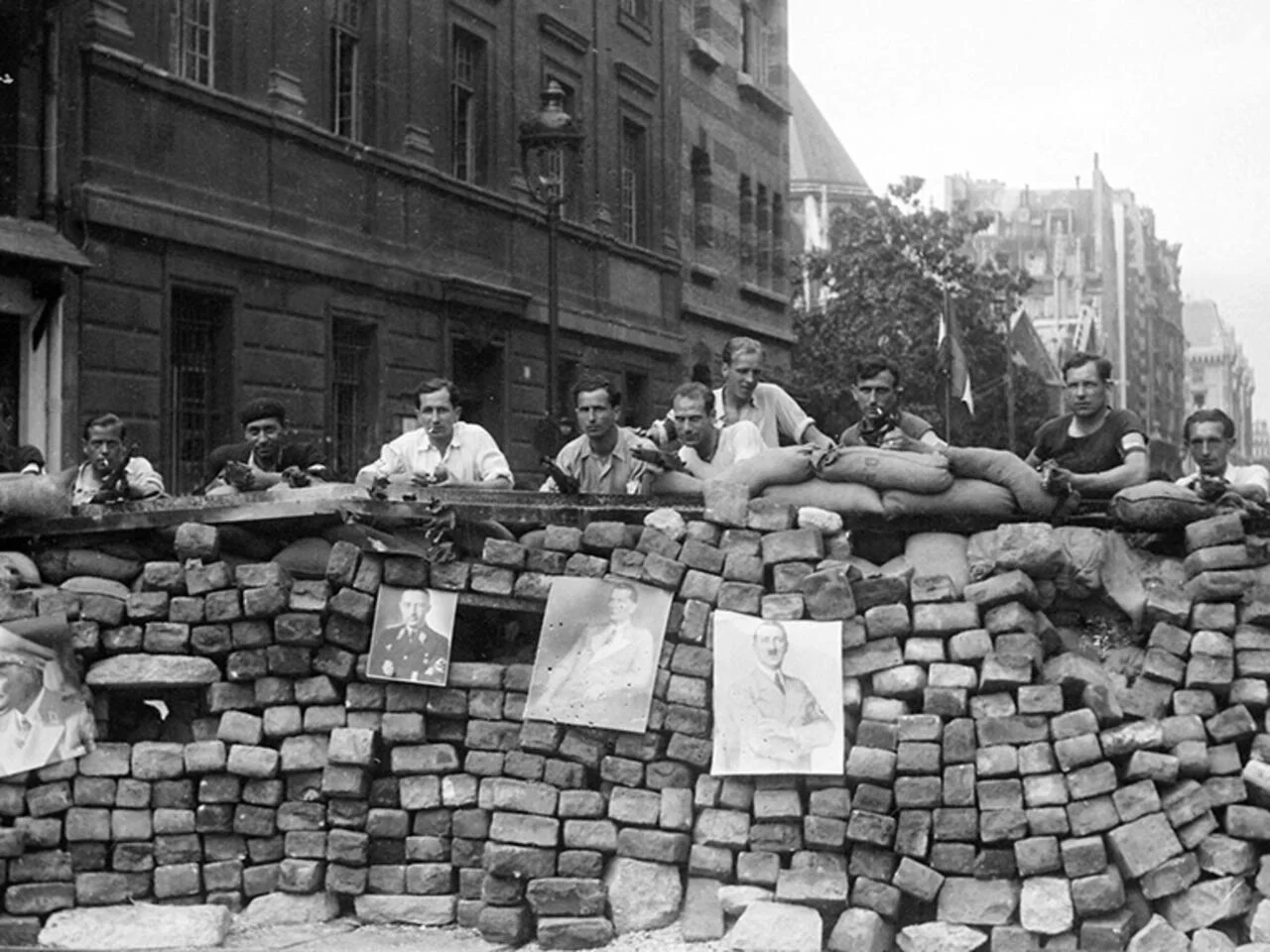
On August 19, the French Forces of the Interior (FFI) launched a general insurrection. The Paris police force seized the Prefecture de Police on the Ile de la Cite. Barricades rose across the city — over 600 in total, built from paving stones, overturned vehicles, and felled trees.
The fighting was intense but unequal. The FFI had roughly 20,000 fighters but few weapons. The German garrison, under General Dietrich von Choltitz, had tanks, artillery, and armored vehicles.
Hitler ordered von Choltitz to destroy Paris rather than surrender it. Explosives were placed under bridges and key buildings. But von Choltitz, recognizing that the war was lost and that destroying Paris would serve no purpose, delayed and ultimately refused to carry out the order.
August 25, 1944: Liberation
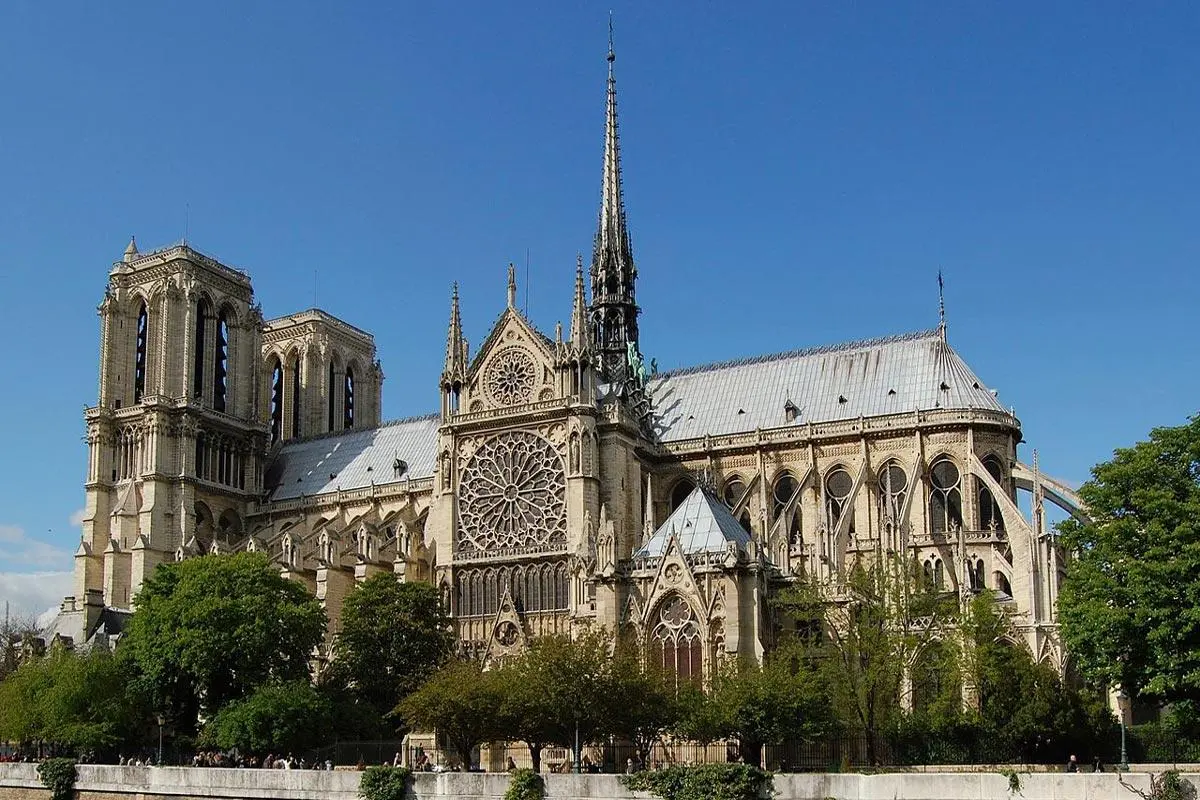
On the evening of August 24, an advance detachment of General Leclerc’s 2nd Armored Division reached the Hotel de Ville. The bells of Notre-Dame rang out across the city for the first time in four years.
On August 25, the full division entered Paris. Von Choltitz surrendered at the Prefecture de Police. That afternoon, Charles de Gaulle walked down the Champs-Elysees before an enormous crowd, declaring: “Paris outrage! Paris brise! Paris martyrise! Mais Paris libere!” — Paris outraged, Paris broken, Paris martyred, but Paris liberated.
The occupation was over. But its scars — physical, psychological, and moral — would shape France for generations.
The Toll
The numbers tell part of the story:
- Four years of occupation (June 14, 1940 - August 25, 1944)
- 76,000 Jews deported from France; fewer than 2,500 returned
- 4,115 children arrested in the Vel’ d’Hiv roundup alone
- Over 600 barricades erected during the August 1944 insurrection
- Roughly 1,500 FFI fighters and 600 civilians killed during the Liberation
- 35 bridges in the Paris region mined for demolition, none destroyed
Walking Through This History
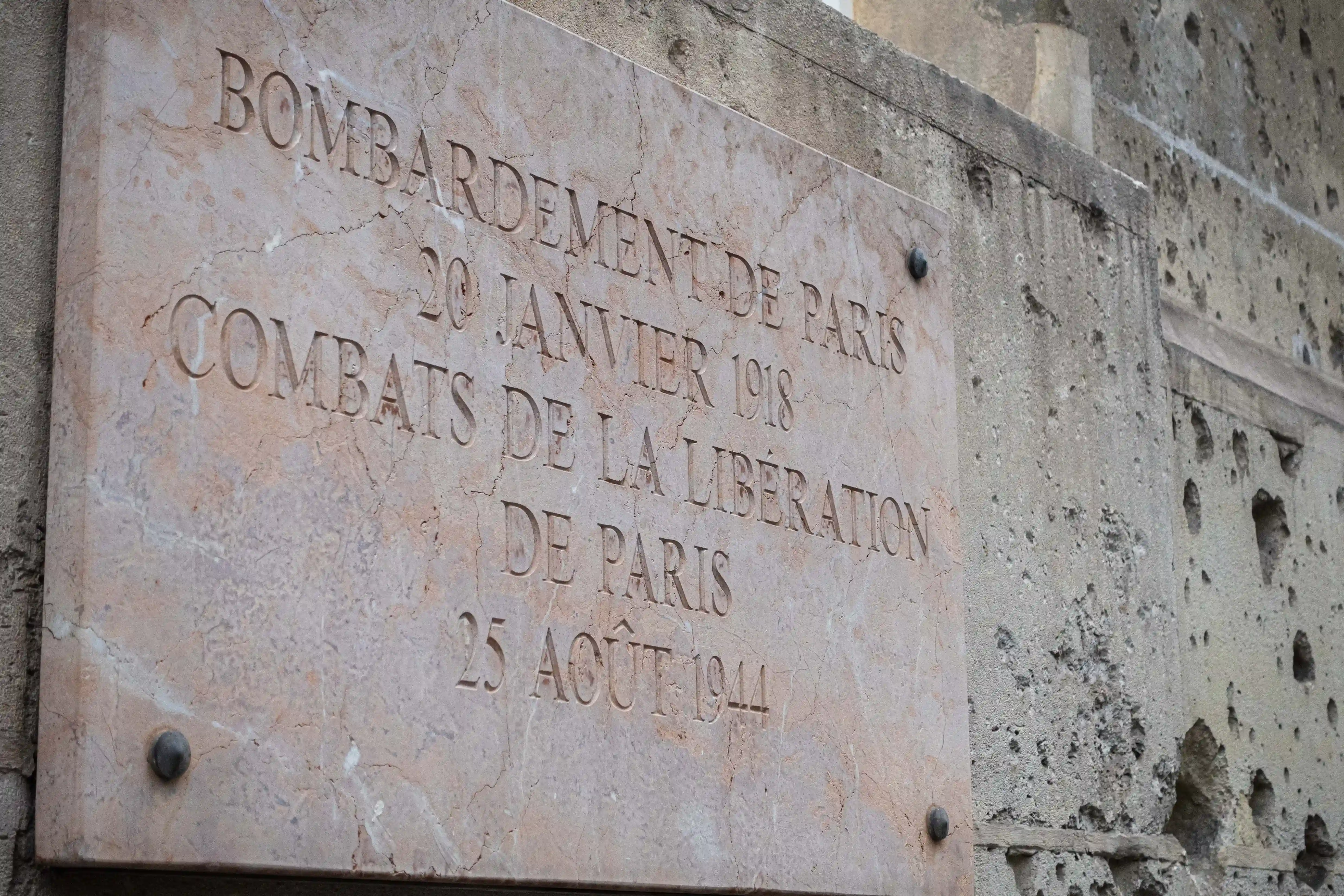
The streets of Paris still carry the traces of the occupation if you know where to look. Bullet holes on building facades, plaques marking where Resistance fighters fell, the site of the vanished Velodrome d’Hiver — these marks are easy to miss in the rush of modern life.
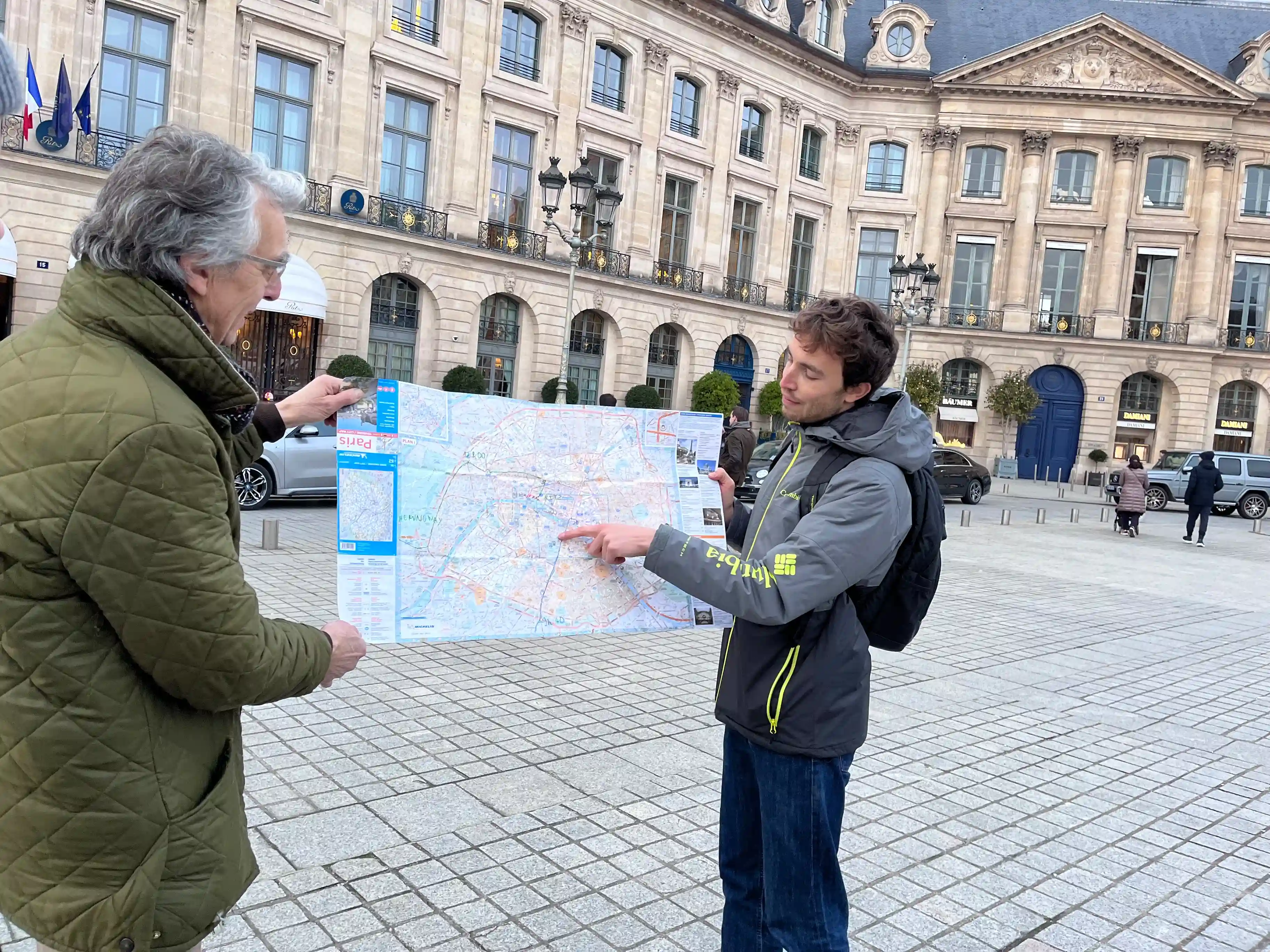
On my Left Bank walking tour and Right Bank walking tour, I take you to the exact locations where this history unfolded. We stand at the Hotel Meurice where von Choltitz surrendered, walk past the Jeu de Paume where Rose Valland kept her secret records, and visit the bridges that were mined but never destroyed.
Understanding the timeline helps you see the city differently. Every street corner has a story, and many of those stories belong to the four darkest years in the life of Paris.