“Is Paris Burning?”
On August 25, 1944, as the Liberation of Paris was underway, Adolf Hitler reportedly asked his chief of staff: “Brennt Paris?” — Is Paris burning?
The question revealed his fury. Hitler had given explicit orders for the city to be destroyed rather than surrendered intact to the Allies. Every bridge over the Seine was to be blown up. Key monuments and landmarks were to be demolished. Paris was to be left “a field of ruins.”
Yet when the 2nd Armored Division entered the city that day, the bridges were intact, the monuments still standing. Paris had survived.
The story of why involves a German general, a Swedish diplomat, and one of the most consequential acts of disobedience in World War II.
The Man Hitler Chose
General Dietrich von Choltitz arrived in Paris on August 9, 1944, as the new military governor (Kommandant von Gross-Paris). He was not chosen by accident.
Von Choltitz had a reputation as a reliable officer who carried out orders without question. He had commanded the destruction of Rotterdam in 1940 and had fought on the Eastern Front, where he was known for his ruthlessness at Sevastopol.
Hitler selected him precisely because he expected obedience. When von Choltitz met with the Führer at the Wolf’s Lair in East Prussia before departing for Paris, he received clear instructions: the city was to be held at all costs, and if it could not be held, it was to be destroyed.
The Orders
The demolition orders were detailed and specific:
- All 45 bridges over the Seine in the Paris area were to be mined and destroyed
- The Eiffel Tower was to be toppled
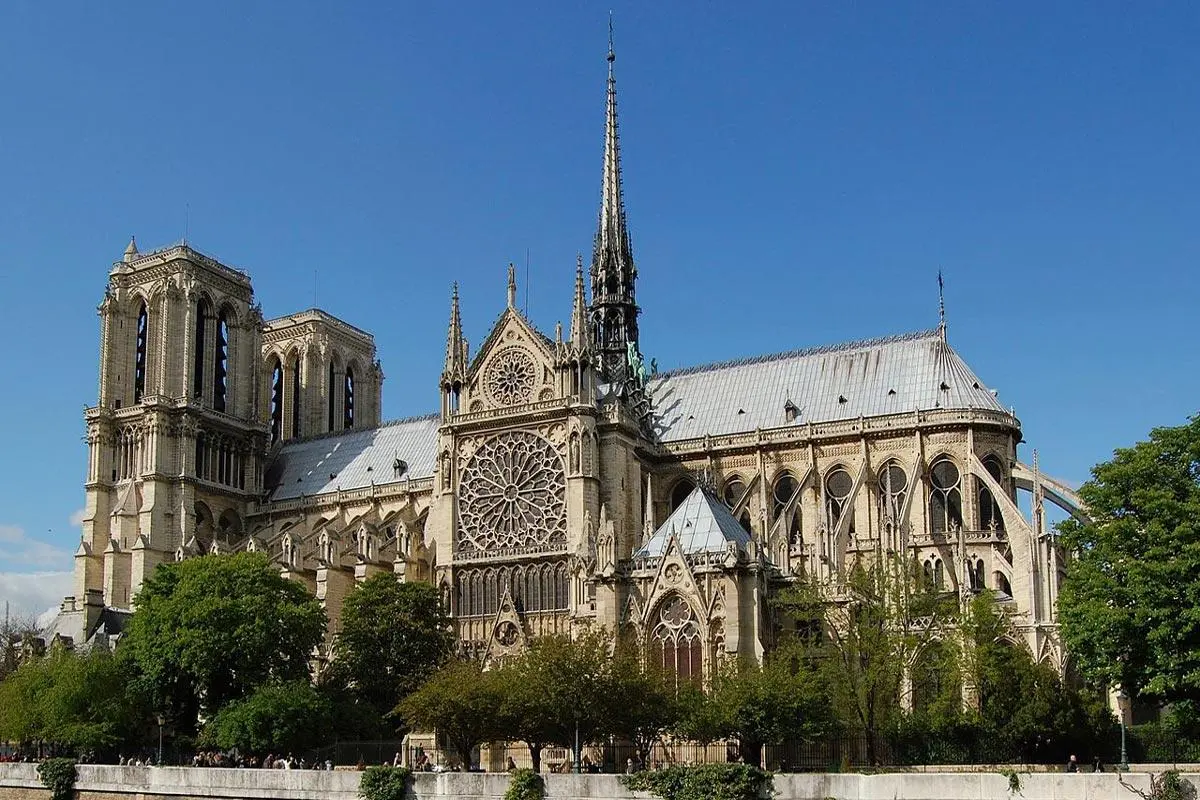
- Notre-Dame, the Opéra, the Madeleine, and other landmarks were to be demolished
- Key industrial facilities and infrastructure were to be rendered useless
- The Paris water supply was to be sabotaged
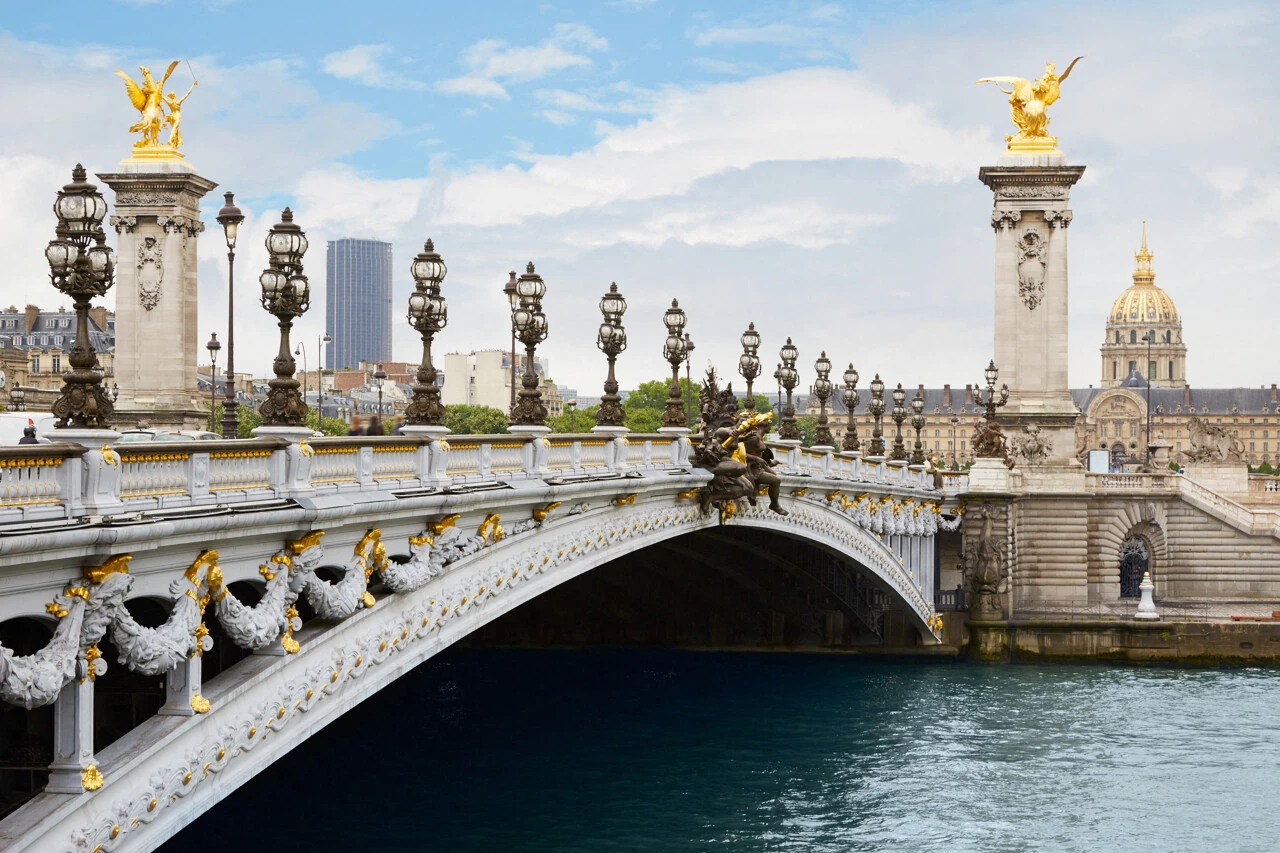
German engineers began placing explosives. The Pont Alexandre III, the Pont de la Concorde, the Pont Neuf — some of the most beautiful bridges in Europe — were fitted with demolition charges.
According to several accounts, enough explosives were placed under the bridges and in key buildings to cause catastrophic damage to the historic center of Paris.
Von Choltitz’s Dilemma
As the days passed and the Allied advance accelerated, von Choltitz found himself in an increasingly impossible position.
On one hand, he had received direct orders from Hitler — orders that were reiterated multiple times via telephone from Berlin. The OKW (German High Command) demanded updates on the demolition preparations.
On the other hand, von Choltitz could see that the war was lost. Destroying Paris would serve no military purpose — the Allies would simply cross the Seine elsewhere. It would only create a humanitarian catastrophe and ensure that Germany would never be forgiven.
Several factors influenced his thinking:
Military reality: With only around 20,000 troops, many of them second-line or administrative units, von Choltitz could not hold Paris against both the approaching Allied armies and the FFI insurrection within the city.
The meeting with Hitler: Von Choltitz later claimed that his meeting with Hitler at the Wolf’s Lair convinced him that the Führer had lost his grip on reality. Hitler appeared physically deteriorated and spoke of imaginary armies and impossible counter-offensives.
Personal considerations: Destroying Paris would make von Choltitz one of the most reviled men in history. His family’s fate in a postwar world also weighed on his mind.
Raoul Nordling’s Intervention
The Swedish consul general in Paris, Raoul Nordling, played a crucial diplomatic role during these critical days.
Nordling met repeatedly with von Choltitz, appealing to him on humanitarian grounds. He negotiated the release of political prisoners, brokered a temporary truce between the FFI and the German garrison, and served as an intermediary between the German command and the approaching Allied forces.
Nordling’s relationship with von Choltitz gave the general a channel through which he could signal his willingness to surrender without the devastating destruction that Hitler demanded.
According to some accounts, Nordling suffered a heart attack during these negotiations — a measure of the extraordinary stress of those days — but continued his diplomatic efforts from his sickbed.
The Decision
In the end, von Choltitz chose not to carry out the destruction order. The bridges were not blown. The monuments were not demolished. The water supply was not sabotaged.
On August 25, when French forces arrived at his headquarters at the Hôtel Meurice on Rue de Rivoli, von Choltitz surrendered. He was taken to the Préfecture de Police, where he signed the formal capitulation of the German garrison.
Paris was free — and intact.
The Debate
Von Choltitz’s motivations have been debated by historians ever since.
The heroic narrative: Von Choltitz himself promoted the story that he deliberately saved Paris out of love for the city and revulsion at Hitler’s madness. His 1950 memoir, Brennt Paris? (Is Paris Burning?), presented him as a cultured soldier who could not bring himself to destroy a masterpiece.
The pragmatic view: Other historians argue that von Choltitz simply lacked the military means to carry out the destruction. His forces were insufficient, many of the demolition charges may not have been properly placed, and executing the order would have provoked the FFI into an all-out assault on his demoralized troops.
The mixed reality: The truth likely lies somewhere in between. Von Choltitz made a deliberate choice not to push for maximum destruction, even though he had some capacity to cause significant damage. Whether his primary motivation was moral conviction, practical calculation, or self-preservation remains an open question.
What is not debated is the outcome: Paris survived largely intact, and the bridges that Hitler ordered destroyed still stand today.
See the Bridges That Survived
The story of Hitler’s destruction order is a central theme of our Right Bank WWII Tour. We begin at Pont Alexandre III — one of the very bridges that was mined and prepared for demolition. Standing on the bridge, we tell the story of von Choltitz’s dilemma, Nordling’s diplomacy, and the order that was never carried out.
It is a powerful reminder that the Paris we know and love today very nearly ceased to exist in August 1944.
Walk in their footsteps — Book a WWII tour in Paris.