Why a Walking Tour Is the Only Way to Understand Occupied Paris
When people tell me they want to learn about World War II in Paris, I always ask the same question: are you willing to walk? Not because the distance is difficult — it is not — but because the story of Occupied Paris lives in the details. A bullet scar on a wall near the Sorbonne. A plaque at the corner of a street you would never notice from a bus window. The exact bench in the Luxembourg Garden where a Resistance cell used to pass coded messages.
I have been guiding WWII walking tours in Paris for years now, and I can say this with certainty: the city itself is the museum. You just need someone to show you where to look.
What the Tour Covers
My tours follow the arc of Paris under German Occupation, from the Fall of France in June 1940 through the years of Resistance to the Liberation in August 1944. This is not a surface-level overview. I have read over 20 books specifically on this period — memoirs, military histories, first-person testimonies — and I weave that research into every stop.
The Fall
We begin with June 1940. Paris declared an open city, abandoned by its government, emptied of two-thirds of its population. I explain how the German army marched down the Champs-Elysees and what it meant for ordinary Parisians to wake up under a foreign flag. At landmarks like the Luxembourg Palace — requisitioned as the Luftwaffe’s headquarters — you can still feel the weight of that moment.
The Resistance
This is the heart of the tour. I tell the stories of people who chose to fight back, often at unimaginable personal cost. Agnes Humbert, an art historian at the Musee de l’Homme, who co-founded one of the very first Resistance networks in Occupied France. Rose Valland, the quiet curator at the Jeu de Paume who secretly catalogued over 20,000 artworks stolen by the Nazis — risking execution every single day for four years.
Near the Sorbonne, I describe the student protests of 1940, one of the earliest public acts of defiance against the Occupation. Along Boulevard Saint-Michel, we trace the route of the barricades that went up in August 1944. These are not abstract stories. They happened on the exact streets where you are standing.
The Liberation
The tour builds toward August 1944 and the Liberation of Paris. I recount the extraordinary decision by General von Choltitz — the German military governor — to disobey Hitler’s direct order to destroy the city. We discuss de Gaulle’s triumphal march down the Champs-Elysees on August 26, and the famous scene of Hemingway liberating the Ritz bar (or at least claiming to).
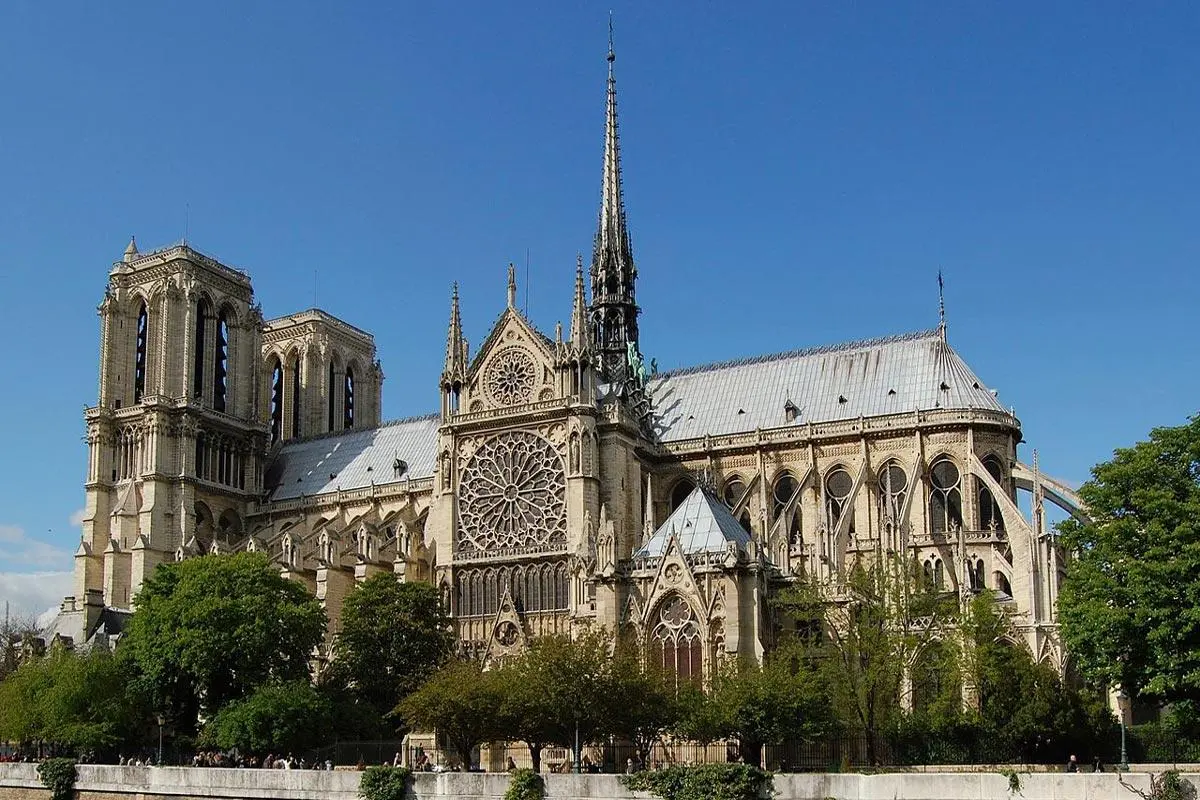
At Notre-Dame, I describe the sniper fire that broke out during the thanksgiving service on Liberation Day — bullets ricocheting off the pillars of the cathedral while de Gaulle refused to take cover. You can stand in the same nave and picture it.
The Two Routes: Left Bank and Right Bank
I offer two distinct tours, each lasting about two and a half hours.
Left Bank Tour
This route covers the intellectual and spiritual heart of wartime Paris. We walk through Boulevard Saint-Michel, past the Luxembourg Palace, along the streets around the Sorbonne, and finish at Notre-Dame. The Left Bank was the center of student resistance, clandestine publishing, and some of the fiercest fighting during the Liberation. It is the tour I recommend if you want to understand the Resistance from the ground up.
Right Bank Tour
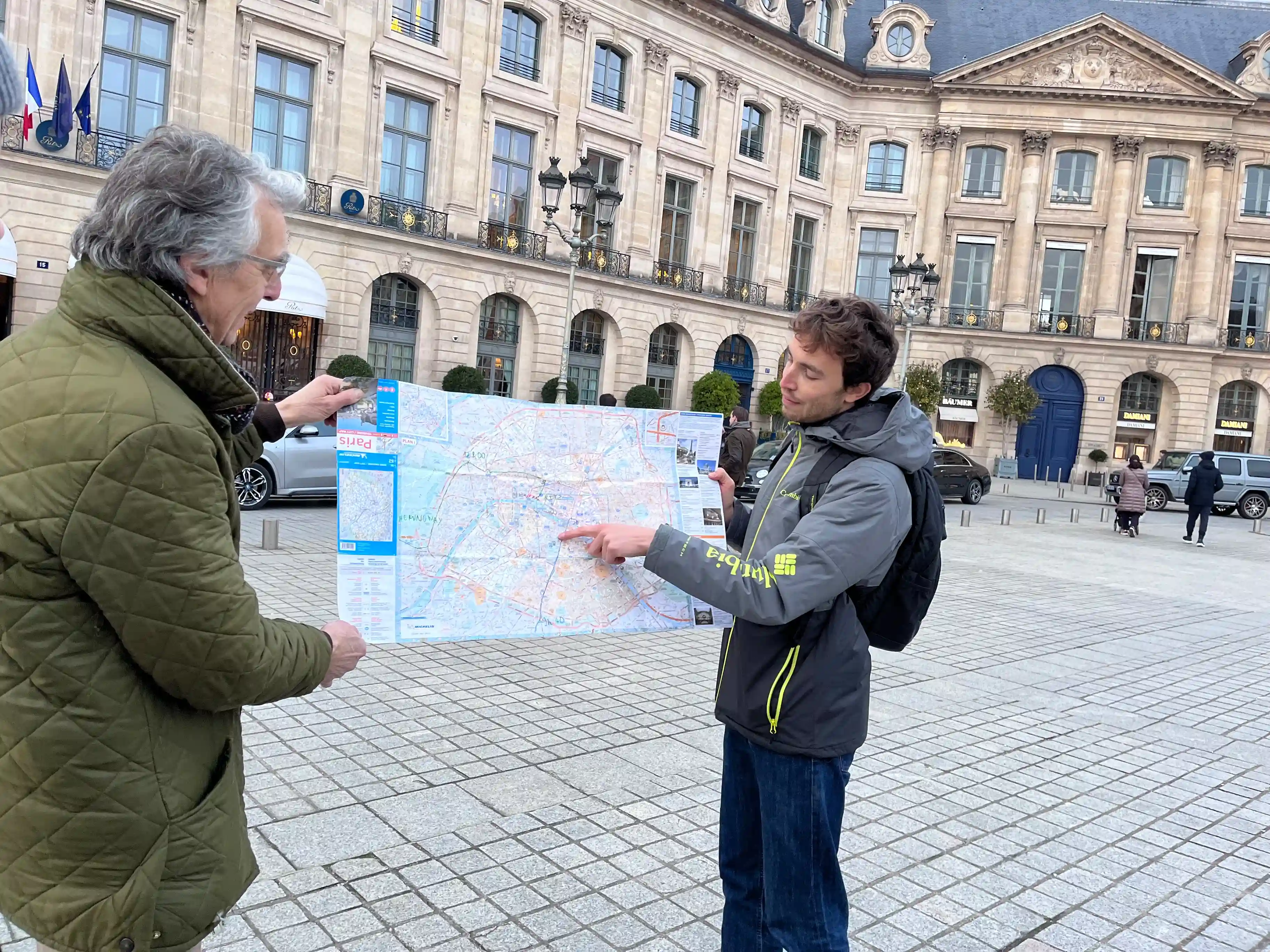
The Right Bank tour takes a different angle — power, diplomacy, and the machinery of Occupation. We pass the Pont Alexandre III, walk through the Place de la Concorde (where German military parades were staged), and reach the Place Vendome, home to the Ritz Hotel and the German military command. This tour brings you face to face with the places where decisions were made that determined the fate of the city.
Both tours cover approximately 3 to 4 kilometers at a comfortable pace, with frequent stops. This is not a march. We take our time.
Who Is This Tour For?
I have guided history professors and teenagers. Families with children and solo travelers. Veterans’ grandchildren and people who simply watched a documentary and wanted to know more. You do not need to be an expert. You do not even need to know much about WWII at all. I start from the beginning and build the story step by step.
That said, the tours are designed for adults and older children (roughly 12 and up). The subject matter includes war, persecution, and loss. I treat it with the seriousness it deserves.
What to Bring
Paris is a walking city, and these tours are no exception. Here is what I recommend:
- Comfortable shoes. We walk for about two and a half hours on cobblestones and pavement. Nothing extreme, but sandals are not ideal.
- Water. Especially in summer. Paris can be surprisingly hot from June through September.
- A light rain jacket. Paris weather is unpredictable. I run the tours rain or shine.
- Curiosity. That is the most important thing. Questions are not just welcome — they make the tour better.
You do not need to bring cash (the tour is booked and paid online in advance), and you do not need a metro ticket to the meeting point — both starting locations are in central Paris, easily reachable on foot from most hotels.
Why a Walking Tour Instead of a Bus Tour?
I get this question often. Here is my honest answer: a bus tour will show you monuments. A walking tour will show you history.
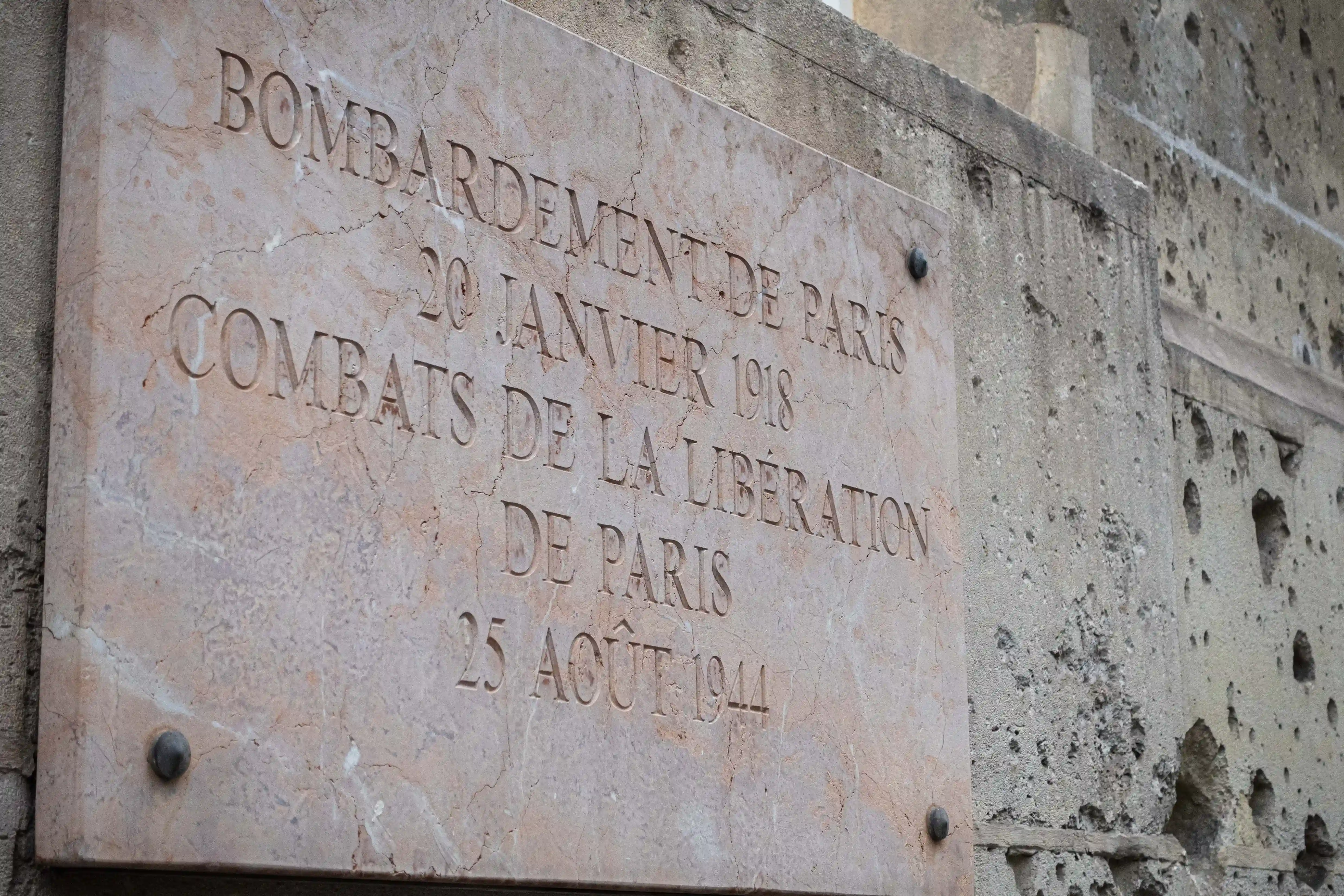
When you stand in front of a wall pocked with bullet holes from 1944, you are not looking at a photograph in a book. You are there. When I point to a balcony on Boulevard Saint-Michel and explain that a Resistance fighter threw a grenade from that exact spot during the insurrection, the street transforms. It stops being a shopping district and becomes a battlefield.
Walking also allows us to go where buses cannot. Down narrow side streets, through hidden courtyards, past details that only exist at eye level. The story of Occupied Paris is not told by grand boulevards alone. It is told by the spaces between them.
What Makes This Tour Different
There are other WWII tours in Paris. Here is what sets mine apart.
Depth of research. I have spent years reading primary sources — memoirs by Resistance fighters, German military records, first-person accounts from the Liberation. I do not repeat Wikipedia summaries. I tell you stories you have never heard before.
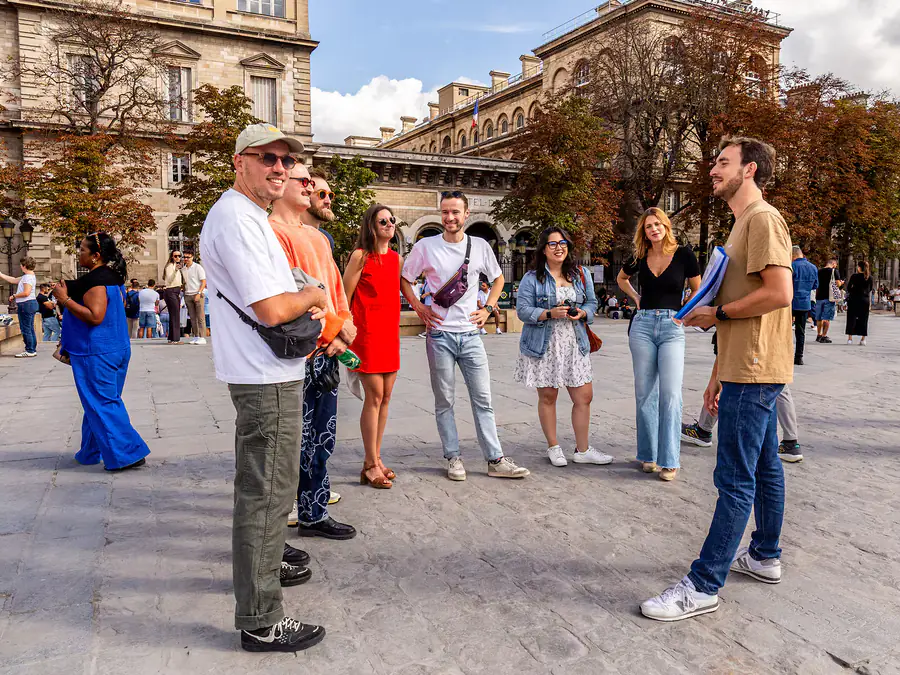
Small groups. My tours are private, which means your group only. No strangers, no waiting for 40 people to cross the street. This allows for real conversation, real questions, and a pace that suits you.
Personal connection. I am not reading from a script. I have walked these streets hundreds of times, and every time I discover something new. My goal is not to lecture you — it is to make you see Paris differently.
Specific, not general. I do not try to cover all of WWII in two hours. I focus on Paris, on the people who lived here, and on the choices they made. By the end, you will know this city’s wartime story in a way that no museum exhibit can replicate.
Ready to Walk Through History?
If you are planning a trip to Paris and want to understand the city beyond the postcard version, I would love to guide you. My WWII walking tours run daily, by reservation. Groups are small, the pace is relaxed, and the stories are ones you will carry with you long after you leave.
Book your private WWII walking tour here and discover the Paris that most visitors never see.