A Vineyard in the Heart of Paris
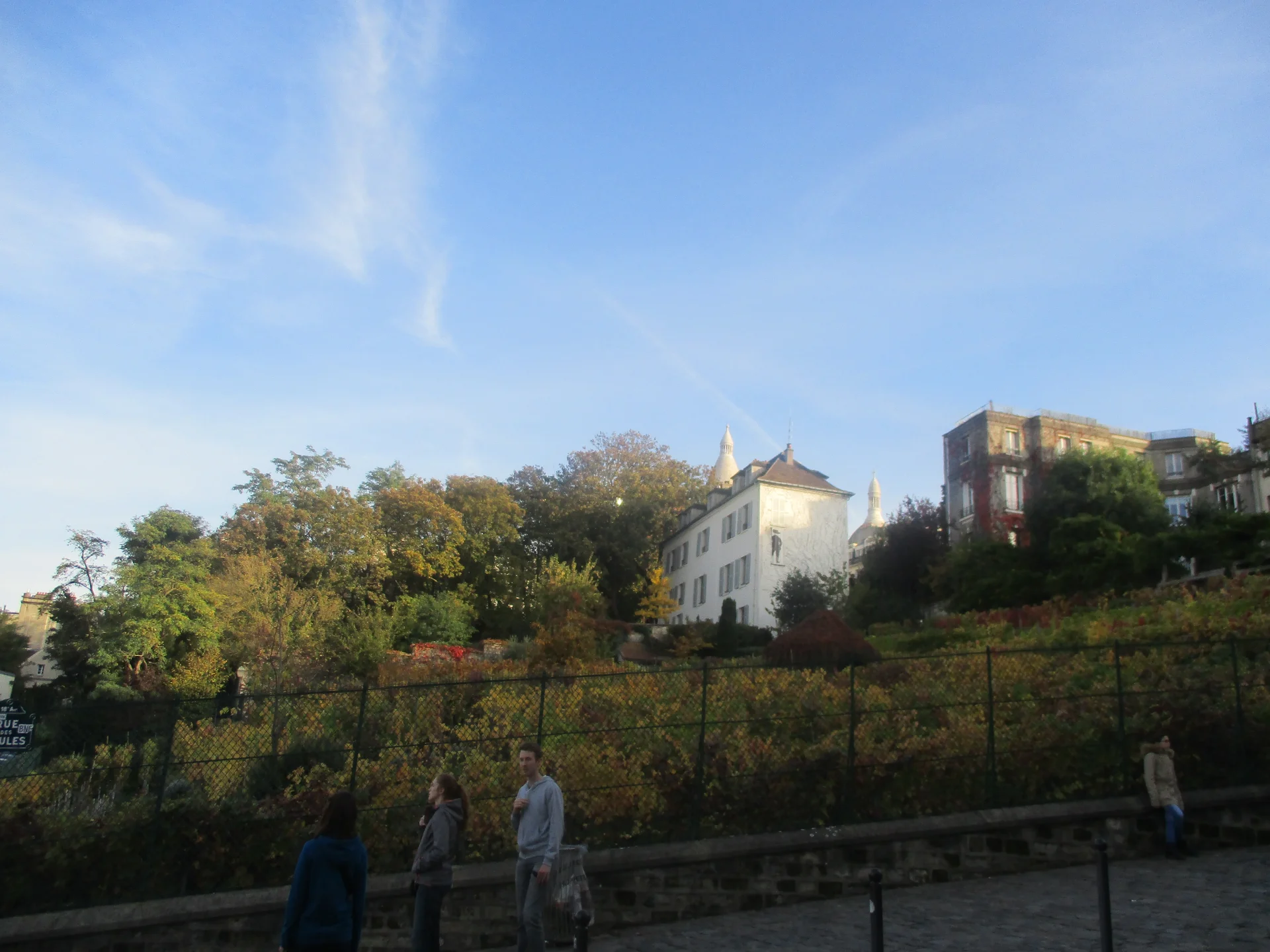
Tucked away on the northern slope of Montmartre, just steps from the Sacré-Cœur basilica and the bustling Place du Tertre, lies one of the most unexpected sights in Paris: a working vineyard.
The Clos Montmartre is a small patch of green — barely 1,556 square meters — surrounded by apartment buildings, cobblestone streets, and the bohemian cafés that have defined this neighborhood for over a century. Every autumn, its grapes are hand-harvested, pressed, and turned into wine.
It is, by any measure, an improbable place for winemaking. And yet, the vines of Montmartre are not a novelty or a tourist gimmick. They are the last living trace of a tradition that once made Paris one of the most important wine regions in the world.
When Paris Was Wine Country
Most visitors are surprised to learn that the Île-de-France — the region surrounding Paris — was once the largest vineyard area in the entire world. At its peak in the Middle Ages, the Paris basin had an estimated 45,000 to 52,000 hectares under vine, exceeding even Bordeaux or Burgundy.
The story begins with the Romans. Gallo-Roman settlers planted the first vines around Lutetia (ancient Paris) as early as the 3rd century AD. In 357, Emperor Julian — who spent a winter in Paris and clearly took a liking to the place — praised the local wines in his writings.
By the 12th century, three great abbeys dominated Parisian viticulture: Saint-Denis, Saint-Germain-des-Prés, and the Abbey of Montmartre itself. Founded by King Louis VI and Queen Adelaide of Savoy, the Benedictine nuns of Montmartre operated their own wine press and produced two wines: a white called clairet and a red known as piquette.
Montmartre had a crucial commercial advantage. Until the neighborhood was absorbed into Paris in 1860, it sat outside the city walls — and therefore outside the reach of the wine tax imposed on all wine entering the capital. This made Montmartre wine considerably cheaper than what you could buy within Paris, and the hilltop became a natural destination for Parisians looking for an affordable drink.
When Wine Was Safer Than Water
One of the most fascinating aspects of medieval wine culture in Paris is the sheer quantity consumed. In 1637, Parisians drank an estimated 155 liters of wine per capita per year — roughly half a liter a day for every man, woman, and child in the city.
Why so much? The answer lies partly in the state of the water supply.
Paris’s drinking water came primarily from the Seine and from wells — sources that were routinely contaminated by sewage, animal waste, and industrial runoff. The fermentation process that produces wine and beer creates an environment hostile to many of the bacteria that made water dangerous.
Historians caution against the oversimplification that “nobody drank water.” Water was free and widely available, and medieval medical texts acknowledged its benefits. But the reality was that fermented beverages were a genuinely safer alternative in a city where clean drinking water was far from guaranteed.
Wine wasn’t a luxury in medieval Paris — it was a daily necessity.
The Rise and Fall of Montmartre’s Vines
Wine production in Montmartre — and across the Île-de-France — reached its peak in the 18th century. The inhabitants of the hilltop village were predominantly ploughmen and winegrowers, cultivating vines from the summit down to the surrounding plains.
Then came the 19th century, and with it, a cascade of disasters.
Urbanization ate into the vineyards as Paris expanded relentlessly outward. The arrival of the railways made it cheaper to import wine from the south of France than to produce it locally. And then, in the 1860s and 1870s, the phylloxera epidemic — a devastating vine disease caused by an American aphid — destroyed vineyards across France. The small, already-struggling Parisian plots stood no chance.
By 1928, the last vines in Montmartre had disappeared entirely.
A Vineyard Reborn: The Story of Francisque Poulbot
The Clos Montmartre as we know it today owes its existence to an act of creative civil disobedience.
In the early 1930s, real estate developers had their eyes on the empty plot of land on Montmartre’s northern slope. The neighborhood was changing fast, and the developers saw an opportunity to build.
But the artists and residents of Montmartre had other ideas.
Francisque Poulbot — a beloved caricaturist famous for his illustrations of Montmartre street urchins (the titis parisiens, or “Poulbots” as they came to be called) — led a campaign to save the land. He was backed by the République de Montmartre, a local civic association that had long championed the neighborhood’s unique character.
Their weapon was an obscure provision of French law: nothing can be built on a vineyard.
In 1933, with the support of the Paris City Council, they planted vines on the threatened plot. The developers were outmaneuvered. The vineyard was saved — or rather, reborn.
Over 1,760 vines were planted, representing 27 different grape varieties, though Gamay and Pinot Noir dominate. Cuttings were donated from prestigious wine regions across France and even from as far away as Japan, making the tiny vineyard a symbolic gathering of global winemaking traditions.
The first harvest took place in 1934.
The Wine of Montmartre Today
Every autumn, the grapes of the Clos Montmartre are hand-harvested by volunteers and members of the Commanderie du Clos Montmartre, a stewardship association created in 1983.
The grapes are then transported to a small winery in the basement of the Mairie (town hall) of the 18th arrondissement, where they are pressed and vinified. The annual production is modest: roughly 1,500 bottles of half-liter demi-bouteilles.
Let’s be honest about the wine itself. The Clos Montmartre does not compete with Burgundy or Bordeaux — the terroir, the climate, and the urban setting ensure that the wine is, shall we say, an acquired taste. Locals will tell you with a grin that it takes four people to drink a glass: one to pour, one to drink, and two to hold the drinker upright.
But the quality of the wine has never been the point.
From the very first vintage, all proceeds from the sale of the wine have been donated to charity — specifically to community causes in the 18th arrondissement, including L’Œuvre des P’tits Poulbots, a charity for disadvantaged children named in honor of the vineyard’s savior.
The bottles are auctioned each year during the harvest festival, and they have become prized collectors’ items — not for what’s inside, but for what they represent.
The Fête des Vendanges: Montmartre’s Annual Celebration
The highlight of the Montmartre wine calendar is the Fête des Vendanges de Montmartre, held annually in early-to-mid October.
First organized in 1934 — just one year after the vineyard was planted — the festival has grown into one of Paris’s most popular events, reportedly the third-largest festival in the city after Nuit Blanche and Paris Plages. It attracts hundreds of thousands of visitors over five days.
The festivities include:
- A grand parade through the streets of Montmartre
- Wine tastings featuring producers from across France
- Live concerts and street performances
- Fireworks over the Sacré-Cœur
- The official auction of the year’s vintage
The Mayor of the 18th arrondissement opens the festival with a ceremony at the vineyard itself, and the atmosphere is electric — a blend of local pride, artistic tradition, and the joyful chaos that has always defined Montmartre.
The festival is free to attend, though individual tastings may have a small cost.
A Living Link to Paris’s Past
The Clos Montmartre is more than a vineyard. It is a living monument to the layers of history that make Paris endlessly fascinating.
In those 1,556 square meters, you can trace the story of Roman Lutetia, medieval monastic life, the tax-dodging ingenuity of pre-revolutionary Parisians, the devastating impact of industrialization, and the stubborn creativity of artists who refused to let their neighborhood disappear under concrete.
The Île-de-France received an official IGP (Indication Géographique Protégée) designation in 2020, and today there are an estimated 140 small vineyards scattered across the region. The Clos Montmartre is not alone — other Parisian vineyards survive in the Parc de Bercy, the Parc Georges-Brassens in the 15th arrondissement, and the Parc de Belleville.
But none carries the history, the symbolism, or the story quite like Montmartre’s.
Discover the Flavors of Paris
The story of wine in Montmartre is a perfect example of what makes Paris such a rich city for those who look beyond the obvious landmarks. Every street, every building, every hidden garden has a story — and often, that story stretches back centuries.
If this story made you thirsty, good news: our Nourritour — Food & Wine tour of Paris is now running. Three hours through the covered passages and the rue des Martyrs, four artisans (madeleines, cheese, charcuterie, wine), and a sit-down tasting of four pairing boards travelling across France’s wine regions.
And if you’re visiting Paris, take a detour to the corner of Rue des Saules and Rue Saint-Vincent in the 18th arrondissement. The vineyard is closed to the public, but you can admire the vines through the railings and imagine a time when all of Paris was wine country.
Explore the hidden stories of Paris — Book a private walking tour.
Photo: Clos Montmartre vineyard, Paris. Credit: Thomon / Wikimedia Commons (CC BY-SA 4.0).